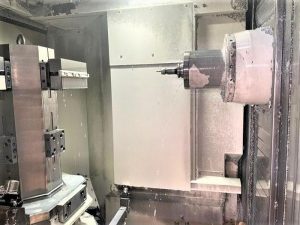
What is CNC Hole EDM Drilling Machine?
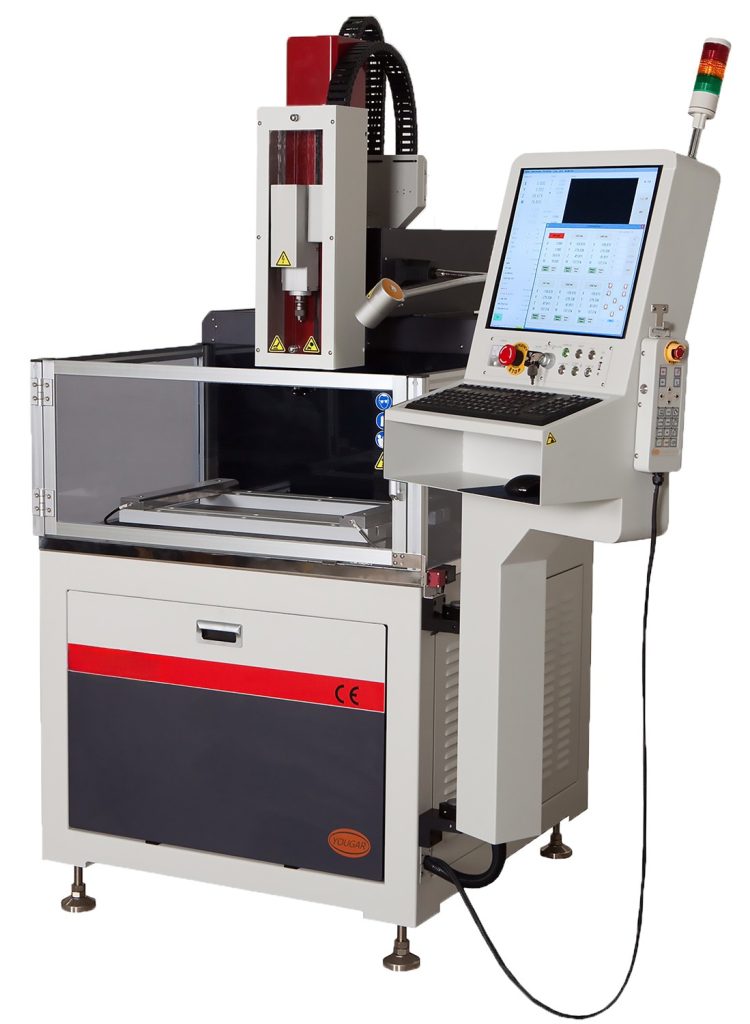
A CNC Hole EDM (Electrical Discharge Machining) Drilling Machine, often referred to as a small-hole EDM or EDM hole popper, is a precision manufacturing tool designed for creating small, high-aspect-ratio holes in conductive materials using controlled electrical discharges (sparks). It integrates computer numerical control (CNC) for automated, repeatable, and high-precision drilling, particularly suited for hard, brittle, or heat-sensitive metals where conventional mechanical drilling is impractical. Below is a technical breakdown tailored for the machinery and metalworking sectors.Technical Principles of OperationThe machine operates on the EDM principle, where material removal occurs through rapid, controlled electrical discharges between a rotating tubular electrode and the workpiece, submerged in or flushed with a dielectric fluid (typically deionized water). The process is non-contact, avoiding mechanical stresses and enabling micromachining of intricate features.
- Electrode and Spark Generation:
- Electrodes are typically hollow tubes (brass, copper, or tungsten) with diameters ranging from 0.1 mm to 4 mm (down to 0.065 mm in advanced systems). The hollow design allows dielectric fluid to flow through, flushing debris.
- A high-frequency pulse generator delivers voltages (e.g., 80–300 V) across a small gap (10–100 µm) between the electrode and workpiece. Sparks generate localized temperatures up to 12,000°C, vaporizing and melting material in micro-increments.
- The dielectric fluid insulates the gap, cools the process, and removes eroded particles, maintaining spark stability. Fluid pressure (e.g., 50–100 bar) is critical for efficient flushing, especially in deep holes.
- Material Removal Mechanism:
- Each spark erodes a tiny crater (micrometers in size) from the workpiece. Repeated discharges progressively form the hole.
- The process is governed by parameters like pulse duration (1–100 µs), current (1–30 A), and gap voltage, which are adjusted via CNC controls to optimize speed, surface finish, and electrode wear.
- CNC Control and Motion:
- The machine employs multi-axis CNC systems (typically 3–6 axes: X, Y, Z for positioning; W for electrode rotation; and optional A/B axes for tilting/rotary tables).
- Servo motors maintain precise gap control, adjusting electrode position in real-time based on feedback from gap voltage sensors to prevent arcing or short-circuiting.
- Advanced models feature automatic electrode changers (AECs), guide holders, and breakthrough detection to optimize unattended operation and handle complex hole patterns (e.g., angled or multi-hole arrays).
Technical Specifications
- Hole Size and Depth:
- Diameters: 0.1–4 mm (standard), with specialized machines achieving 0.065–0.1 mm.
- Depth-to-diameter ratios: Up to 300:1 (e.g., 1 mm diameter holes up to 300 mm deep).
- Drilling speeds: 1–60 mm/min, depending on material, electrode size, and power settings.
- Accuracy and Tolerances:
- Positional accuracy: ±0.002–0.005 mm.
- Hole roundness and straightness: Within 0.01 mm, with minimal taper (0.001–0.002 mm/mm).
- Surface finish: Ra 0.2–1.5 µm, depending on settings (roughing vs. finishing passes).
- Materials:
- Suitable for conductive materials, including hardened steels (e.g., tool steel, HRC 60+), stainless steel, titanium, tungsten carbide, Inconel, Hastelloy, and conductive ceramics.
- No sensitivity to material hardness, unlike mechanical drilling.
- Machine Components:
- Power Supply: Programmable pulse generators (e.g., transistorized or adaptive control) for precise spark control.
- Dielectric System: High-pressure pumps, filtration units (to remove 0.1 µm particles), and temperature regulation (±1°C) for consistent performance.
- CNC Controller: Fanuc, Siemens, or proprietary systems with touchscreen interfaces, supporting G-code or conversational programming.
- Worktable and Fixturing: Granite or cast-iron bases for vibration damping, with T-slots or magnetic chucks for workpiece clamping.
- Electrode Management: Automatic electrode wear compensation and multi-electrode magazines for continuous operation.
Advantages in Metalworking
- Non-Contact Process: Eliminates mechanical stress, burrs, and tool breakage, ideal for fragile or hardened materials.
- High Aspect Ratios: Achieves deep, narrow holes (e.g., 0.5 mm diameter, 150 mm deep) unattainable with twist drills.
- Complex Geometries: CNC enables angled holes, curved paths, or multi-hole patterns with consistent precision.
- Minimal Heat-Affected Zone (HAZ): Localized sparking limits thermal distortion, preserving material properties.
- Versatility: Drills through pre-hardened workpieces, broken taps/drills, or irregular surfaces without pilot holes.
- Automation: Supports unattended operation with features like automatic electrode feeding, wear compensation, and in-process monitoring (e.g., video systems or laser sensors).
Limitations
- Material Constraint: Limited to conductive materials (non-conductive ceramics or plastics require alternative methods).
- Speed: Slower than mechanical drilling for larger holes or softer materials (e.g., 10–100 times slower for 1 mm holes in mild steel).
- Electrode Wear: Requires frequent electrode replacement or compensation, increasing costs for high-volume production.
- Surface Finish: May require secondary processes (e.g., reaming) for ultra-smooth finishes in some applications.
Applications in Machinery and Metalworking
- Aerospace: Drilling cooling holes in turbine blades (e.g., 0.3–1 mm diameter, 100:1 aspect ratio) and fuel injectors, meeting stringent tolerances (e.g., ±0.01 mm).
- Automotive: Producing precise holes in fuel nozzles, hydraulic valves, and brake components.
- Tool and Die: Creating starter holes for wire EDM, removing broken taps/drills, or machining ejector pin holes in molds.
- Medical: Micromachining holes in surgical implants or dental tools, often in titanium or stainless steel.
- Energy and Electronics: Drilling filter holes, spinnerets for chemical fibers, or micro-holes in semiconductor components.
- General Manufacturing: Group hole drilling for sieves, spray nozzles, or multi-angle patterns in complex assemblies.
Industry-Specific FeaturesModern CNC Hole EDM machines, such as those from Makino, GF Machining Solutions, or Ocean Technologies, offer advanced capabilities:
- EDM Milling: Some models use fine electrodes (e.g., 0.1 mm) to mill shaped holes (e.g., square or slotted) by orbiting the electrode.
- Breakthrough Detection: Sensors detect when the electrode exits the workpiece, preventing backwall damage in blind holes.
- High-Speed Models: Achieve up to 100 mm/min in thin workpieces or soft materials like copper.
- Hybrid Systems: Combine small-hole EDM with wire EDM or laser drilling for multi-process capabilities.
- Software Integration: CAD/CAM compatibility for importing complex hole patterns, with real-time monitoring via IoT-enabled controllers.
Example Workflow
- Setup: Secure the workpiece on the table (e.g., using a 5C collet or magnetic chuck). Load the electrode (e.g., 0.5 mm brass tube) into the spindle.
- Programming: Input hole coordinates, depth (e.g., 50 mm), and parameters (e.g., 10 A current, 50 µs pulse) via CNC interface or G-code.
- Drilling: The machine advances the electrode, maintaining a 20 µm gap, while dielectric fluid (60 bar) flushes debris. Servo feedback adjusts for wear.
- Inspection: Post-process checks (e.g., CMM or optical measurement) verify hole diameter (±0.002 mm) and straightness.
- Automation: For high-volume jobs, the machine cycles through multiple electrodes and hole patterns, logging data for traceability.
Market Context Manufacturers like Belmont (SY series), Sodick (K series), and DMNC offer models tailored to specific needs:
- Entry-Level: Compact machines (e.g., 400 x 300 mm worktable) for small shops, costing $50,000–$100,000.
- High-End: Multi-axis systems with AEC and tilting heads for aerospace, priced $150,000–$500,000.
- Trends: Integration with Industry 4.0 (e.g., predictive maintenance), eco-friendly dielectrics, and hybrid EDM-laser systems.
In conclusion, CNC Hole EDM Drilling Machines are critical for metalworking applications requiring micro-precision and high-aspect-ratio holes in tough materials. Their non-contact nature, CNC automation, and ability to handle complex geometries make them indispensable in high-stakes industries, despite slower speeds compared to mechanical drilling.