What is Automatic Jewelry Casting Machine for silver and gold alloy?
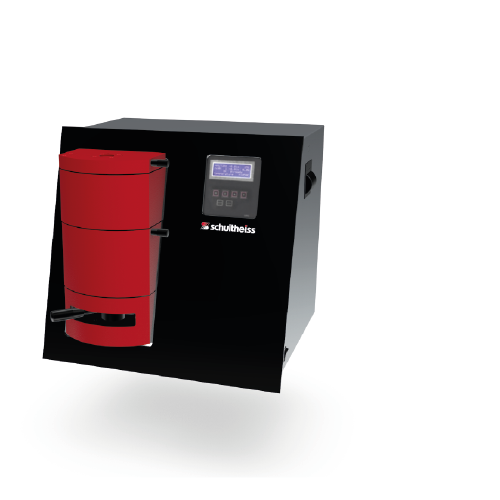
An automatic jewelry casting machine is a specialized piece of equipment designed for the high-precision manufacturing of jewelry items, particularly those made from precious metals like gold (including K-gold alloys) and silver alloys. In the jewelry sector, these machines automate the lost-wax casting process—a traditional method where a wax model is replaced by molten metal in a mold—to produce intricate designs such as rings, pendants, earrings, and chains with minimal defects. Unlike manual or semi-automatic systems, fully automatic models integrate melting, pouring, and cooling under programmable controls, ensuring repeatability, efficiency, and consistency for high-volume production. They are essential for jewelers handling alloys, as these metals often require controlled atmospheres to prevent oxidation, porosity, or uneven microstructures that could compromise aesthetic and structural integrity.Technical Principles of OperationAutomatic jewelry casting machines operate on the principles of induction melting, vacuum-assisted degassing, and pressure or centrifugal filling to achieve defect-free castings. The process leverages electromagnetic induction for rapid, uniform heating and a sealed chamber to manipulate pressure differentials, drawing from thermodynamics and fluid dynamics to optimize metal flow into molds.Key Technical Components
| Component | Function | Technical Specifications (Typical for Gold/Silver Alloys) |
|---|---|---|
| Induction Crucible/Furnace | Melts the metal using electromagnetic fields generated by a high-frequency coil (typically 1-10 kHz). | Capacity: 1-6 kg; Temperature: Up to 1,300°C (sufficient for gold alloys ~1,064°C melting point, silver alloys ~960°C); Features: Electromagnetic stirring for homogeneous alloy composition, reducing segregation in multi-element alloys (e.g., Cu, Zn in sterling silver). |
| Vacuum Chamber | Creates a partial vacuum (down to 10^-2 mbar) to remove dissolved gases and air pockets. | Prevents oxidation in oxygen-sensitive alloys; Inert gas (argon/nitrogen) backfill at 0.5-1 bar for controlled atmosphere. |
| Mold/Flask Holder | Secures investment molds (gypsum-based) containing the wax burnout cavity. | Flask size: 4-6 inches diameter; Vibration technology (in advanced models) aids mold filling for thin sections. |
| PLC Control System | Automates sequencing via programmable logic controller (e.g., Siemens/Taiwan PLC). | Up to 100 pre-set programs for alloys (e.g., 18K gold, 925 silver); Monitors parameters like temperature (±1°C accuracy), pressure ramp-up (0-2 bar in seconds), and cycle time (2-5 minutes per batch). |
| Pressurization/Centrifugal Mechanism | Drives molten metal into the mold via overpressure or centrifugal force. | Vacuum-pressure: 0.8-1.5 bar overpressure; Centrifugal: 500-1,000 RPM for denser filling in intricate designs. |
| Cooling and Safety Systems | Rapid quenching and exhaust management. | Water-cooled jacket (flow rate 5-10 L/min); Alarms for overheat (>1,400°C), vacuum leaks, or inert gas depletion. |
Step-by-Step Technical Process
- Preparation: A wax pattern (duplicated via injection molding for alloys) is invested in a gypsum slurry, dried, and burned out in a kiln (500-800°C), leaving a precise cavity. For alloys, burnout must account for volatile elements (e.g., zinc in silver alloys evaporates ~907°C).
- Melting: Charge gold/silver alloy into the graphite/silica crucible. Induction heating generates eddy currents, converting electrical energy to heat via Joule effect (η = I²R losses). Stirring ensures uniform temperature distribution, critical for alloys to avoid phase separation (e.g., in Au-Cu-Ag ternary systems).
- Degassing and Atmosphere Control: Vacuum pump evacuates the chamber, reducing gas solubility per Henry’s Law (C = k·P, where lower pressure P minimizes dissolved O₂/H₂). Inert gas is introduced to displace oxygen, preventing oxide inclusions that cause porosity in silver (which forms Ag₂O above 300°C).
- Casting:
- Vacuum-Pressure Mode (common for gold/silver): Molten metal (viscosity ~1-3 mPa·s at melt temp) is drawn into the mold by vacuum, then pressurized for complete filling. This minimizes shrinkage (1-3% volumetric for alloys) via directional solidification from mold walls.
- Centrifugal Mode (for denser alloys): The flask rotates, imparting centrifugal acceleration (a = ω²r, up to 100g), forcing metal into fine details (<0.5 mm channels).
- Turbo pressure variants ramp pressure rapidly (e.g., 0-1 bar in 0.5s) for delicate filigree work.
- Solidification and Ejection: Controlled cooling (rate 10-50°C/min) promotes fine grain structure (ASTM grain size 5-7) for ductility. The flask is quenched, and the casting is divested via high-pressure water or vibration.
Suitability for Silver and Gold Alloys
- Gold Alloys (e.g., 14K-18K Au-Cu-Zn-Ag): Low melting points and good fluidity make them ideal for vacuum-pressure casting. Machines ensure homogeneity to maintain color consistency (e.g., yellow vs. white gold via Ni/Pd additions). Capacity up to 2 kg/batch supports bracelet/chain production.
- Silver Alloys (e.g., Sterling 92.5% Ag-Cu): Prone to firescale (Cu oxidation), so vacuum/inert gas is crucial. Centrifugal options handle higher densities (10.5 g/cm³ vs. gold’s 19.3 g/cm³) for uniform filling. Porosity <1% achieved via strong stirring, yielding high-density (>99%) pieces.
Advantages in the Jewelry SectorThese machines boost productivity (100-500 pieces/hour vs. manual 20-50), reduce material waste (5-10% scrap recovery), and ensure quality metrics like surface roughness (Ra < 1 μm) and tensile strength (>300 MPa for alloys). Environmentally, they minimize emissions via closed-loop gas systems. For scalability, models like SuperbMelt SPB-DM or Indutherm VC series offer modularity, with ROI in 6-12 months for mid-sized ateliers.In summary, automatic jewelry casting machines transform alloy metallurgy into artistry through precise thermal-fluid control, enabling the sector to meet demands for flawless, customizable precious metal designs.