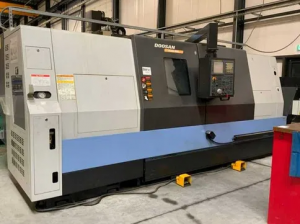
What is a CNC Vertical Double-Side Surface Grinding Machine suitable for soft and hard machining of all common coated (EURO 7) and uncoated car and commercial vehicle brake discs?

Here’s a detailed breakdown of what a CNC Vertical Double-Side Surface Grinding Machine (suitable for soft and hard machining of all common coated (Euro 7) and uncoated car & commercial vehicle brake discs) means, what to look for, and some example machines / suppliers.
What the machine is
In this context you’re looking for a machine that:
- Is CNC controlled (i.e., computer numerical control) so that the grinding process is repeatable, precise, programmable for different disc types (coated/uncoated).
- Has a vertical spindle / orientation or layout (i.e., the grinding wheels are oriented vertically, or the workpiece is vertical) in what is described as “vertical double‐side” configuration.
- “Double‐side” means the machine can grind two surfaces simultaneously (or in one setup) – specifically the two large flat faces of a brake disc (front and rear surfaces) in one clamping or work cycle. This dramatically increases throughput and maintains parallelism and flatness between the two faces.
- Suitable for soft and hard machining of brake discs: this means it can handle uncoated conventional cast-iron discs (relatively “soft” in grinding terms) and hard/coated discs (for example for Euro 7 compliant vehicles, with hard coatings, laser cladding, etc.).
- Specifically for “all common coated (Euro 7) and uncoated car and commercial vehicle brake discs” means the machine should handle a broad range of diameters, thicknesses, material types (cast-iron, coated iron/steel, possibly carbon-ceramic etc) and deliver required surface finish, flatness, DTV (disc thickness variation) tolerances, etc.
What features/specs you should focus on
When you evaluate a machine for this purpose, here are the key parameters and features to ask about / ensure:
1. Workpiece range
- Maximum and minimum outer diameter (OD) of brake disc it can process. Commercial vehicle discs are larger than car discs, so you may need a wide OD range.
- Thickness range – discs vary in thickness; ability to clamp thicker discs is important.
- Possibly hub / bore diameter range if the fixture clamps through the hub.
- Weight of the part (for automated loading/unloading).
- If it supports both coated and uncoated, the machine must accommodate whatever structural/thermal differences coatings bring.
2. Grinding capabilities
- Spindle power of the grinding wheels: higher power is needed when removing harder coatings or high material removal.
- Grinding wheel type: for hard coatings you may need CBN (cubic boron nitride) or diamond abrasive wheels. Some machines specify this. For example one vendor states they support CBN/diamond when grinding certain coatings.
- Double-side simultaneous grinding: wheels on both sides (top & bottom) or two vertical wheels opposite each other so the part is ground on both faces in one clamp. This ensures parallelism and throughput.
- Precision: Flatness tolerance, parallelism, DTV (disc thickness variation) tolerance, surface roughness (Ra). For example a machine aimed at carbon-ceramic discs claims Ra 1.6 µm.
- Good cooling/filtration system: when grinding hard coatings you generate hard particles / heat, so chip removal, coolant flow, filtration are critical. One machine states a “vertical design ensures optimum removal of abrasive hard material particles, which increases service life of machine components”.
- Thermal stability and rigidity: cast‐iron or mineralite base, heavy construction to minimize vibration and maintain precision. The vendor for hard-coated brake discs emphasised a mineralite base and vertical design for thermal stability.
3. Fixture & loading system
- Clamping mechanism: since you’re machining both faces at once, you often clamp the disc by its hub or some fixture and the machine ensures both wheels contact the surfaces.
- Automatic loading/unloading interface if you expect high throughput (for production line). Many brake‐disc manufacturers aim for automation. For example the EMAG machine mentions machine shuttle for automation.
- Quick changeover/fixture flexibility: If you handle different disc geometries (car vs commercial vehicle, different size, different coating), you want the machine to allow rapid change of tooling/fixtures and grinding wheels.
4. Control / programming / automation
- CNC system (Siemens, FANUC, etc) with flexibility to program different disc types.
- Possibly sensor feedback: torque sensing, wheel dressing, automatic balancing. One machine describes a torque sensing grinding head that adjusts feed speed according to remaining material.
- Integration to production line: ability to network, log data, quality control features, etc.
5. Tolerances and quality output
- Flatness and parallelism of both faces (e.g., within 0.02 mm flatness, 0.03 mm parallelism as one machine lists).
- DTV (Disc Thickness Variation) tolerance – very important for brake discs to avoid vibration or pulsation. One spec says peripheral to DTV ≤ 0.008 mm in a machine for carbon-ceramic discs.
- Surface roughness Ra: good finishing is required especially for coated discs where surface finish influences braking behavior.
- Ability to handle the coating without damaging it and within required specs for the finished disc.
6. Coating / hard disc support
Since you mention “coated (Euro 7)” discs:
- Many modern brake discs use coatings/laser cladding to reduce particulate emissions (as per Euro 7 requirements). For example the article about the EMAG VLC 450 DG describes how brake disc manufacturers are increasingly using laser‐clad stainless steel + carbide coatings to meet Euro 7.
- The grinding machine must be capable of removing or finishing these coatings effectively: the vendor of a vertical double disc grinder stated they developed new wheel specs and parameters specifically for coated brake discs.
- So ensure the supplier has experience with coated brake discs, and can supply proper wheel/trimming/dressing strategy for your coating type.
7. Production / cycle time / cost efficiency
- Throughput (minutes per part) must match your production volume. Some machines quote e.g., cycle time 15 minutes per item for certain disc sizes.
- Quick changeover to accommodate different disc sizes/types.
- Maintenance/serviceability, wheel change times, etc.
8. Footprint / service / location / after-sales
- Floor space, weight (some machines weigh many tonnes)
- Availability of regional service / spare parts (important if you are in Türkiye).
- Machine calibration, training for operators, safety & environmental concerns (especially grinding dust, coolant disposal).
Example machines & suppliers
Here are some real world machines that match the “vertical double-side surface grinding” concept for brake discs.
❗ Note: These may need negotiation/customisation for your exact disc sizes/specs (car + commercial vehicle) and coating/uncoated mix.
- EMAG – VLC 450 DG: This is explicitly described as a “double-sided surface grinding machine” developed for the machining of hard coatings of brake discs (Euro 7 compliant). It emphasises vertical design, good chip removal, and high precision.
- Junker – SATURN double disc surface grinding machines: Use two vertical grinding wheels, automatic loading/unloading, designed for grinding brake discs among other parts.
- Yuhuan – Machine “YHMG7776 High-Precision CNC Vertical Double Disc Grinding Machine for carbon-ceramic/carbon-carbon brake discs”. While carbon-ceramic is perhaps beyond typical coated cast-iron discs, this shows the concept. Spec: OD ≤ φ500 mm, thickness 15-60 mm, cycle time 15 min, Ra 1.6µm, etc.
- Hengga – CMFK-DM500 Brake Disc Double-face Grinding Machine: For integrated turning and grinding of brake discs; portal column design, vertical workpiece spindle, double tool holder. Suitable for diameters 100-450 mm (small-to-medium discs) and designed for high production.
Putting it all together: What to specify for your case
Given your requirement (soft + hard machining of all common coated (Euro 7) & uncoated car and commercial vehicle brake discs) you should prepare a specification sheet and ask suppliers for quotes based on:
- Size range:
- Minimum / maximum OD (car & commercial vehicles). For commercial vehicles, discs may be very large (e.g., > 400-500 mm). Ensure machine supports that.
- Minimum / maximum thickness.
- Bore/hub size and fixture interface (car hubs vs heavy trucks).
- Weight of disc (especially for CV discs).
- Part mix: How many uncoated vs coated? What coating types (laser cladding, etc)?
- Material types: Cast iron (typical), optionally carbon-ceramic or other high-hardness coatings.
- Finish requirements: Flatness, parallelism, DTV, Ra, surface structure (cross-hatch or directional grind). State numeric tolerances.
- Cycle time / throughput: How many discs per hour/day do you need? Is it a production line?
- Automation level: Manual vs robot loading/unloading, integrated into line.
- Grinding wheels: Need to handle coated surfaces (CBN/diamond) and conventional surfaces – ask about wheel changeover time, wheel life.
- Cooling/filtration & dust/abrasive particle handling: Especially for hard coatings which may generate more aggressive particles.
- Machine construction and accuracy: Heavy base, vertical orientation, thermal stability. Ask for run-out, positioning accuracy, repeatability.
- Service & spare parts availability in Türkiye/EU: Choosing a supplier/vendor with local support helps.
- Flexibility for future: As coatings evolve (Euro 7, next standards) you may need adaptable machine settings/wheels.
- Cost / ROI: Balance purchase cost vs throughput, wheel life, downtime, maintenance.
- Safety/environment: Dust extraction, coolant management, noise, operator safety.
- Compatibility with your existing cell/line: If you have upstream/downstream operations (cladding, balancing, washing, etc), make sure the grinder integrates into your workflow.
Example “Candidate Machine” (not full quote)
As an example: A machine capable of processing discs up to OD 600 mm, thickness from 20-60 mm, uncoated cast iron or coated steel/disc, double-side vertical grinding, with CBN/diamond wheels for coating removal/finish, CNC control (Siemens/Fanuc), automated loading/unloading, cycle time ~10-15 min for standard car disc; heavier discs maybe longer. Acceptable tolerances: flatness ≤0.02 mm, parallelism ≤0.03 mm, Ra ≤1.6µm, DTV ≤0.01 mm. Machine base heavy cast iron/mineralite, vertical wheel orientation, good coolant/filtration. Interface to robot cell. Spare parts/support in Turkey or EU. This would meet your requirement.