18/10/2025
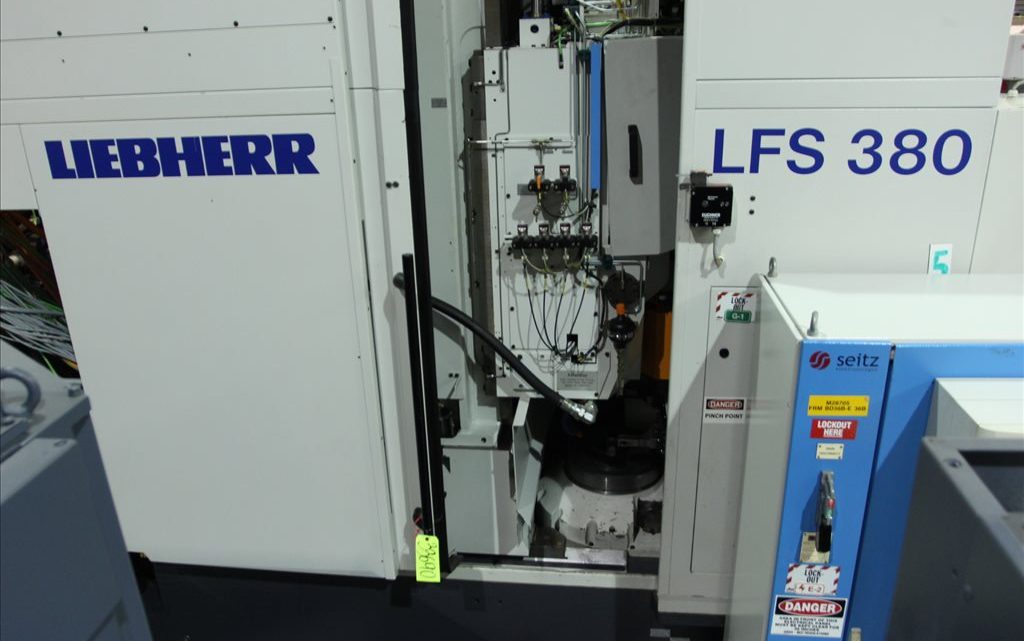
Smart Investment Checklist: Key Factors Before Buying a Pre-Owned, Used, Surplus, Second-Hand LIEBHERR LFS 380 CNC Gear Shaper made in Germany
If you’re considering purchasing a pre-owned/surplus Liebherr LFS 380 CNC gear-shaper made in Germany, here’s a smart investment checklist to help you evaluate the machine properly and avoid common pitfalls. I’ll highlight what to check, what questions to ask, and what risks to mitigate.
Why the LFS 380 is interesting
Before diving into the checklist, a quick reminder of what this machine offers (so you know what you’re buying).
- The LFS 380 is a CNC gear-shaping machine for internal & external gears (and pinions) that has appeared in used-machine listings.
- Example specs: one listing shows maximum gear/workpiece diameter ~ 14.96″ (≈ 380 mm) and center distance up to ~ 17.71″ (≈ 450 mm) for that unit.
- It typically uses a Siemens 840D CNC control (in later models) and has automated features like tailstock, ring loader, tilting column.
- Being made by Liebherr (Germany), build quality tends to be high; spare parts & support may still be available through their gear-technology division.
Given all that, a well-conditioned used LFS 380 can be a strong machine—but only if you do your homework.
Due-Diligence Checklist
Here are the key factors you should inspect, verify, and negotiate before buying. Think of this as your “pre-purchase audit”.
1. Machine specification & suitability
- Confirm model exactness: “LFS 380” (and any suffix/variant) – ensure you’re comparing apples to apples.
- Check capacity: for your gear-making needs, ensure the machine’s maximum workpiece diameter, face width, module (gear size), and stroke/center distance match your parts. For example, one spec: maximum face width ~ 8.26″ and center distance ~17.71″.
- Check module range (size of gear teeth it can cut). If you will produce large module/gears, ensure machine supports it. The LS/series brochure gives ranges for modules and diameters.
- CNC control version: older vs newer (Siemens 840D is good). Ensure control is in good condition and software still supported.
- Automation/loaders: Does machine include loader, ring loader, tailstock, tilting column, etc? These features add value. One listing: “180° ring loader and tailstock” on LFS 380.
- Footprint & weight: Used machines may weigh many tons (one listing ~ 32,000 lbs ~14.5 t) and need heavy equipment for transport.
- Machine origin: Germany, make sure you have full documentation (manuals, wiring diagrams, original drawings).
- Spare parts availability: Though Liebherr is premium, older machines may have components discontinued—check stock of key spares (hydraulics, control boards, etc).
2. Condition & service history
- Ask for operational history: Was the machine used heavily (production 24/7) or lightly (R&D)? A listing said “R&D Facility… manually loaded” which is a favourable sign.
- Inspect under power (if possible): ensure all axes move smoothly, no excessive vibration, no abnormal noise, hydraulic/pneumatic systems leak-free.
- Inspect tooling/spindle/gear head: Check spindle bearings, backlash in gearing, cutter head slide wear.
- Check CNC control: any error logs? Are all axes working? Are all safety features intact?
- Check automation: loader, tailstock, any rotary tables or pallets—are they functioning properly?
- Check cleanliness and chip-management: gear shaping produces chips; if the machine was poorly maintained you may have residual wear from chip accumulation.
- Check for modifications: Has the machine been altered, parts replaced with non-original components, modifications done by previous owner? Ask for documentation on modifications.
- Check for downtime/spares: What is downtime history? Are any spares missing, any known about used parts that need replacement soon (e.g., linear guide rails, ball screws)?
- Alignment check: After transport the machine will need to be re-leveled and aligned; ideally verify last alignment records.
3. Infrastructure, installation & compatibility
- Floor loading: Is your shop floor capable of handling the weight and footprint of the machine-? Reinforced bed? Vibration isolation?
- Utilities: Verify power requirements (voltage, phases, amperage). Example listing: “480 Volt” for LFS 380. Also check cooling water, chip conveyor drainage, mist extraction.
- Layout and installation: Access doors, shipping/rigging, crane capacity for installation.
- Automation integration: If machine has loader or ring loader, check if it fits into your workflow/automation cell.
- Spindle tooling and cutter head tooling: Do you have compatible tooling or need to purchase new?
- Control language/interface: Is the control in a language your operators understand? Are there program libraries available?
- Spare parts supply chain: For a used machine you may need to budget for spares/consumables early.
4. Software, programming & training
- Check CNC software version: Older versions may no longer be supported, making future updates/spares harder.
- Gear-shaping software capabilities: Does it support the helix angles, modules, internal/external gears you need? One brochure mentions capability for tapered gears/helix angles.
- Training: Will supplier or previous owner provide training on how to run, maintain, and program?
- Documentation: Ensure manuals for mechanical, hydraulic, electrical, CNC control, loader system are present.
- Programming libraries: Are there pre-set programs for common gears? This reduces changeover time.
5. Total cost of ownership & risk factors
- Price vs value: Compare cost of machine + transport + installation + setup vs a newer machine or alternative machine.
- Hidden costs: Refurbishment of older machine, replacement of worn parts, control upgrade, automation integration, downtime until operational.
- Obsolescence risk: As machine ages, components may become obsolete (e.g., control boards), which might cause expensive retrofit in future.
- Future demand: Will the machine’s capacity (size, module) cover your future production needs? If you outgrow it, you risk depreciation.
- Machine’s remaining life: How many hours/years of operation remain? Has major overhaul been done?
- Support & spare cost: Premium machines have good build quality, but spares can be expensive and delivery slow for older models.
- Resale value: If you decide to upgrade in future, what is resale market for this model?
- Regulatory compliance: Especially in Turkey/EU, ensure machine meets safety/CE compliance; ensure emissions (coolant mist extraction), noise levels, electrical safety are acceptable.
6. Inspection & test-run checklist
When physically inspecting the machine, here’s a practical list to check:
- Visually inspect overall condition: corrosion, paint, guards, chip removal, coolant tank.
- Power up machine: Check axes movement (X, Y, Z or equivalent), backlash, noises, hydraulic pressure.
- Run a test program (if possible): Cut a sample gear or at least simulate various operations to check performance.
- Measure spindle tool taper accuracy and run-out.
- Check cutter head slide travel and linear guide condition.
- Check tailstock/tail support if present: movement, alignment.
- Check loading/automation: if ring loader or tailstock is included, run its sequence.
- Check CNC control panel: responsiveness, error history, program storage, backup.
- Inspect electrical cupboard: clean wiring, original components, no evidence of overheating.
- Check machine alignment and leveling (if possible).
- Inspect chip conveyor and coolant system, suction/mist collector, filtration.
- Ask about consumables: Are toolholders, cutters, fixtures included? What’s condition of those?
- Check documentation: Date of last preventive maintenance, service records, any repairs/overhauls done.
7. Negotiation & purchase contract tips
- Get a full machine specification sheet from seller (year, serial number, hours, usage history).
- Include clause “subject to inspection under power”—you must see it working before finalizing.
- Verify that all included accessories (loaders, tailstock, ring loader, clamps) are part of sale or list separately.
- Agree on who is responsible for dismantling/transport/installation—often older machines have high relocation costs.
- Include a warranty period if possible (even limited: e.g., 30-60 days after installation) for major items (control, drives).
- Check for original manuals and as-built drawings—missing manuals reduce value.
- Payment terms: use escrow or phased payment (e.g., deposit, payment after inspection) if possible.
- Know the customs/installation issues for Turkey (if you’re importing) or EU. Transport, duties, VAT, installation costs may add significantly.
Summary Table of Risk vs Benefit
| Factor | Benefit | Risk if ignored |
|---|---|---|
| Machine spec match | Machine fits your parts & future needs | You buy machine that cannot handle your work → wasted investment |
| Condition & history | Lower maintenance cost, longer remaining life | Hidden wear, breakdowns, high repair cost |
| Infrastructure fit | Easier installation, faster ROI | Unexpected cost/time for installation, retrofit, poor production start‐up |
| Software & training | Operators productive quickly | You struggle to program machine, high downtime and trained operator shortage |
| Total cost of ownership | Transparent budgeting | You underestimate spares/obsolescence cost → lower ROI |
| Inspection & contract | Clear scope, fewer surprises | You buy a machine and find missing parts/wiring/control later |
Final Advice
- If you find an LFS 380 in excellent condition (low hours, full documentation, good automation, recent control version) for a good price, it can be a strong buy.
- But don’t buy based solely on brand. Build quality is good, but older machines still carry risk of hidden wear, obsolete parts, or large integration costs.
- Set aside a realistic budget for installation + commissioning + initial spare parts—often buyers underestimate this.
- Consider future proofing: Is the machine going to meet your future production needs (gear sizes, modules, automation)?
- Before closing the deal: inspect under power, get all specs confirmed, review service history, evaluate spare parts availability, and ensure you have full rigging/installation plan.