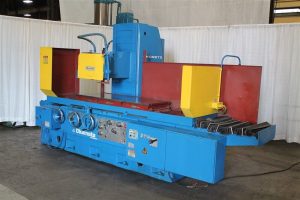
How Smart Engineers Assess a Pre-Owned, Used, Second-Hand, Surplus GER RS-1000 Surface Grinding made in Spain Before Purchase
When evaluating a pre-owned or surplus GER RS-1000 surface grinding machine (manufactured in Spain) before purchase, smart engineers adopt a structured checklist. Below is a detailed due-diligence guide you can tailor for your company/plant.
Preliminary specification check
Before even visiting the machine, verify the following technical and documentation data:
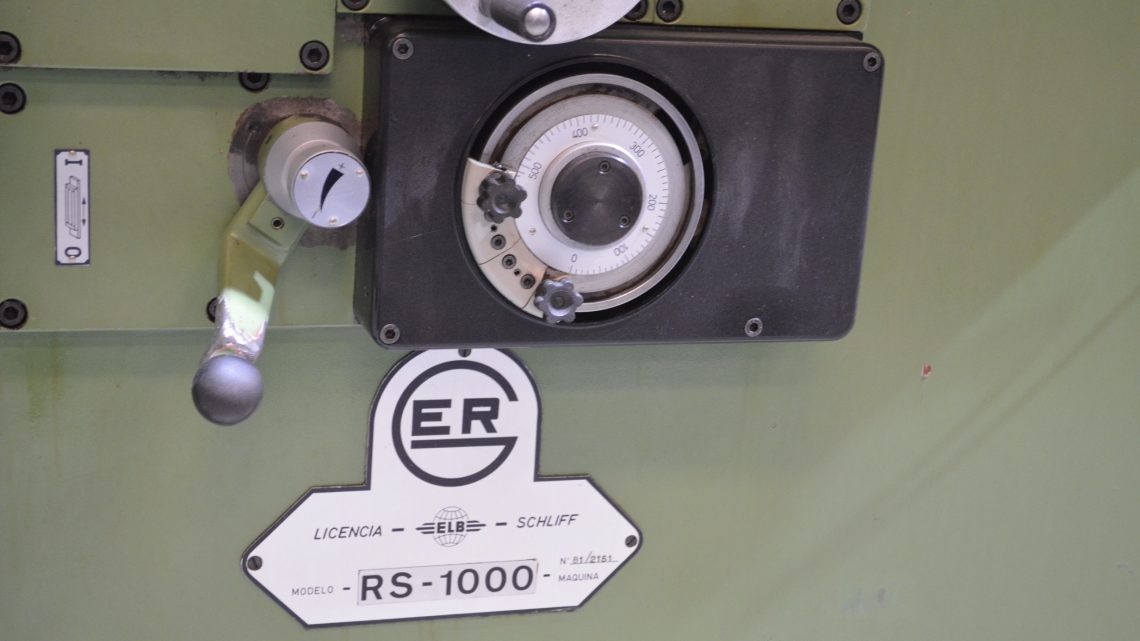
- Confirm the exact model: “RS-1000” — check whether it’s standard RS-1000 or any variant/suffix.
- Compare machine specification vs your needs: for example one spec sheet lists for RS-1000: table size ~ 1,000 × 500 × 425 mm, distance from table to wheel centre ~ 625mm, table speed 2-20 m/min, wheel size 400×80×127mm, 9 kW head motor, machine weight ~ 4,300 kg.
- Check if magnetic chuck is included (some listings show RS-1000 “equipped with magnetic plate 600×300 mm”)
- Ask for serial number, year of manufacture, factory location, maintenance records.
- Check that the machine has capacity (table size, travel, wheel size, motor power) to handle your parts (size, weight, finish) and future needs.
- Check the environment of prior use: was it used in heavy production, tool-room, or occasional use? That affects wear and remaining life.
On-site inspection & condition assessment
During your visit, bring relevant measuring tools (surface plate, precision level, feeler gauges, dial indicators) and walk through these inspection items. Many machinists suggest similar checks when evaluating used grinders.
Mechanical & structural
- Ways / table travel: With the table moving, observe for uneven motion, “chatter” or vibration. Use a precision level or straight-edge on the table to see if the table remains flat across travel. Wear in the ways may show as curvature or wobble.
- Spindle / wheel head: Run the spindle (if possible) and listen for bearing noise, check for excessive run-out or wobble on the grinding wheel mount.
- Wheel size / condition: Check the wheel dimension (diameter, width, bore) – e.g., 400×80×127mm spec for RS-1000. Ensure wheel hub mounting is in good condition, guarding is intact, wheel nut area clean.
- Table flatness & magnetic chuck: If a mag-plate is present, verify its condition and surface flatness. Ensure the chuck surface is not pitted, uneven or heavily repaired.
- Clearances & travel limits: Check travel in X/Y/Z (or equivalent) – maximum cross movement, vertical travel, table to wheel centre height (625mm in one spec)
- Hydraulics / lubrication / coolants: For hydraulic feed or automatic table, check for leaks, clean oil, correct pressure, smooth operation. Poor lubrication often indicates heavy wear.
- Frame & base: Visually inspect the machine base, check for cracks, rust, distortion, or signs of re-work.
Functional & operational
- Test-run: If possible, ask the seller to perform a grinding run with coolant, a test piece. Then measure finish, flatness and repeatability. Machinist forums suggest grinding a sample piece and verifying flatness or thickness variation.
- Surface finish / accuracy: On the output of the test, check for edge rounding, inconsistent finish, chatter marks. A good used grinder should produce acceptable flat surfaces with minimal rework.
- Electrical & control system: Inspect electrical panel, wiring, condition (no frayed wires, burned components). For any CNC or feed-automation, check controller interface, test runs, back-ups.
- Wear parts & maintenance history: Ask for history of major wear items (ways scraped, spindle rebuilt, magnet chuck serviced). A clean service log is strong.
- Accessories & tooling: Verify included accessories (wheel dresser, fixtures, mag-chuck controls, guards etc). Missing accessories may increase hidden cost.
Documentation & support
- Ensure you receive the original or current manuals (mechanical, hydraulic, electrical).
- Ask about spare parts availability for this model. Since RS-1000 is older, parts for hydraulics, controls or bearing/ways may be harder to source.
- Verify the seller is authorized or experienced with used machines and can provide references.
- Check compliance with safety / CE / local standards (especially important for import/use in Turkey / EU).
Pre-Purchase Checklist Summary
Here is a checklist you can tick off:
- Specification match: table size, travel, wheel size, motor power, capacity for your parts ✅
- Documentation: serial number, year, maintenance history, operations log ✅
- Visual condition: paths, ways, spindle, table, frame, hydraulic systems ✅
- Functional test: run machine, check table motion, spindle, feeds, output quality ✅
- Accuracy test: measure flatness of table, check repeatability, run test part if possible ✅
- Electrical/control check: wiring, control panel, interface, safety guards ✅
- Accessories: confirm included mag-chuck, dresser, tooling, guards, fixtures ✅
- Parts & support: verify availability of critical spares, vendor support for RS-1000 ✅
- Installation/footprint: check required floor loading, power requirements, removed machine transport costs ✅
- Contract terms: condition “as-is”, inspection allowed, any warranty/return clause for used machine ✅
Risk factors & negotiation points
- If the ways show significant wear (curvature, table sag) then bringing the machine up to precision may require major re-scraping or rebuild => negotiate price down.
- If the seller cannot demonstrate a test‐run or provide recent accuracy readings, treat as higher risk.
- Older hydraulic controls, electrical components or PC/U-controller boards may need replacement soon => build this into cost.
- The footprint/weight: transport, rigging, foundation, re-installation costs in Turkey or your plant may be high.
- Age of machine vs remaining life: even if working now, major refurbishment may be required soon – build this into total cost.
- Technology obsolescence: If you need certain automation or digital controls, and the RS-1000 lacks them, you may incur upgrade cost or be limited in future production flexibility.
- Hidden costs: Wheel re-dressers, fixtures, accessories may be missing or worn; include cost in negotiation.
- Service support: If the machine has been idle a long time, mechanical/hydraulic seals may have degraded.
Final recommendation
If everything checks out (good condition, accurate travels, strong service history, full documentation, suitable for your application) then the RS-1000 can be a solid used machine investment. But if you find major wear in ways/spindle, missing documentation, unclear maintenance history or required refurbishment, then cost savings may be offset by downtime and upgrade cost.
Before signing purchase, I strongly recommend:
- Getting a written condition report with measured values (flatness of table, run-out of spindle, travel accuracy).
- Including in the contract a right to inspect under power or conditional offer pending inspection.
- Budgeting a refurbishment allowance (for wear parts, installation, calibration) especially for used machines.