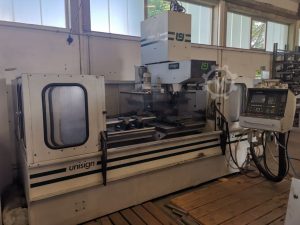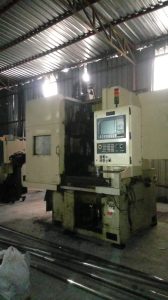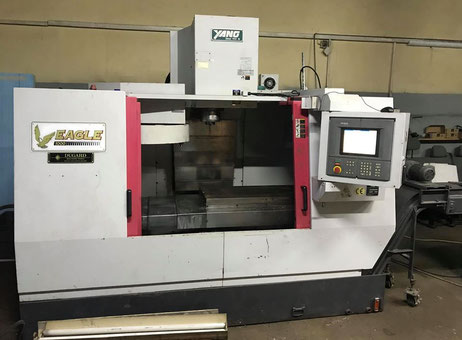
What Industry Experts Recommend Before Purchasing a Pre-Owned / Second-Hand / used Yang Eagle SMV 1000?
Here are detailed recommendations and what experts suggest you inspect before buying a pre-used Yang Eagle SMV-1000 vertical machining center. I lay out its known specs first (so you know what to compare against), then what to check in detail (common weak spots, typical faults), followed by a practical checklist.
Known Specs & What It Typically Offers
These are capabilities you should expect, to spot anything that’s not matching, or any exaggeration by the seller. Based on listings:
| Spec | Typical / Example Values |
|---|---|
| X-travel ≈ 1,000-1,020 mm | |
| Y-travel ≈ 510-514 mm | |
| Z-travel ≈ 510-515 mm | |
| Table size / clamping area ~1,070 × 500 mm or approx that, with ~250-350 kg load depending on application / central / max loading. | |
| Spindle taper: BT40 / SK40 in many listings. | |
| Spindle speed: often ~6,000-8,000 rpm in many machines. Some listings show up to 6,000; others 8,000. | |
| Tool magazine / ATC: many have 16-20 tool stations/pockets. | |
| Control: Fanuc O-MD is typical in many of the ones offered. | |
| Approx weight: ~4-4.2 tons / 4,000-4,200 kg in many descriptions. |
Knowing these helps you verify that what you are being offered is consistent, and also helps you understand what kind of machine/mold/tool sizes you can work with.
Common Issues & Weaknesses
From user forums and machine-sales descriptions, there are recurring issues, parts that tend to wear out, and things which often cause problems. Experts recommend you pay special attention to these.
| Issue / Weak Spot | What to Inspect / Ask About | Why It Matters |
|---|---|---|
| Automatic Tool Changer (ATC) / Magazine problems | Check that the tool magazine works reliably: that tools can be picked and loaded, that the magazine doesn’t get stuck between pots, that sensors work, that the tool change cycle completes properly. Inspect the mechanism & sensors. Check parameter settings (e.g. certain Fanuc parameters like diagnostic counters) to ensure alignment between magazine pot numbering and control logic. | The ATC is often a source of downtime in older machines. If sensors are out, or if switches/optics are degraded, tool change might fail or cause errors. Fixing these can be expensive or difficult with older parts. |
| Spindle & Bearings | Run the spindle at different speeds; listen for noise, vibration. Check for run-out of the taper. Inspect coolant-through function (if applicable). Ask if spindle bearings have been replaced, records of maintenance. Heat build up during long cuts. | The spindle is probably the most expensive part to repair or replace. Bearing wear can degrade precision and surface finish, increase tolerances, cause scrap. |
| Axes, Guideways, Backlash | Move each axis through full travel; check for smoothness, binding, stiffness. Measure backlash. Inspect linear ways or box ways for wear, rust, scoring. Check whether lubrication is up to date and working (way lubrication, slide lubrication). Check alignment (squareness) of axes. | Worn ways or screws degrade accuracy and repeatability. If guides are worn or misaligned, even if the machine is powerful, you’ll get poor quality, faster wear, possible scrapping, poor surface finish. |
| Control / Electronics | The Fanuc O-MD control should be in good shape; verify there are no logged persistent faults. Check wiring, enclosure for signs of water damage, heat damage. See whether manuals / backup programs are available. Check sensor / plate / encoder functionality. | Older control units have parts that may no longer be stocked; finding a replacement or repair could be costly or delayed. Malfunctions here can render machine unusable even if mechanical parts are fine. |
| Coolant / Chip Management / Auxiliary Systems | Cooling system: coolant tank, pumps, filters, flow. Check for contamination. Test any internal cooling to tool or spindle if applicable. Check the chip conveyor or chip tank for damage or inefficiency. Any dust, chips accumulation in undesirable places. Inspect lubrication system. | Poor cooling or coolant quality accelerates tool wear, affects thermal stability; improper chip management can damage guideways or cause overheating. |
| Wear & Tear & Usage History | Number of hours / machine usages, duration and conditions of usage. Were large, heavy cuts common? What kind of material was machined (abrasive materials increase wear). Was the environment clean/dusty/humid/temperature-controlled? Maintenance history: oil changes, filter changes, bearing replacements etc. | A machine heavily used under harsh conditions will typically require more refurbishment, parts replacement. Knowing the history helps you price accordingly. |
| Accuracy / Test Cuts | Make sample cuts for geometry accuracy, finishing accuracy under real load. Check repeatability. Surface finish under finishing passes. Verify table flatness, that there is no wobble or deflection in workholding. Warm the machine up and test; thermal drift matters. | Even if everything looks good statically, performance under load and after warm-up matters. A machine that can’t hold tolerances or drifts with heat will waste material/time. |
| Physical Condition and Structure | Inspect the frame, column, table, castings for any cracks, welded repairs, distortions. Check table face for damage. Inspect covers, guards, ways, fill lubricators, way covers. Check door and guard safety devices. | Structural damage might be hidden or poorly repaired. Distortions reduce precision. Safety equipment not working is risky and may fail regulatory inspections. |
| Power, Voltage, Environment Compatibility | Make sure the power supply matches your facility (voltage, phase, amperage). Also cooling water, compressed air, exhaust/chip removal. Floor load capacity. Machine weight & dimensions – shipping and installation costs. Environmental conditions like temperature swings, humidity, dust. | If power is not compatible, you’ll spend money modifying installations. Poor environment reduces machine life. Transport/installation costs can add up. |
| Spare Parts & Support | Are spare parts for the Fanuc control, sensors, ATC, spindle etc readily available (regionally)? Are manuals / parts list available? Is there local service / OEM or third-party support? Also check for replacement tool holders, spindle repairs, magazine parts etc. | When something fails, repair time & part cost can make or break the ROI on a used machine. If a key part is “rare”, you may pay dearly or wait long. |
Red Flags
These are warning signs that something may be wrong or that the seller is hiding something. If you see them, either get the price significantly reduced or strongly reconsider.
- Seller refuses to let you run the machine under power and/or make test cuts.
- Spindle runs roughly, or there is vibration / noise that seems unusual.
- ATC fails or shows alarms frequently, or is partially non-functional.
- Heavy rust, smoke, burned smells, oil mixing with coolant or vice versa.
- Missing maintenance records, unknown history, no hours info.
- Poor supporting infrastructure (e.g. no manuals, no drawings, missing guards or safety interlocks).
- Misaligned axes, excessive backlash, sloppy motion.
- Frame or table repaired/welded (unless properly supervised) or distorted.
- Spindle taper damage or wear.
- Operation temperature instability or excessive thermal drift.
- Control panel or electronics enclosure damaged by moisture or heat.
Practical On-Site Checklist
Here’s a checklist you can bring to an inspection or use when talking to the seller, so you don’t miss something important.
| Item | What to Do / Observe |
|---|---|
| Model, Year, Serial No. | Confirm the exact model, serial number; see if the dataplate matches what the seller claims. |
| Hours / Usage Data | Ask for machine hours / spindle hours; check if meter matches sellers’ statements. |
| Maintenance Records | Oil changes, spindle bearings, way lubrication, ATC maintenance, coolant replacement. |
| Visual Inspection | Frame, castings, table, ways, covers, guards. Look for damage, rust, repair signs. |
| Spindle Test | Run empty spindle at various speeds; listen/feel for noise/vibration; check run-out, taper condition. |
| Axis Movement | Move axes through full travel; check for smoothness, binding, backlash. Check lubrication. |
| Tool Changer / Magazine | Cycle ATC; load several tools; check accuracy; magazine movement; sensors; alarms. |
| Control Panel & Electronics | Open panel; inspect wiring; smell; signs of burnt parts; cleanliness; environmental damage. Check logs/fault history. |
| Coolant & Lubrication Systems | Check coolant: clarity, contamination; flow; pump tools; internal coolant through tool if applicable. Lubrication of slides / ways. |
| Test Cut / Sample Piece | Do a machining operation similar to what you will use; check precision, surface finish, thermal drift. |
| Utilities & Installation | Power requirements; space; floor loading; need for crane, pallet etc. Transport costs. |
| Manuals / Documentation | User & maintenance manuals; parts catalogues; control manuals. |
| Spare Parts Availability | Check if parts are available locally or with reasonable shipping; cost of frequent wear parts. |
| Price vs Condition | Based on above, compare with other used machines; adjust offer price accordingly. |
| Warranty / As-Is Terms | What guarantee is offered, if any; what “as is” means; what happens if after start-up you find faults. |