22/09/2025
What Industry Experts Recommend Before Purchasing a Pre-Owned / Second-Hand / used HURON KX 15?
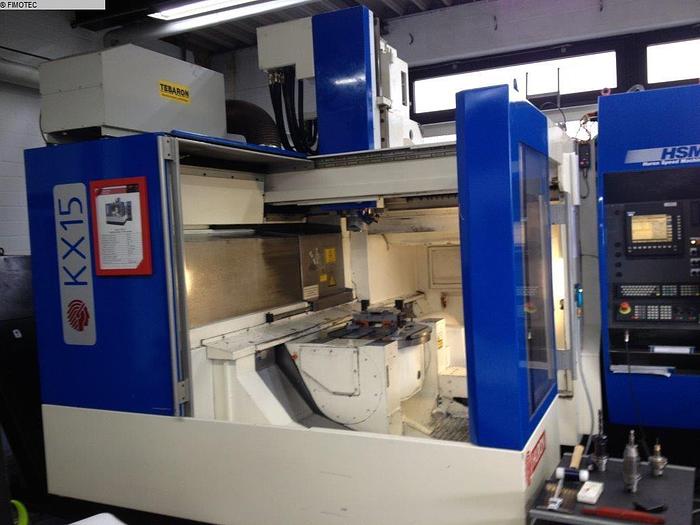
If you’re considering buying a used Huron KX-15 (a 5-axis vertical machining center), industry experts suggest doing a deep inspection in many areas. Below is a detailed guide / checklist of what to verify, what issues are common, and what specs to confirm.
Key Specs / What the Huron KX-15 Is Supposed to Offer
From various listings, typical specifications for the Huron KX-15 include:
| Spec | Common Values |
|---|---|
| X-travel ~800 mm | |
| Y-travel ~1000 mm | |
| Z-travel ~550 mm | |
| Spindle speed: varies; some up to 18,000 rpm; others 24,000 rpm in certain builds | |
| Spindle taper: often HSK-63-A; sometimes ISO or SK variants depending on version | |
| B-axis tilt: +20° / −100°; C-axis 360° | |
| Tool magazine: 20-60 tools depending on version, automatic tool changer | |
| Coolant / internal coolant feed, often high pressure (≈40 bar) | |
| Workpiece load capacity ≈500 kg on ro-tilting table (or similar) |
Knowing these lets you compare what’s being offered vs what you need.
What to Check / Inspect Before Buying
Here are expert-recommended inspection points specific to a complex 5-axis CNC machine like the KX-15, plus general used machinery criteria.
| Area | What to Check | Why It Matters / Common Issues |
|---|---|---|
| Machine History & Documentation | • Year of manufacture; hours/spindle hours; usage history (type of material, volume, shifts). • Maintenance and service records: especially spindle rebuilds, tool changer maintenance, calibration, backlash correction. • Any past accidents, crashes especially in B or C axis, collisions of tool with part or table. • Original owner or multiple relocations (transport can cause misalignments, damage). | Machines with heavy usage or frequent crashes/safety interlocks triggered often will have hidden damage. Rebuilding spindle or electronics is expensive. |
| Spindle & Bearings | • Run spindle at full speed; listen for noise, vibration, rise in temperature. • Check for run-out / spindle taper condition. • Inspect whether spindle rebuilds have taken place; what was done. • Internal coolant through spindle: is it working, seal condition, leakage. • Bearings: radial / axial play. | Spindle is probably the most critical and costly component. Bearing failure or misalignment degrades accuracy hugely. Coolant seals leak over time, affecting seal and bearings. |
| Axes & Guide Ways / Ballscrews | • Check travel in each axis; ensure full travel without binding. • Check backlash in each axis; also any looseness in B-axis, C-axis. • Inspect guide ways (linear or box ways), look for wear, scoring, rust. • Ballscrews: inspect nut wear; check for noise / slop under load. • Check leveling & squareness; test tramming. • Inspect tilt and rotation axes for alignment, backlash, and accurate positioning. | Worn way surfaces/bearing surfaces reduce precision, lead to bad finish, inaccurate complex parts. 5-axis makes alignment more critical. |
| Tool Changer / Magazine | • Tool magazine condition; tool holders; check for wear or misfit. • Cycle the tool changer; test swapping speed, repeatability, any misgrips. • Check if the magazine has been modified or repaired; check robot or auto-tool change interface. | A failing or slow tool changer slows production & causes errors when new tools are misaligned. Replacement parts are costly. |
| Control System / Electronics | • What CNC control is fitted (Siemens 840D Powerline is common) ‒ check firmware version, any error logs. • All sensors, limit switches, wiring, encoders; check if any have been replaced, mis-calibrated. • Electrical panel: condition, cleanliness, signs of overheating or water damage. • Software / parametric calibration: check if backlash / compensation data is correct. • Safety systems / interlocks. | Control errors, drift, bad signals lead to scrap, unsafe operations. Older controls may have unsupported parts. |
| Cooling / Hydraulic / Pneumatic / Auxiliary Systems | • Coolant-through-spindle system: pressure, leaks, seals. • Coolant tank condition: cleanliness, pump performance, filters. • Lubrication system: automatic lubrication of axes, whether it’s working properly. • Hydraulic or pneumatic systems for axis clamping (if any), chip conveyors. • Chip removal: chip conveyor condition, doors, guards. • Air conditioning or ambient cooling if required (for electronics, spindle). | Poor cooling leads to thermal drift; dirty coolant leads to damage; worn lubrication causes premature wear; chip build-up can scratch surfaces, damage tools. |
| Accuracy / Test Cuts | • Make a test part, preferably a challenging machining job (multi-axis, finishing cuts) to see how well the machine holds tolerance. • Measure position repeatability, surface finish. • Check that the B and C axes return to the same position accurately. • Under load: increasing cutting forces can reveal weakness or flex. • Thermal drift: let machine warm up and check whether dimensions drift. | Many machines look OK when idle; but under load or after warm-up latent problems (flexing, backlash, component stretch) appear. |
| Structure / Frame / Mechanical Integrity | • Check table face/rotating table for flatness, damage, repaired or welded parts. • Frame / column for cracks, distortion; support structures. • Check condition of bolts, fixtures on table, misalignment of rotary table. • Inspect tilt/rotary axis bearings/joints for wear or slop. • Check base and foundation requirements; vibration or stability. | Structural damage or deformation is hard/expensive to correct; rotary/tilting axis misalignment degrades 5-axis capability. |
| Power, Utilities & Physical Setup | • Electrical requirements: voltage, phase, amperage; check compatibility with your facility. • Hydraulic or coolant water requirements; air pressure, filters. • Floor space needed; clearance around machine; lifting/transport to site. • Foundation or base requirements; anchoring; stability; vibrations. • Environmental conditions: cleanliness, temperature, humidity; particularly for electronics. • Spare parts availability (spindle, control components, B/C axis parts, tool holders). | If you don’t have the right power or infrastructure, additional cost to retrofit. Some parts may be difficult or expensive to import. |
| Price / Warranty / Support | • Compare multiple machines to know what market price is for similar condition/specs. • What warranties or guarantees come, if any (for example spindle, control). • What support is available locally or via supplier; cost and lead time for parts. • What shipping / installation / alignment cost will be. • What modifications or upgrades may be needed (e.g. newer control, safety, coolant system). | Hidden costs often come from installation, calibration, unplanned repairs. Knowing them in advance helps you budget. |
| Red Flags / Warning Signs | • Buyer claims “just painted” or looks clean but doesn’t let you see under covers. • Spindle hours missing, no usage history. • Inconsistent or vague answers about maintenance. • Smell of burning, loud noise. • Drift in readings, or swarf / chips that are irregular (which can indicate tool holder or spindle problems). • Worn or mismatched tool holders. • Cracks or weld patches in the structure or rotary table. | If you get any of these, they could foreshadow expensive issues. |
Practical Checklist to Use On-Site / Before Purchase
Here’s a condensed checklist you can bring when you go inspect in person.
- Confirm model & serial number; verify specs (spindle RPM, travel, axis capabilities, tool magazine).
- Ask for full usage history (hours, spindle hours), maintenance logs, rebuilds.
- Run spindle empty → listen for noise, vibration; then run under moderate load.
- Cycle all axes fully; check for smooth movement, sticking, binding.
- Test B & C axis: tilt & rotate; check backlash, repeatability.
- Check coolant-through spindle: flow, pressure, leakage.
- Look over electrical cabinet: open panels, check wiring, smell, clean of dust, signs of overheating.
- Check lubrication systems & filters. Open the coolant tank & see if it’s clean.
- Make a test cut / sample part; measure precision and surface finish.
- Inspect rotary/tilting table: table surface, clamping, alignment, run-out.
- Inspect tool changer: tool holders fit well, swapping is smooth.
- Check utilities: power, air, coolant, floor space.
- Ask about spare parts: lead times, cost.
- Check price vs condition differences (how many hours, how many rebuilds).
- Negotiate any repairs / calibration needed before purchase, or get discount.