22/09/2025
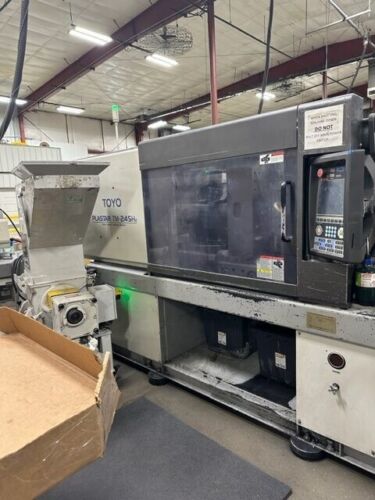
What Industry Experts Recommend Before Purchasing a Pre-Owned / Second-Hand / used Toyo TM-245H2?
Here are many of the key things that industry experts recommend you check before purchasing a pre-owned / second-hand Toyo TM-245H2 injection molding machine. Some are general used-machinery inspections; others are more specific to this model and its class.
What is the Toyo TM-245H2 — key basics
To put the checks in context, here are some spec “anchors” (what you typically expect):
- 245 ton clamp force.
- Shot size ~20.8 oz.
- Tie bar spacing ~24.02″ × 24.02″; platen size ~32.28″ × 32.28″; clamp stroke ~20.47″.
- Control system: Toyo’s PLCS-11.
Knowing these helps to assess wear vs expected use, and makes verifying seller claims easier.
What to check / inspect closely
Here are expert-recommended aspects to verify, grouped by categories:
| Category | What to check & why |
|---|---|
| General condition and history | • Age & usage hours: How many hours has the machine run? What was the duty cycle (light, heavy)? High hours under heavy use increase chances of component wear. • Usage / application history: What kind of materials, molds, cycles was it doing? (High temperature resins, corrosive materials, fast cycling etc.) • Service / maintenance history: Are there records? Regular maintenance (hydraulic oil, heater bands, cooling, safety, etc) matters. • Environment: Was it used in a clean dry factory or in rough dusty/humid environment? That affects condition. |
| Mechanical & structural components | • Clamping unit (platen / tie bars / platen alignment): Check for twist, warp, scoring, or damage on platens. Tie bars should be straight, nuts and ends in good shape. • Hydraulic system: Pumps, valves, hoses, seals, cylinders. Look for leaks, seepage, slow response under load, noises, and overheating. Shot unit / Injection unit: Barrel wear (look for pitting, corrosion, excessive wear), screw condition, check for degraded heater bands, thermocouples. • Clamping stroke & safety interlocks: Ensure safety devices work (door lock, safety guards etc); clamp opens/closes fully without problems. • Core pull, knock-out mechanisms, mold mounting: If equipped, check these operate smoothly and without misalignment. |
| Electrical / Control / Automation / Interface | • Controller (PLCS-11 in many units): Check if it’s functioning well, any error logs, replacement/repair history. • Sensors, limit switches, thermocouples, heat control: Are they accurate? Do they drift or fail? • Servo motors / drives: If the machine has electric components (servo / all-electric versions, or motors for movement), check motor health, cables, connectors. • Robot interface / automation: If included, test communication, wiring, alignment. • Power supply compatibility: Voltage, phases (3-phase), quality, any issues with spikes / stability. |
| Hydraulic / Cooling / Auxiliary systems | • Hydraulic oil condition: colour, contamination, smell. Look for signs of water ingress or thermal damage. • Coolant / cooling system: Check cooling pumps, heat exchangers, filters. Overheating history is destructive. • Clamps / tie-bar lubrication: These large machines need good lubrication on moving parts. • Temperature control (barrel heaters, platen heaters) – ability to reach required setpoints, stability. |
| Performance under test / running condition | • Run it under power / test cycle: If possible, do a trial mold / test a run under real load. • Cycle time, consistency, stability: Heat up times, injection consistency, shot size accuracy, repeatability. • Noise, vibration, smoke: Unusual noise or vibrations can indicate wear or misalignment. • Warm-up behaviour: Sometimes faults show up only when machine is hot. • Startup behaviour: How it starts cold; ease of startup; any delays or misfires. |
| Wear / replacement parts availability & cost | • Screw/barrel replacement: These are wear parts; find out cost and lead time. • Controller / electronics spares: Older models might have obsolete parts. • Hydraulic seal kits, valve spools, heaters, etc: How easy/hard are they to get; cost and shipping. • Mold compatibility: The machine’s platen dimensions, tie-bar spacing etc must match your molds or those you intend to use. |
| Operational cost & Localization | • Power consumption: Older hydraulic machines tend to be less efficient. Estimate ongoing electricity (or hydraulic oil) usage. • Potential modifications needed: If local voltage, safety standards, environmental regulations differ, what retrofits needed? • Transportation / installation / foundation: This machine is heavy (~23,000 lbs or more), needs proper foundation, power, crane, installation. • Spare parts, service support locally: Are there Toyo / third-party service centres in your area? How fast can spares be delivered? |
| Documentation & legal / warranties | • Serial #, model #, specification plate: Confirm identity with paperwork to avoid surprises. • User / maintenance manuals: Helpful for future maintenance, troubleshooting. • Warranty or “as is” condition: Most used machines are “as is” — clarify returns or guarantees. • Safety / regulatory compliance: Does machine meet current safety / local regulatory codes? Guards, emergency stops etc. |
Specific red flags for a Toyo TM-245H2
Here are some issues or warning signs specific to this model, or seen commonly in machines of its size & age:
- Platen warpage during long clamping phases or high clamp force — check platen flatness.
- Tie bar & clamp wear (thermal distortion, scoring) especially in older machines or where molds are large or heavy.
- Worn screw or barrel due to abrasive materials — may need early replacement.
- Heater bands and thermocouple failures — drift over time.
- Hydraulic oil contamination / breakdown; leaking seals in hydraulic cylinders.
- Control unit (PLCS-11) reliability; older firmware or parts may be less supported.
- Issues in mold mounting plate area: damaged bolt holes, misalignment due to crash or improper mold insertion.
Checklist you can use on site
Here’s a condensed checklist you can bring with you:
- Check serial number / dataplate & verify model / year.
- Ask for and review maintenance / service records.
- Visually inspect machine (platens, tie bars, guards, frame) for wear, damage, corrosion.
- Run the machine (cold start). Listen for unusual sounds, check control responses.
- Heat up & run a test cycle; verify shot size, consistency, temperature stability.
- Inspect hydraulic system for leaks, hose condition, oil quality.
- Inspect electrical / sensors / automation interfaces.
- Verify auxiliary systems (cooling, safety devices, core pull, robot / interface if present).
- Check parts availability & ask supplier for estimates on key parts (screw, barrel, heaters).
- Check infrastructure needed locally (power, foundation, lifting, shipping).