What Industry Experts Recommend Before Purchasing a Pre-Owned / Second-Hand / used Makino V55-A25?
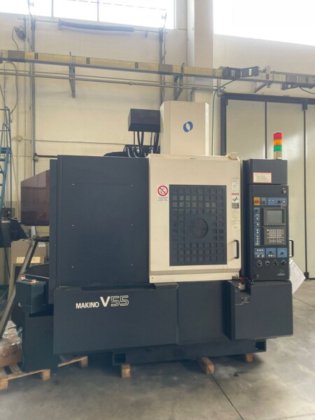
Here’s a detailed guide (based on what machine tool experts recommend) for inspecting a Makino V55-A25 vertical machining centre before buying used. I’ve included specs, common weak spots, and a checklist so you know what to look for & what to demand from the seller.
What the Makino V55-A25 Is / Key Specs to Know
These are typical specs for the Makino V55-A25 so you can compare what you’re being offered with what you should expect. They help you spot exaggeration or omitted problems.
| Spec | Typical / Advertised |
|---|---|
| X-travel (longitudinal) ~ 35.4 in (≈ 900 mm) | |
| Y-travel ~ 19.7 in (≈ 500 mm) | |
| Z-travel ~ 17.7 in (≈ 450 mm) | |
| Table size ~ 39.4 in × 16.5 in (≈ 1000 × 420-500 mm depending on version) | |
| Maximum table load ~ 1,500-1,540 lbs (≈ 680-700 kg) | |
| Spindle speed up to 20,000 RPM in many versions, often with thru-spindle coolant (TSC) | |
| Spindle taper: HSK-63A in many versions (some may have alternatives or adaptors) | |
| Tool changer: ~25 tools / stations | |
| Rapid traverse / cutting feed: high-rapids (≈ 1,900-2,000 ipm ≈ 48-50 m/min in X,Y axes) in advertised listings |
What Experts Recommend Checking / Inspecting Closely
Based on what is known about the V55-A25 and common failure/wear modes in high-speed vertical machining centres, here are what to look for:
- Spindle Condition & Through-Spindle Coolant (TSC)
- Run the spindle at various speeds (low, middle, high). Listen for noise, vibration. Excessive heat is a red flag.
- Check whether TSC works properly (flow, pressure). Leaks or degraded seals will hurt tool life & finish.
- Inspect the draw-bar or collet mechanism (if applicable). Check clamp/unclamp smoothness and force.
- Axis Guides, Ball Screws & Accuracy
- Move each axis through full travel. Feel for binding, uneven motion, “stiction” or jerkiness.
- Measure backlash in ball screws. Compare to manufacturer tolerances.
- If the machine has optical or linear scales, check their functionality; inspect for missing pieces / misalignment.
- Inspect guideway surfaces (linear rails or box ways) for scoring, pitting, corrosion, misalignment.
- Control System & Electronics
- Which control is fitted (e.g., Fanuc, Makino’s “Professional 3” etc.), and how well maintained. Check for version, firmware, error logs.
- Inspect electrical cabinets: wiring in good shape, no burn marks, clean, cooled properly.
- Check sensors, limit switches, encoders, all feedback devices are working and calibrated.
- Check safety features & interlocks.
- Tool Changer / Magazine
- Cycle through the ATC / magazine. Load heavy tools. Ensure all pockets work, indexing is accurate.
- Inspect for wear in pockets, sensors, mechanical parts of the changer.
- Check tool holding consistency (does each tool seat properly, is there run-out?).
- Coolant / Chip Management / Auxiliary Systems
- Condition of coolant: filtered, clean, not contaminated. Tanks, filters, lines, pumps.
- Chip conveyor (if fitted): works smoothly, no blockages, guards and doors in place.
- Lubrication system for axes / ways: check that lube is flowing, supply lines working, no blockages, proper replenishment.
- Frame, Table, Structure
- Table flatness; check for any damage to table surface, mounting holes, clamps etc.
- Spindle taper face: look for damage or wear where tools mount.
- Column structure: any cracks, welds, major corrosion, repairs.
- Leveling: verify the machine was leveled; mis-level can cause accuracy drift.
- Performance Test / Test Cuts
- Make actual test parts if possible; especially finishing passes, to check surface finish, accuracy, chatter.
- Run the machine warm (after 15-30 minutes) and cold; see if readings drift or parts go out of tolerance.
- Machine History
- Number of hours, spindle hours if separately metered.
- Maintenance records: when bearings replaced, when screws or guides serviced, frequency of coolant replacement, etc.
- What materials have been machined (abrasive or hard materials increase wear).
- Power, Utilities, Environment
- Power requirements: voltage/phase/amperage; ensure your facility can support them.
- Cooling water, air (if compressed air or filtered air needed), quality of supply.
- Environment: dust, humidity, temperature control. These affect electronics and guide wear.
- Spare Parts & Support
- Availability of parts: bearings, spindle seals, way covers, electrical parts etc.
- Manuals, parts catalogues, control backup, program backups.
- Does Makino or third-party service have support in your region?
Red Flags / Warning Signs to Seriously Consider
If you encounter any of the following, either negotiate hard, require repair by the seller, or walk away:
- Spindle vibration / noise that’s more than “normal”, especially at high rpm.
- TSC not working or leaks; sealing damage.
- Axis binding, inconsistent motion, pronounced backlash.
- Linear scale or encoder failure (or missing).
- Control has recurring faults; old firmware with no possibility of upgrade.
- Table or spindle face damage; worn or damaged tool-holders, thick burrs, rust.
- Coolant heavily contaminated, poor filtration, smell of mildew / bad chemical balance.
- Tool changer missing pockets, misalignment, failing sensors.
- Missing manuals, lack of maintenance records.
- Frame welds/repairs that look significant (could affect rigidity and accuracy).
- Electrical panel signs of overheating or water ingress.
Practical On-Site / Pre-Purchase Checklist
Here’s a distilled actionable checklist you can bring with you when inspecting a Makino V55-A25 (or ask the seller to provide info/photos):
| Item | What to Check / Ask |
|---|---|
| Model & Serial No. | Confirm exact model, serial number, build date, versions/options installed (e.g. TSC, scales, ATC size etc.). |
| Travel vs Spec | Physically (or via control) move full X, Y, Z to check full travel matches spec. |
| Spindle Test | Run at different rpms; check vibration/noise; test drawbar or tool clamping; TSC flow/pressure. |
| Axis Movement & Accuracy | Check backlash; guideway wear; if possible, use test gauge or dial indicator to check straightness, flatness. |
| Tool Changer | Test operation; load heavy & light tools; ensure all pockets available; check indexing & accuracy. |
| Coolant / Lubrication / Auxiliary | Inspect tank cleanliness; coolant clarity; pump/flow. Lubrication system: greasing / oil, filters. Chip removal. |
| Control & Electronics | Open panels; check wiring; error/fault log; sensor condition; backup programs present; control version. |
| Structure & Table | Table surface flatness; damage; spindle taper face; check for any welds or repairs; check leveling. |
| Test Cut | Machining sample similar to what you’ll be doing; checking finish & tolerance; warm-up drift. |
| Machine History & Logging | Hours; spindle hours; past rebuilds; what maintenance has been done; what replacement parts already used. |
| Power & Utilities | Voltage/phase; power draw; coolant/air requirements; plumbing; facility suitability. |
| Spare Parts & Documentation | Manuals; parts lists; chat with local Makino service; cost/availability of wear parts. |
| Price Comparison | Compare price with similar machines in similar condition; include costs of transport, set-up, alignment, possible repairs. |
| Warranty / Condition Guarantee | Insist on “as-is” terms; see if anything is guaranteed; possible return or refund if major faults discovered after purchase. |