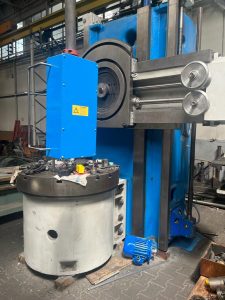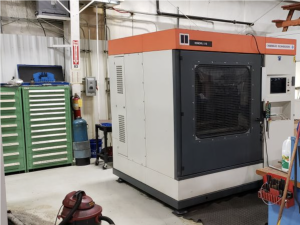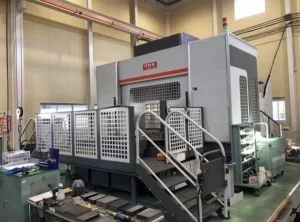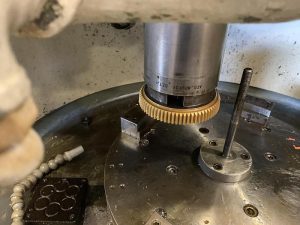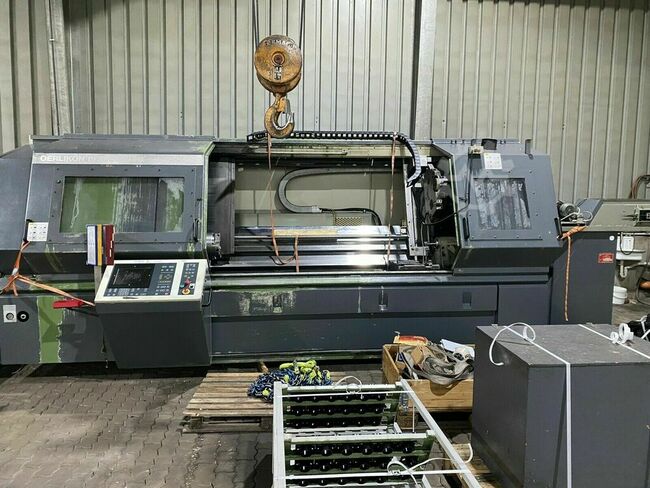
What Industry Experts Recommend Before Purchasing a Pre-Owned / Second-Hand / used VDF Boehringer 250C-U DL2000?
If you’re looking at a used / pre-owned VDF Böhringer 250C-U / DL2000 lathe, industry experts recommend doing a very thorough inspection and verification. These machines are large, powerful, and can deliver excellent performance—but there are many potential issues, especially with wear, service history, and control/electrical systems. Below is a detailed checklist of what to check, what red-flags to watch for, and things to ask the seller.
Key Specifications / What to Know up Front
To know if a machine is close to spec, compare what you see vs what it should offer. For the VDF Böhringer 250C-U (and comparable “250” class models), some published data:
| Spec | Typical / Known Values |
|---|---|
| Max Turning Diameter over bed | ~ 420 mm |
| X-axis travel (cross slide) | ~ 370-405 mm |
| Z-axis travel / distance between centers | Up to ~ 2,000-2,176 mm depending on variant |
| Spindle bore | ~ 78 mm |
| Max spindle speed | ~ 2,800-3,550 rpm in many listings |
| Turret tool-stations | 12 positions is common, of which several may be driven/live tools in some variants |
| Quill / tailstock features | Quill diameter ≈ 100 mm, stroke ~ 100 mm in many examples |
| Approx. Machine Size / Weight | Length ~7,300 mm, Width ~3,000-3,100 mm, Height ~2,250 mm; ~13,000-14,000 kg depending on variant & included fixtures. |
Use these as benchmarks. Some machines may have fewer features or lower spec (e.g. older variant, less powerful motors, fewer driven tools), but large deviations usually mean either heavy wear or modifications.
What to Inspect / Check Before Purchase
Here is a detailed checklist that experts recommend you go through. Wherever possible, bring tooling, measurement instruments, and someone who knows this type of machine.
Mechanical & Structural Checks
- Bed and Ways
- Inspect the bed ways for wear: look for scoring, pitting, rust, gouging.
- Check the alignment and straightness over the full Z travel (between centers). Warped or sagging beds degrade tolerances for long parts.
- Check cross slide / X‐axis ways similarly for wear.
- Spindle, Headstock & Bearings
- Run spindle at various speeds; listen for noise or vibration.
- Check for radial run-out and axial (end) play using test bars. Even small amounts of play degrade finish accuracy.
- Examine the bore (through-hole) of the spindle – if it’s used for bar work, check that it’s clean and round, no wear or damage inside.
- Look for signs of overheating, discolouration, or seal leaks.
- Turret / Tool Holder System
- Verify the turret indexes cleanly and accurately. No wobble or mis-alignment when switching tools.
- Check quality and condition of toolholders. If there are driven tools (live tools), those motors and their bearings must be tested.
- Check if turret clamping is solid, locking is secure.
- Tailstock / Quill (if present)
- Inspect tailstock alignment—especially in long bed lathes—to the spindle centerline.
- Quill stroke & diameter, condition of taper, any wear or looseness.
- Axes Travel & Motion
- Move X & Z axes through full travel, both directions; check for smoothness, no binding or sudden changes in resistance.
- Check for backlash: command movements in +X then −X (or +Z then −Z), measure discrepancy.
- Test feed / rapid traverse performance.
- Coolant / Lubrication Systems
- Are coolant pumps working? Is coolant clean, properly filtered, no sludge?
- Lubrication: ways, ballscrews / lead screws (if applicable), spindle bearings. Is automatic lubrication functioning?
- Check for leaks—hydraulic, coolant, oil.
- Control / Electrical / Electronics
- What CNC control is installed (Philips, Siemens, or other)? Is it fully functional (screen, input panel, emergency stops, limit switches)?
- Electrical panel: wiring condition, signs of past overheating, moisture, corrosion.
- Servo drives, motor condition: run under load to detect overheating, vibration, or drift.
- Accuracy & Test Cuts
- If possible, make a test part similar to what you’ll be producing. Check finish, dimensions, roundness, surface finish.
- Run warm-up: operate machine for some time then recheck some dimensions; see if drift has occurred.
- Check readings vs actual: programmed travel vs actual, tool changes, etc.
- Accessories, Tooling, Fixtures
- What is included: chucks, steady rest, follow rest, special toolholders, work supports?
- Are they in good condition, free from excessive wear, matching specifications needed for your work?
- Physical Condition
- Visual check: rust, surface corrosion, damage.
- Check way covers, guards, chip management (chip conveyor if fitted).
- Check foundation, floor mounting—machine shouldn’t be loose or poorly supported.
Red Flags / Warning Signs
These are things that, if present, can turn a “good deal” into a costly headache:
- Spindle bearing noise, excessive heat, axial or radial play beyond acceptable tolerances.
- Worn or damaged spindle bore (if used), deteriorated taper; if worn, it can cause vibration, poor finish, increased scrap.
- Significant wear on bed ways or slideways (deep scoring, corrosion) particularly near chuck or places that see heavy loading.
- Tool turret misindexing, loose locks, slipping.
- Control / electrical system issues: intermittent errors, display glitches, failed inputs, old or obsolete controls for which spares are hard to get.
- Coolant / lubrication neglect: dirty or contaminated coolant; lubrication points dry or stained; leaks.
- Poor maintenance or missing service records.
- Missing or worn accessories, tool holders, fixtures that are expensive to replace.
- Machine moved often, or poorly installed / leveled—this can lead to alignment issues.
Questions to Ask the Seller
To get more insight, these are useful questions:
- What is the year of manufacture, exact model (i.e. 250C-U DL2000), and serial number?
- What is the control system installed (Philips, Siemens, others)? Is there a backup of configuration / programs? Are spares still available?
- How many hours has the spindle run? What kinds of materials have been machined (hard steel, stainless, etc.)?
- What maintenance / service history exists (bearings replaced, ways reconditioned, turret rebuilds, etc.)?
- Has the spindle ever been rebuilt or serviced? Any history of damage, overheating?
- Has the machine been idle? If yes, how was it stored?
- What tooling, chucks, steady/follow rests, fixtures are included and in what condition?
- Can you see the machine running under load? Can sample parts be made?
- Are all safety devices present and functional (guards, barriers, emergency stop, limit switches, etc.)?
- Are there any known faults: alignment problems, vibration at certain speeds, control errors, accuracy drift, etc.?
Economic / Logistic Considerations
- Transport, rigging, installation cost will be significant: large size & weight (~13-14 tonnes, long bed, big footprint) means you need proper equipment for moving, foundation, alignment.
- Power supply & electrical installation: make sure you have capacity, correct voltage / phase, cooling, possibly upgraded panels if the control is old.
- Spares & parts cost: check local availability of spare parts for this model (bearings, control boards, tool holders, etc.).
- Refurbishment cost: depending on your inspection, you may need to budget for spindle servicing, way resurfacing or scraping, refurbishing the turret, recertification/calibration.
- Tooling & fixture costs (if not included) could be substantial.
- Expected ROI: given the machine’s condition, what throughput and scrap rate will you realistically get? Will it meet your tolerance and production needs?