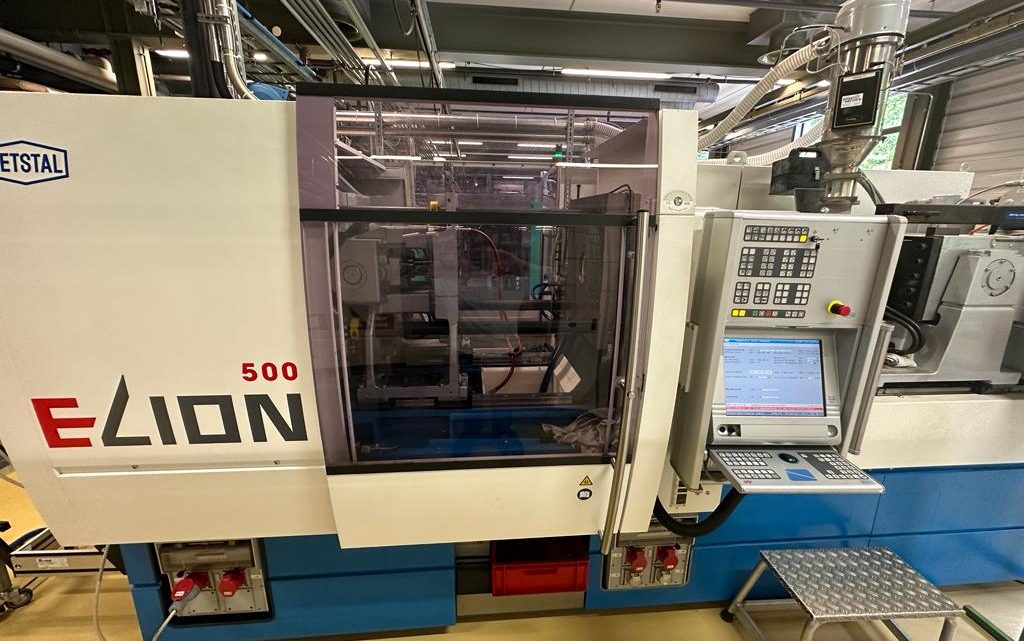
What Industry Experts Recommend Before Purchasing a Pre-Owned / Second-Hand / used NETSTAL ELION 500-60 Electric Injection Moulding Machine?
Before purchasing a pre-owned / used NETSTAL ELION 500-60 electric injection moulding machine, industry experts advise a very detailed inspection and evaluation. Electric machines like the Elion series have many advantages (energy efficiency, speed, precision) but also particular risks (electrical/electronic wear, servo systems, etc.). Below are:
- Key known specs / baseline for the Elion 500-60
- A thorough checklist of what to inspect & test
- Common red flags
- Questions to ask the seller
- Logistical / financial / operational considerations
Known Specs & Baseline for NETSTAL ELION 500-60
From published sources, these are the main parameters for the Elion 500-60 (or close variants) to compare against what you see in the used machine.
| Spec | Approximate Value |
|---|---|
| Clamping force | 50 tons (~ 500-60 refers to this class) |
| Screw Diameter | ~ 18 mm |
| Injection volume / stroke / shot weight | ~ 25.4 cm³, shot weight ~24.4 g (material like PS) |
| Injection pressure | ~ 2,350 bar |
| Screw L/D ratio | about 21-22 (varies slightly in different sources) |
| Opening stroke / platen & tie-bars / platen size etc. | Opening stroke ~ 310 mm; tie-bar spacing ~ 360 × 360 mm; platen size ~ 550 × 540 mm vertically / horizontally for clamping platen. |
| Dimensions / Footprint / Weight | Dimensions approx 4.355 m × 1.66 m × 2.042 m; machine weight ~ 6.2 tonnes (≈6,200 kg) in many listings. |
These should act as benchmarks: the used machine may deviate somewhat due to wear/modifications, but big deviations mean hidden costs.
What to Inspect & Test (Detailed Checklist)
When evaluating a used ELION 500-60, an expert would go through all these items:
- Electrical & Control Systems
- Condition of the servo motors / drive units: check for unusual noises, overheating, vibration. Electric machines rely heavily on these; motor failures are expensive.
- Condition of control panel / CNC electronics / PLCs / touchscreens: screens should work, no flicker, buttons responsive. Also check firmware / software version and whether updates are available.
- Wiring, connectors, sensors: look for loose connections, frayed wires, signs of overheating, prior repairs.
- Safety interlocks, emergency stop functions: must all work reliably.
- Injection Unit
- Screw & barrel wear: inspect the barrel for scoring, wear, corrosion; test that screw rotates cleanly, check for backlash or play.
- Heating zones / thermocouples: check whether all heating elements are functioning; verify temperature uniformity. Broken or uneven heaters can drastically affect quality.
- Plasticizing ability: test with your material, see whether melting is uniform; check for signs of overheating, burned material.
- Nozzle contact / alignment: check nozzle sealing, alignment, heating of nozzle, any leaks.
- Clamping / Platen / Clamping Unit
- Check that the clamping force is still close to spec under test (if possible). Clamps should hold mould closed tightly without slipping or deflection.
- Inspect the platen surfaces for flatness, damage or corrosion.
- Check tie-bars / guides: are they straight, without play? Any bending, damage or excessive wear.
- Opening/closing mechanism: is it smooth, audible squeaks or vibrations?
- Cycle & Dynamic Performance
- Test actual cycle times for your typical mould/shot; an “electric” machine like the Elion often claims fast cycles — see if that holds under load.
- Check injection speed, pressure, holding pressure, cooling times, etc. under load.
- Ejector/unit movement: check speed, force, smoothness.
- Utilities & Ancillaries
- Power supply: ensure the facility has correct voltage, phase, capacity, that connections are clean and sufficient.
- Cooling / water / chiller (if required): verify that water cooling or chiller systems are functioning, temperature stable.
- Hydraulic / pneumatic units (if any auxiliary uses these) — check for leaks, seals, pressure stability.
- Wear Parts, Mould Interface & Quality
- Inspect mould mounting plates: für Verschraubung, prix / wear etc.
- Ejector pins or mechanisms: are they still precise, not worn or bent.
- Test part quality: mould a test shot, inspect for defects (voids, burn marks, surface finish, flash, warpage).
- Maintenance History & Records
- How many hours / shots has the machine done?
- Records of preventative maintenance: especially of the injection unit, screw/barrel, heaters, drives/servo motors.
- Any previous breakdowns, repairs or parts replaced (motors, electronics, plattens etc.)
- Physical Condition
- General cleanliness: corrosion, rust, chip accumulation, cleanliness of barrel and injection area.
- Structure / frame: any signs of physical damage, repairs, distortions.
- Guards, safety shields: are they present and in good condition?
Common Red Flags
You’ll want to watch out for these warning signs:
- Electric servo / drive units malfunctioning or replaced non-OEM without documentation.
- Barrel or screw strongly worn: large wear leads to degraded plasticization, inconsistent shot weight, increased scrap.
- Heating/chamber issues: zones not heating, broken thermocouples, fluctuating temperatures.
- Clamping unit with slipping or inability to hold mould tightly; platen misalignment.
- Cycle times much slower than spec; machine sluggish under load.
- Leakages: electrical components exposed to moisture, coolant leaks, water ingress.
- Control software or electronic control boards obsolete or difficult to source; missing backups or manuals.
- Parts of the machine idle or unused for long periods leading to deterioration.
Questions to Ask the Seller
To get more detailed info, these are useful:
- What is the year of manufacture and serial number? Has the machine been retrofitted or upgraded (electrical, drives, software)?
- How many hours / shots has it run, especially on your intended material?
- What preventative maintenance has been done? When was the screw or barrel last serviced / replaced? What about heaters, sensors, safety systems?
- Has the injection unit ever been rebuilt, or has clamping unit been reconditioned?
- Are there moulded parts samples available made in recent time (so you can see current part quality)?
- Are all original manuals, wiring diagrams, software backups, spare parts lists available?
- What is the status of the electrical components / servo drives: any known issues, heat damage, replacement parts availability?
- Are utilities (power, cooling water, temperature control) in good order?
- What accessories / tooling are included / match with your moulds (e.g. mould plates, ejectors)?
- Has the machine ever been idle / stored in less than ideal conditions?
Logistical / Economic / Operational Considerations
- Installation / transport costs: being an all-electric machine, expects precise installation, power supply, likely heavier upfront cost for rigging and alignment.
- Power / electrical demands: ensure facility can meet requirements; check for harmonics / surge protection etc.
- Spare parts availability and cost: Electric drives, servo motors, heater zones, control boards. OEM parts might be expensive and lead time significant.
- Energy consumption & operating cost: Electric machines tend to be more efficient, but if components are older or degraded, efficiency may drop.
- Mould compatibility: Will your existing moulds / parts be compatible with the platen, clamp area, shot size etc.?
- Lifecycle: Estimate how many years of useful service remain, given wear, maintenance, and parts obsolescence.