23/09/2025
What Industry Experts Recommend Before Purchasing a Pre-Owned / Second-Hand / used Pedersen USL Universal Tool Grinding Machine?
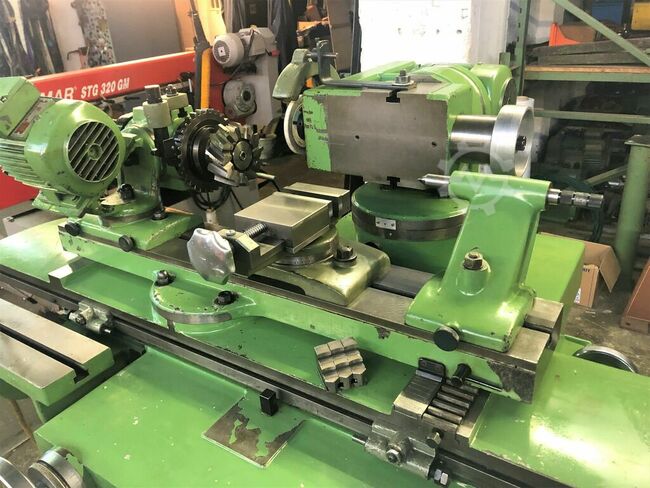
When buying a used / pre-owned conventional (manual) tool grinding machine, like a Pedersen USL or similar, industry experts advise a thorough evaluation. It’s not just about whether it looks good — many functional, mechanical, safety, and precision issues can lurk. Below is a detailed list of what to inspect, test, and ask for — plus red flags and tips for negotiating.
What Experts Recommend Checking
Here are critical areas to evaluate:
| Category | What to Check | Why It Matters / What to Look For |
|---|---|---|
| General Condition & History | • Usage history / duty cycle: how hard it’s been used, what materials / sizes have been ground. • Maintenance records: oiling, bearings changed, wheel dressing, alignment done. • Ownership / location: a machine that’s sat idle in damp environment is more likely to have rust, seized parts. Visual inspection of the exterior — rust, paint condition, missing guards, loose or bent parts. | Helps assess how much work / cost will be needed to bring it to reliable service; indicates remaining useful life. |
| Precision, Alignment & Geometrics | • Spindle run-out: check how true the spindle rotates (with indicator). • Way wear / slide travel straightness: see if table, bed, saddle moves smoothly without binding; check for dips or wear on ways. Flatness of table / chuck surfaces: whether they can produce flat surfaces as required. Parallelism / squareness of relevant parts (head, wheel relative to table). Test grind parts (flat plate, known blocks) and measure. | Grinding accuracy depends heavily on spindle integrity and way condition. Worn ways or bad bearings lead to poor surface finish, lack of dimensional accuracy, vibration / chatter. |
| Spindle & Bearings | • Check for bearing noise (while running, both cold and after warming up). • Inspect for vibration / excessive heat at spindle during operation. • Check tool holding mechanism (collets, chuck, adapters) for wear. Lubrication of spindle / shaft; are there oil / grease fittings? Can the spindle maintain speed / RPM under load? | Bad bearings are expensive and critical; they degrade performance, can damage parts, reduce life. |
| Mechanical Structure & Motion | • Smooth motion of all axes (longitudinal, cross, vertical feeds) without backlash, overt play, or jerky motion. Feed mechanisms, leadscrews, gears, nuts: check for wear, backlash. Bed and slide lubrication: are oil channels/ways functional? Check for rust, scoring. Coolant / grinding fluid system: Does it work? Is it clean, well-maintained? Wheel dressing / truing mechanisms operate properly. | If motion is sloppy, feeds inconsistent, or cooling is poor, you’re likely to have bad grind results or shortened wheel / part life. |
| Controls, Safety & Electrical Systems | • All electrical systems (motor, switches, wiring) should be in safe, good working order. • Emergency stop, guards, covers should be present and functional. • Wheel guard, work rest, spark guards must meet safety specs. Power supply compatibility, and whether machine has been modified. Safety features: e.g. protection from wheel bursting, proper shielding. | For safe operations, legal compliance, and to avoid costly rewiring or retrofitting unsafe machines. |
| Accessories / Tooling & Parts Availability | • Tool holders, collets, grinding wheels, dressing tools that match the machine. • Spare parts: belts, bearings, slides, screws, nuts. • Manuals (operator, parts), drawings if available. • Whether replacement wheels and consumables are still available / standard. | If accessory / spare parts are obsolete or difficult to get, maintenance becomes costly or infeasible. Having necessary tooling is essential to use the machine without big extra expense. |
| Performance / Test Runs | • Run under load if possible. Test with actual parts you expect to use. • Look for chatter, vibration, heat, smoke, unusual noises. • Measure output (flatness, finish, dimensional accuracy). • Check wheel balance, levelness of the machine on the floor. • Let machine run for some time: do motors stay cool, do lubricants behave, electrical current stable. | A machine might appear good static, but issues often emerge under use; performance test reveals many hidden problems. |
| Cost & Total Investment | • The listing price + cost to transport, set up, adjust / repair. • Cost of expected wear items (wheels, belts, coolant, parts). • Downtime cost: how long will you be unable to use it until you fix any discovered issues. • Consider resale or residual value: how rare or common is the machine, how desirable. • Warranty / return policy if buying via dealer. | Helps decide whether used is really cheaper vs new or refurbished. Hidden costs often make a used machine expensive. |
Red Flags / What to Be Wary Of
Here are warning signs (things that often lead to regret):
- Spindle looseness or excessive run-out; unrepairable spindle damage is very costly.
- Severely worn or grooved ways, especially if the cost to recondition (scraping, replacing slide members) is high.
- Signs of overheating: burnt paint, discolored metal, smells; overheated bearings or motor.
- Obvious rust or neglected lubrication; pitted slide surfaces.
- Modified machines (e.g. non-standard parts fitted, altered alignment, removed guards) without documentation.
- Missing safety features.
- Parts / consumables that are obsolete or difficult / expensive to source.
- Machines that have been misused (heavy duty beyond capacity), or used in environments with corrosive coolant or chips / grit that may have damaged ways / bearings.
Questions to Ask the Seller
Before purchase or inspection, these questions help you judge risk:
- How many hours has the machine been used, and what kind of load (how often full loads, how frequently used)?
- What materials have you mostly ground (steel, carbide, tool steels etc.)? (Because different materials wear wheels and bearings differently.)
- What maintenance has been done: spindle overhauls, lubrication, wheel balancing / dressing, way surfacing, alignment checks?
- Any history of breakdowns or major repairs (e.g. spindle replaced, bed repaired)?
- Are there any known defects / things that need replacement now?
- What tooling / accessories are included? (Wheel flanges, work rest supports, tool/honing attachments.)
- Are parts / wheels / consumables still available?
- Can I see it under power and run a test grind? (Preferably using a sample part similar to what I will use.)
Acceptable Levels Depending on Use
Your tolerance for wear / inaccuracy depends on how you will use the grinder:
- Fine toolroom / precision work: small tolerances, flatness, finish. You’ll want minimal wear, excellent spindle, near-factory alignment.
- General tool grinding / rough work or occasional use: you can accept more wear, more refurbishment, slower speeds; but be clear what trade-offs you accept.
- Heavy production: durability, noise, throughput, consumables cost become more important.
Checking Under Power & Practical Tests
When you can see the machine operating or test it, do these:
- Let it warm up and listen for unusual sounds in the spindle / bearings.
- Run the table travel full length; check for peaks & dips with a level or precision test indicator.
- Make a few test grinds: grind a flat surface and measure for flatness; grind parallel surfaces, check finish and dimension.
- Move cross-feed, vertical feed — smoothness, backlash, stick-slip.
- Use coolant if applicable; see how clean the coolant system is, whether coolant reaches the grinding zone effectively.
- Check electrical draw or motor behavior (if possible): any signs of overload or motor strain.
What Experts Suggest for Negotiation / Decision
- Use documentation of defects / wear to negotiate price down. If you find ways are worn or spindle bearings noisy, get quotes for repairs and subtract those from your offer.
- Ask seller to include necessary consumables or tooling in the price.
- If machine requires rebuilding / alignment, get estimates locally so you know total cost of getting machine into shape.
- If possible, buy from a seller who offers some short-term guarantee or return window.