What Industry Experts Recommend Before Purchasing a Pre-Owned / Second-Hand / used Nagel SCD 80 Centerless Superfinisher?
If you’re considering purchasing a used / second-hand Nagel SCD-80 Centerless Superfinisher, there are many technical, operational, and economic factors that industry experts recommend carefully checking. Below is a detailed checklist & advice to help you evaluate the machine, anticipate potential issues, and decide whether it’s a good investment.
What the Nagel SCD-80 Offers (as baseline for comparison)
First, understand what the machine is supposed to do and its nominal specs, so when you inspect a used one you can see how far it deviates from ideal:
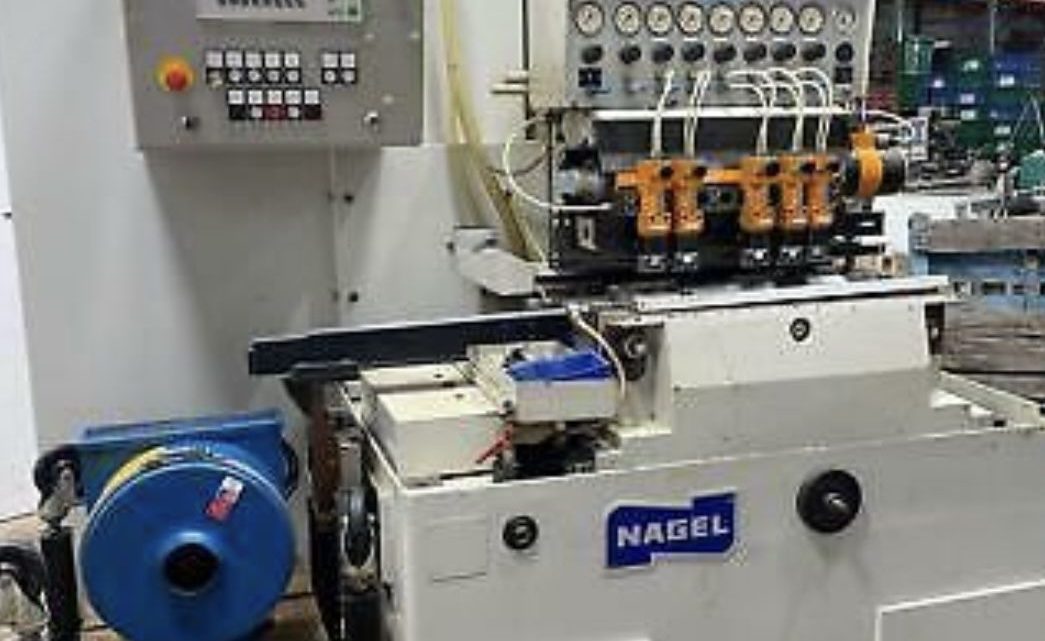
- It’s a through-feed centerless superfinisher. Good for cylindrical round parts: bearings, shafts, pins.
- For SCD-80, workpiece diameter range approx 1.5 mm to 80 mm (≈ 0.059″-3.15″) for standard models.
- Feed rate, circumferential speed, oscillation amplitude/frequency, number of heads, pneumatic & hydraulic/pneumatic systems are part of the performance envelope.
Thus the used machine should be compared against its original performance specs, and whether components have degraded or been replaced.
Checklist Before Purchase (Industry Experts’ Priorities)
Here are what specialists (used machinery dealers, superfinishing process engineers, maintenance experts) typically evaluate and recommend you verify:
- General Condition & History
- Usage history: total hours of operation (ideally for different subsystems: superfinishing heads, feeding mechanism, oscillation system).
- Maintenance records: schedule of past maintenance, replacements/repairs of major parts (hone stones, rolls, pneumatic system, oil & coolant changes).
- Environment where machine was run: clean vs dirty shop; ambient conditions; how well it’s been kept (dust, humidity, temperature).
- Mechanical Wear & Alignment
- Superfinishing heads: check for wear in the hone stones, seats, guides. Are they still capable of achieving original surface finish & flatness/roundness?
- Thru-feed rolls / work supports / guides: check for wear, surface condition, grip, diameter (rolls wear down).
- Bearings, shafts, spindles: sound, backlash, vibration. Even small misalignments degrade finish.
- Frame & structure: check for any distortion, sagging, weld repairs, cracks. A warped base or alignment issue can ruin precision.
- Dynamic & Oscillation Systems
- Pneumatic oscillation: check the frequency, amplitude, condition of valves, seals, actuators. A decline here can reduce finish quality.
- Any auxiliary mechanical oscillation (if equipped): moving parts, cams, belts, motors – check for wear, vibration, smoothness.
- Feed rate controls & accuracy: motors, drives, metering mechanisms must still perform within spec.
- Hydraulic, Pneumatic, Air & Coolant Systems
- Air supply: cleanliness, moisture, pressure stability. Corrosion, oil contamination, leaks will degrade operation.
- Hydraulic / pneumatic actuation: check for leaks, tired seals, responsiveness.
- Coolant system / filtration & mist collectors: whether still functioning; clogged filters, degraded coolant, or dry/inefficient mist extraction all can affect finish and parts life.
- Electrical & Control Systems
- Control hardware & software: whether original or upgraded; how easy to find parts and support; condition of wiring, panels.
- Sensors, safety interlocks: are all safety features functional? Are sensors accurate?
- Power requirements: make sure voltage/frequency matches your facility; check if transformer/modifications are needed.
- Spare Parts Availability & Cost
- Some parts (hone stones, rolls, seals) will wear regularly—check their availability, cost, lead time. If discontinued, this can make upkeep expensive or slow.
- Are there third-party suppliers, remanufacturers, or is everything OEM?
- Performance Testing
- Try a trial run with sample parts similar to what you will process: check surface finish (Ra, Rz etc.), roundness, straightness, throughput.
- Measure actual feed rates, finish speeds, oscillation amplitude/frequency under load.
- Check for consistency, repeatability.
- Safety & Compliance
- Are guarding, shields, emergency stops, etc., in place and functioning?
- If you are in Europe/Türkiye, do the electrical components comply with CE / TÜV or relevant local safety and emissions (mist, coolant disposal) standards?
- Economic / Operational Considerations
- Transport & installation costs: the machine is heavy, large; moving, rigging, foundation, alignment may cost significantly.
- Floor space & utilities: needed power, compressed air, floor mounting, exhaust/mist collection etc.
- Return on investment: compare current condition vs cost of refurbishment/new purchase. Sometimes a slightly more expensive used but near-new machine can save you in operating cost.
- Seller Credibility & Documentation
- Get serial number & model details; confirm they match documentation and parts availability.
- Ask for original manual(s), parts list, calibration certificates (if any).
- Warranty or guarantee if possible (even limited) from seller or refurbisher.
Common Pitfalls & Red Flags
These are items people frequently miss, which later cost more:
- Hidden wear on rolls / guides that do not show obvious damage but cause parts to drift or chatter.
- Air or coolant system contamination: rust or sludge inside plumbing that is expensive to clean.
- Oscillation system drift: seals, bearings in the oscillatory mechanism degraded, leading to inconsistent finish.
- Obsolete or custom-made electrical/control parts that are hard to replace.
- Underreported issues: e.g. the machine was idle for long periods without lubrication, which can damage bearings.
- Incorrect upgrades or modifications: sometimes used machines have been modified; those modifications might be poorly done, compromising performance or safety.
Specifics for the Nagel SCD-80
Apply all of the above but also check features specific to Nagel SCD:
- Verify that oscillation amplitude & frequency match what Nagel specifies for the SCD-80 (e.g. both pneumatic and optional mechanical oscillation, if equipped). If previous owner didn’t maintain pneumatic oscillation system well, performance drops sharply.
- Number of superfinish heads installed—if fewer than original, throughput may be less. Extra heads may have been removed or parts cannibalized.
- Check that the thru-feed rolls are correct variants for the diameter you intend to use and are in good condition.
- Make sure the broken-stone detection and automatic load/unload options (if installed) are working—if not, they can be costly to repair and reduce productivity.