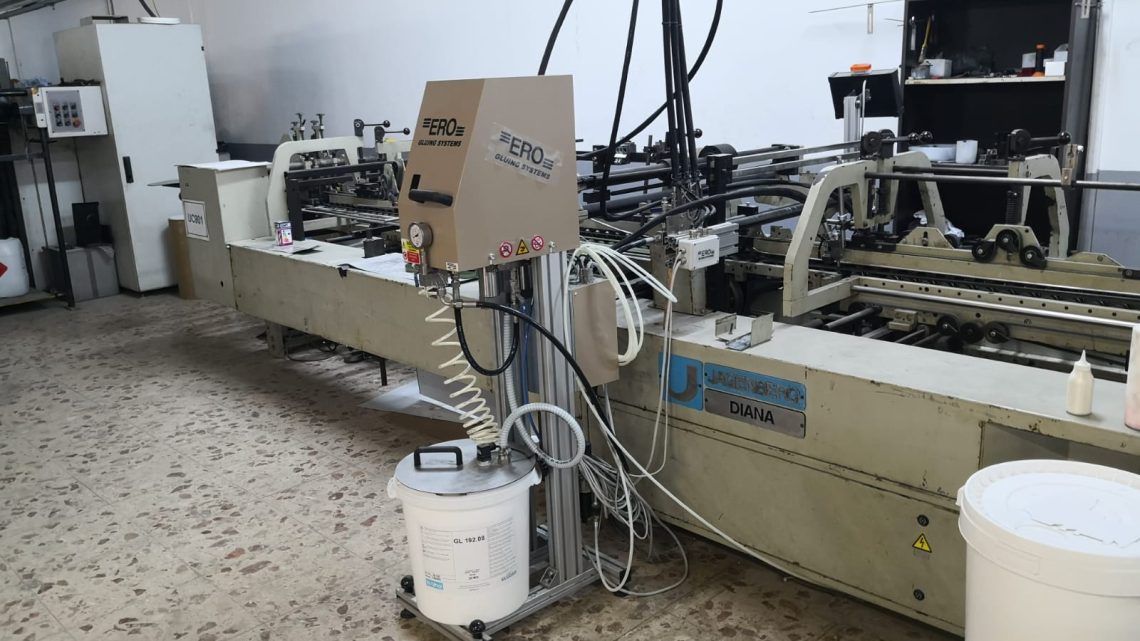
What Industry Experts Recommend Before Purchasing a Pre-Owned / Second-Hand / used Jagenberg Diana 90?
Here’s a detailed guide—drawn from what people who deal in post-press / folder-gluer machines (especially older Jagenberg / Diana 90 machines) recommend—on what to inspect, ask, test, and beware before purchasing a pre-owned / second-hand Jagenberg Diana 90 (folder-gluer / specialty folder-gluer) machine.
What the Jagenberg Diana 90 Is / Typical Specs & What to Know Up Front
First, it helps to know what a “healthy” or “as-new” Diana 90 typically could (or should) do, so you can compare against the used machine.
From various listings, brochures, and users:
| Spec | Typical / Published Values for Diana 90-/90-1/90-2 / “Specialty Folder Gluer” |
|---|---|
| Max blank (sheet) width | ~ 900-915 mm |
| Min blank width | ~ 45 mm |
| Max blank length | ~ 750 mm |
| Material types handled | Corrugated (B and E flute), solid board, standard carton / cardboard grammages (often ~200-800 g/m²) |
| Max running speed / belt speed | Up to ~ 450 m/min for many models, depending on material and load. |
| Power / kVA / electrical requirements | 25-30 kVA in some older versions; 27 kW listed for some used units. |
| Size / footprint / weight | Length often ~ 12-13 metres for a full line with packer, width ~ 1.5-2 m, weight ~ 5-7 tonnes depending on model / accessories. |
Knowing these helps you judge whether what the seller claims is realistic given the condition / wear.
What to Inspect / Evaluate (Mechanical, Operational)
Because the Diana 90 is a folder-gluer (folder + glue + feed + delivery + possibly packer / stacker), there are many subsystems. Here’s what experts say you need to check carefully, plus what tests to do.
- Frame, Structural Condition & Alignment
- Examine the main frame and folding sections for any visible cracks, welds, repairs, signs of fatigue. Over years of vibration, load, and mis-alignment, structural distortions can set in.
- Check that the machine is level and firmly mounted. Misalignment can affect glue accuracy, fold timing, box integrity.
- Inspect the folding rails / side guides, belt guides for wear, damage, corrosion. If belts run off-track or guides are worn, you’ll need adjustments / part replacements.
- Feed / Feeder Section
- The feeder (blank feeder) guides: are they straight, adjustable, not bent or worn? Blanks must feed smoothly without skew.
- Feed registration: check blank orientation, blank start alignment. If feed timing is off, gluing and fold lines will be off.
- Check for any slippage in belts, motors, drives; check whether drive motors are strong and consistent.
- Glue System
- Which glue unit is installed (e.g. HHS series, number of guns, type of glue: cold or hot, strip or wheel, etc.)? Is the glue system original or has it been replaced / serviced?
- Inspect glue guns / nozzles: are they clean, worn, properly aligned? Leaks or mis-sprays are a common occurrence.
- Glue pump(s): check condition, pressure consistency, maintenance. If pressure fluctuates, glue application will be uneven.
- Cleanliness of glue delivery lines: old glue buildup, dried glue, blockages reduce performance.
- Folding / Creasing / Gluing Synchronization & Mechanics
- The folding / creasing knives, creasers, belts or chain drives: check for wear, correct spacing, alignment. Creasing tools may wear or be misaligned.
- Folding arms or rollers: check for wobble, play, smoothness. Any vibration or slop in folding motion will degrade quality.
- Timing and synchronization between feed, glue, folding / glue units, delivery: test running at operational speed, see if boxes / cartons are aligned properly, with correct dimensions, fold accuracy and glue registration.
- Drive Motors, Gearboxes, Belts / Chains / Bearings
- Motors: inspect for overheating, insulation condition, correct power. Are they rated for required speeds & loads?
- Gearboxes and reductions: any noise, backlash, wear. Bearings in rollers / shafts: play, noise, heat under operation.
- Belts / chains & sprockets / pulleys: are they worn, properly tensioned? Replacement of large belts or chains may be costly or require downtime.
- Conveyor / Transfer / Delivery / Packer Section
- The delivery belts (or carriers) that move the folded / glued product: condition of belts (wear, fraying), alignment of carriers.
- Packer / stacker (if included): check that count / stack accuracy works, that mechanical parts / pneumatic or hydraulic actuators are functioning.
- Box kicker, stack turner, etc. if present: working condition, speed, safety.
- Control / Electronics / Sensors
- Control panels / human-machine interface (HMI): are switches/buttons, readouts, encoders in good condition? Sensors for blank detection, fold registration, glue triggers etc. Check alignment and functioning.
- Safety interlocks: are guards present? Are emergency stops functioning and placed conveniently and fully?
- Electrical panels: wiring condition, any signs of overheating, burned insulation, corrosion, grounding.
- Wear Parts & Maintenance History
- What parts have been replaced recently: belts, glue unit parts, folding knives, creasers, bearings, motors. Request maintenance logs.
- How often cleaning and lubrication have been done. A folder-gluer that’s been badly maintained will have many small issues that add up.
- Check for spare parts availability (for your region / country) for key wear items (belts, glue heads, knives, creasers, motors).
- Operational Testing
- Run at various speeds, from slow to near max: see if vibrating or any misalignments / flutter in fold or glue.
- Run production blanks (or similar stock to your material type / grammage). Look for glue consistency, fold accuracy, box quality, sheet waste.
- Look for properties like fold scoring/creasing quality (no cracks, clean folds), glue seams properly sealed, no glue leaks or smearing.
- Capacity & Suitability for Your Needs
- Size ranges: Will the min / max blank widths and lengths cover your product range? If your boxes are near the min blank size, check how stable & accurate the machine is at that end. Machines tend to do better in the middle of their range.
- Material thickness / weight (grammage) compatibility: heavier board, thicker corrugated, etc. If operating near capacity, more wear, slower speeds, more maintenance will result.
- Speed vs expected throughput: If you need production at or near the upper speed limit (say ~450 m/min), verify that the specific unit is capable of stable operation at that speed with your material / applications.
- Safety, Environment, Condition of Ancillaries
- Check safety guards, interlocks, access to moving parts. Operator safety is critical.
- Condition of the working environment: moisture, dust, temperature fluctuations—all affect mechanical condition (corrosion, rust on belts, guides).
- Ancillary systems: glue storage, glue mixing / heating (if applicable), ventilation (especially for fumes), waste disposal, cleaning.
What to Ask the Seller / What Documentation to Get
To reduce risk and to understand what “you’re buying,” these are things you should demand / check:
- Machine serial number, year built, version / model variant (e.g. Diana 90-1, 90-2, specialty version, etc.). This lets you find original spec sheets or parts info. Many listings (Intermak, AGM) give these.
- Production & usage history: How many hours or metres of run-length, how many boxes produced, how many operational hours per week. What shifts? Was machine heavily used or lightly?
- Maintenance and repair history: What parts replaced, when; any breakdowns; evidence of regular servicing of glue units, belts, motors, folds, etc.
- List of wear items / spare parts replaced recently: glue guns, belts, creasing tools, folding knives, rollers, etc.
- Operational test / sample run: Ask to run the machine under load, with your type of material, to produce sample boxes, set them up in the formats you will use.
- Accuracy & quality of output: Sample cartons / boxes: are glue seams clean? Are folds proper? Are dimensions consistent? Are there defects (tearing, cracking, glue bleed, misfold)?
- Photos & inspection of less visible parts: underside, internal components, motors & gearboxes, belt routing, glue pump lines, condition inside covers and guards.
- Spare parts lists, manuals, drawings (mechanical, electrical), if available. Especially for older machines, having the technical documentation is invaluable.
- Control / electrical schematic, parts availability locally. Being able to get replacement motors, belts, glue pump parts, sensors etc. locally or with reasonable shipping time / cost is very important.
- Demonstration of safety features & compliance: interlocks, guarding, emergency stop, operator safety.
- Condition of installation & alignment: is the machine portable or fixed? Will moving it cost much? How much installation and alignment would be required at your facility?
Red Flags / Common Problem Areas in Used Diana 90s
These are the things that often turn up in machines of this age / use class, which can lead to high cost of repair or substandard performance. If you see one or more of these, investigate carefully / insist on a discount or repair before purchase.
- Significant wear or damage to glue unit: clogging, leaks, worn nozzles, misaligned guns. This can result in erratic glue application.
- Belts & folding guides badly worn: belts frayed or misaligned; guides with scoring / damage.
- Folding / creasing tools (knives, creasers) dull or damaged, leading to bad fold, cracking, inconsistent crease.
- Motor or gearbox noise / vibration, especially under load, indicating bearing wear or gearbox wear.
- Poor registration of feed → misaligned glue lines or fold lines. Blank skew, poor blank feeding.
- Output quality under high speed deteriorates: e.g. collapse in boxes, glue failure, misfolds. If machine can only run slow without problems, its “capacity” is impaired.
- Lack of parts / service in your area: difficult or very expensive to obtain replacements.
- Corrosion or rust, particularly on metallic rollers, frames, under glue units, or in guard interiors—difficult to clean or repair.
- Control system / sensors degraded: inaccurate sensors, worn encoders, poor feedback for glue timing / fold registration.
What to Budget For / Extra Costs
Even a machine in good used condition is likely to need investment to make it reliably productive. Be prepared for:
- Replacement of wear items: belts, folding knives, creases, rollers, glue nozzles etc.
- Tuning / alignment / calibration work: making sure the folding, feed, glue, delivery are all correct.
- Potential refurbishing of drive motors, gearboxes, bearings.
- Cost of moving and installing the machine: setting level, alignment, perhaps a new foundation, proper installation of glue units.
- Local adaptation: if glue types in your use differ (e.g., you need cold glue, specialty adhesives), you may need different glue guns or pump.
- Training of operators / maintenance personnel. Older machines often require knowledge of quirks.
- Shipping / dismantling / packing costs, especially for a large folder-gluer.