What Industry Experts Recommend Before Purchasing a Pre-Owned / Second-Hand / used E.W. MENN GW63 Thread Roller Machine?
Below is what industry experts recommend you check / verify / demand before buying a used E.W. Menn GW63 Flat-Die Thread Roller (or similar thread rolling machine). It includes known specifications, common wear & risk points, tests & inspections to perform, documentation to request, and red flags.
Known Specs & Parameters for the GW63
Useful to know what “as made” or typical performance is, so you can compare what you’re looking at:
| Spec | Typical / Published Values for GW63 |
|---|---|
| Blank diameter range (min-max) | ~ 3.5 mm to 8 mm for some machines. |
| Maximum thread length | ~ 55 mm (in some units) some variants give up to 80 mm. |
| Production speed / pieces per minute (ppm) | One refurb unit claims up to ~ 260 ppm. |
| Dies size | ~ 115 × 130 mm dies in some refurbished units. |
| Age / refurb info | Some units are old (1970s) but refurbished (e.g. 2019) with updated components. |
These give you a benchmark: if a machine claims to do more, check whether it truly can; if less, you may need to invest more.
What to Inspect / Check Before Purchase
Since thread rollers are mechanical and produce forces, wear is often hidden. Here are detailed aspects to inspect and test:
- Frame / Structural Condition
- Check for cracks or fatigue in main machine frame, housing of roll slides, die holders. Heavy cyclic forces can cause micro-cracks.
- Check alignment of the rolls and die holders: the slides that carry the dies must move smoothly and be properly aligned.
- Rolls / Dies Condition
- Inspect the dies: look for wear, chips, pits, burnt edges. Dies shape is critical; worn dies will produce incorrect thread form or poor surface finish.
- Check the matching of dies: that the mating die halves are symmetric, correctly oriented, and mounted securely.
- Are dies made from good material, properly hardened? Has there been any previous refurbishment or regrinding?
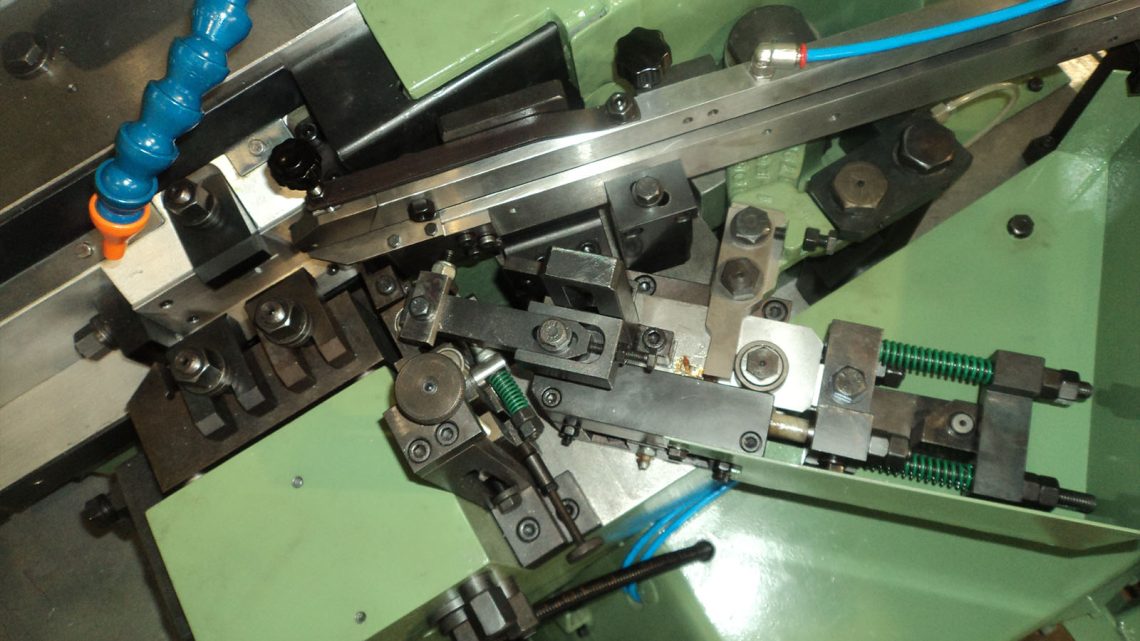
- Blank Handling / Feed Mechanism
- Is the feed (blank loading, positioning, guiding) consistent and well aligned? Differences in blank diameter or misalignment lead to poor threads or die damage.
- Are vibratory bowls, feeders etc., in good shape (if present)? Uniform feed and consistent blank presentation matter.
- Slide / Guide Wear
- Inspect the guiding surfaces/slides that carry the die holders and pressure rolls: are there scratches, wear flats, or looseness?
- Check for backlash, looseness, movement where there shouldn’t be any.
- Pressure / Force System
- Check how die closing / blank pressing / roll pressure is generated (hydraulic, mechanical, screw, etc.): is it consistent, adjustable, stable?
- Any leaks in hydraulic or pneumatic systems.
- Ability to adjust pressure for different blank hardness / sizes.
- Roll Synchronization and Timing
- Flat die thread rollers often have synchronization mechanisms between rolls: check timing, drive belts/gears etc.
- Inspect drive trains, gear wear, belts; any looseness, backlash, or worn teeth degrade thread quality.
- Blank & Thread Length Capacity
- Confirm the machine can handle your planned blank lengths. For example, if your threads exceed 55 mm, ensure the machine variant supports longer thread length (some units do, others don’t).
- Speed / Throughput vs Desired Output
- Does claimed pieces per minute match what you need? If the machine is advertised at 260 ppm, test whether under real working blanks / dies etc. it can maintain it without excessive wear or failure.
- Cooling / lubrication system must cope with the speed; otherwise dies or machine may overheat or fail prematurely.
- Lubrication, Maintenance & Auxiliary Systems
- Are oiling / lubrication points serviced? Are the lubrication systems working (slides, bearings, roll surfaces)? Poor lubrication accelerates wear.
- Cooling / die lubrication (if required) for threads: is there a system to apply lubricant to die surface or blank? Dies tend to heat up.
- Condition of auxiliary systems: feeders, blank handling, chip / scrap removal, guards.
- Safety / Guards / Controls
- Safety interlocks, guards over moving parts. Are they present and functional?
- Controls: positioning of pressure settings, ability to stop the machine quickly in case of jam.
- Wear on High-Load Components
- Roll shafts, bearings supporting rolls: check for play, noise, vibration when machine is idle, then under light load.
- Pressing surfaces and contact surfaces: where blank meets rolls, where dies contact blank: check for heat damage, galling, wear.
- Alignment and Precision Tests
- Run test blanks, produce threads, measure thread form (major, minor, pitch diameter). Use thread ring/plug gages.
- Measure thread lead / pitch consistency across many parts.
- Check “start of thread” entrance: is there lead in appropriate chamfer etc., or is it ragged or inconsistent?
- Inspect for “overfilling” or “underfilling” of thread profiles (thread crests not sharp, roots not correct), using optical or profilometer measurement if available.
What to Ask the Seller / What Documentation to Get
To reduce risk, demand as much of the following information and evidence as possible:
- Total hours / cycles (or blanks processed). How many hours/days has machine been in service under load, how intensively has it been used.
- History of maintenance: die changes, lubrication schedule, repairs, parts replaced (rolls, bearings, guides).
- Information about refurbishments: if any shafts, dies, guides, hydraulic/pneumatic systems have been rebuilt or replaced. For example, Manassero’s GW63 was refurbished in 2019.
- Sample threaded parts produced recently, ideally with the material, blank geometry, and thread depth/pitch similar to what you’d use, for your own inspection.
- Photos of key invisible or less visible parts: roll surfaces, die surfaces, inside frame, slides & guides, bearings, drive system.
- Warranty / guarantee on die matching or machine performance (even short term).
- Control manual or technical documentation: parts lists, lubrication charts, drawings.
Common Failure Modes, Risk Areas & Red Flags
These are things that often come up on used thread rollers and may cost you significant repair or compromise output:
- Dies or rolls with damage (chips, nicks) which were “patched” but not corrected: these degrade thread quality and increase scrap.
- Feed inconsistencies: blanks out of round, variable blank diameter, poor handling: these cause thread defects.
- Drive train wear: gears, belts, shafts worn or misaligned; can cause timing or synchronization errors that manifest as pitch errors or poor thread surface.
- Lubrication failures: dry sliding surfaces or dies running hot, leading to wear, scoring, or die failure.
- Poor or incomplete maintenance history: not knowing what maintenance has or has not been done increases risk.
- Over-claiming throughput: sometimes machines are quoted with “best case” performance, but in your real world you may need to slow down due to material, blank prep, die lubrication, etc.
- Age of components that wear but are expensive to replace (roll shafts, large bearings).
- Missing or worn safety features, or missing controls/spare parts.
- If machine has been idle for long periods: rust, corrosion, dried lubrication, seized parts can occur.
What You Should Budget For / Additional Costs
Even a well-maintained used GW63 may still need additional investment to bring to good production condition. Some of these include:
- New dies or regrinding existing ones.
- Roll resurfacing or replacement.
- Bear-ings or shaft replacement if there’s play or wear.
- Rebuilding or refurbishing slide / guide mechanisms.
- Lubrication overhaul: replacing old, contaminated oil; checking lubrication circuits.
- Ensuring feeders, blank handling systems are adapted to your blank types. Possibly need modifications.
- Transport, installation, alignment at your site. Leveling and setting up properly.
- Operator training for setup, die matching, maintenance.
“Good Condition” Criteria & What “Fair” vs “Poor” Looks Like
To help you judge, here are what experts often say are acceptable vs warning level conditions:
| Condition | Good / Acceptable | Warning / Poor |
|---|---|---|
| Roll die surfaces | Smooth, sharp, no visible nicks; full hardness; matching shape in mating die. | Visibly worn, chipped, mismatched, flattened crests; significant pitting or heat discoloration. |
| Slide motion / guide wear | Motion is smooth, no binding, minimal backlash, slides are tight and properly lubricated. | Sluggish, binding, noise, backlash, uneven wear patterns, visible scoring. |
| Pressure / force consistency | Pressure is evenly distributed, adjustable, behaves consistently over many cycles. | Pressure drift, leaking hydraulic or pneumatic lines, inconsistent thread quality due to pressure fluctuation. |
| Blank feeding / blank size control | Blanks consistently within the required tolerance; feed mechanism clean and reliable. | Blanks out of spec; frequent rejects; feed mechanism worn or misaligned; blank slipping or mispositioned. |
| Throughput vs Spec | Able to approach advertised ppm under your blanks & dies; stable operation. | Machine only hits maximum in ideal cases; often must run slower; heat, wear issues when pushed. |