What Industry Experts Recommend Before Purchasing a Pre-Owned / Second-Hand / used HAAS VM2 Mold Maker?
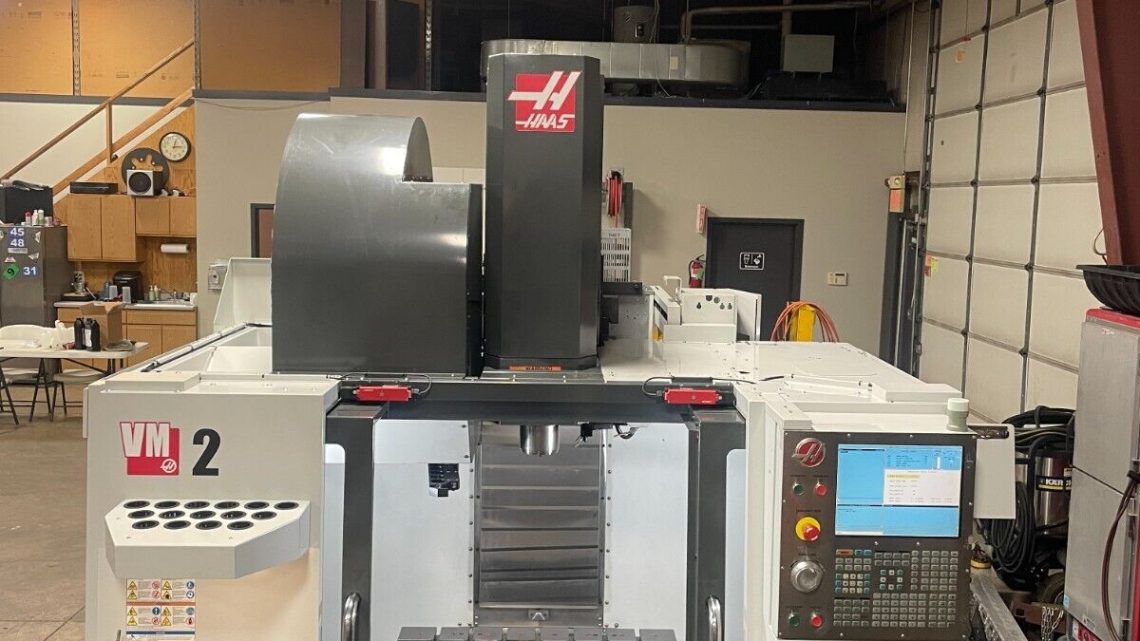
Here’s a detailed expert-guide / checklist for evaluating a pre-owned / used HAAS VM-2 Mold Maker (Vertical Machining Center) so you can decide with confidence.
What the HAAS VM-2 Mold Maker Is / Key Specs to Know
Before inspecting, know what you should expect from spec so you can spot deviations. Here are core published specs for the VM-2, especially the mold-making versions:
| Spec | VM-2 Standard or Common “Mold Maker / Mold Machine” Variant |
|---|---|
| Travel (X × Y × Z) | ~ 30″ × 20″ × 20″ (≈ 762 × 508 × 508 mm) |
| Spindle | Inline direct-drive up to ~ 12,000 rpm; 40-taper (BT or CT) typical in the mold-making package. |
| Table size | ~ 36″ × 18″ (~ 914 × 457 mm) |
| Table loading capacity | Up to ~ 3,000 lbs / ~ 1,300-1,400 kg evenly distributed in many versions. |
| ATC (Tool changer) | Side-mount tool changer, often 24-tool stations (or “24+1”) in the mold maker package. |
| Rapid traverse / feed rates | Rapids ~ 710 in/min (~ 18 m/min) on X, Y, Z. |
| Power / Motor | Typically 30-40 hp spindle drive in mold variant. |
| Standard extras for mold-makers | Mold package features, cross-slot tables or extra fixturing, chip auger, programmable coolant & flood coolant, rigid tapping etc. |
Having the machine fairly close to those values is good; major departures should raise questions (why lower, what wear / damage or modifications).
Key Areas to Inspect / Test Before Purchase
Below are the physical, mechanical, control & operational aspects you should examine (ideally on site), plus what to ask/take evidence of.
| Area | What to Inspect / Test | Why It Matters / What to Look Out For |
|---|---|---|
| General Condition & Visual Inspection | • Inspect the machine’s structure for signs of collision, damage, welds or repairs (especially table edges, column faces, spindle head). • Look for rust or corrosion, especially on slides, gibs, ways, screws. • Check way covers, wipers, guards—are they intact and undamaged? • Cleanliness: chips, coolant stains, fluid leaks, grime—often signs of how well machine has been cared for. | Structural damage or corrosion can degrade accuracy; damaged way covers let chips/coolant in and accelerate wear. |
| Spindle & Spindle Assembly | • Run spindle across its full rpm range (including 12,000 rpm) to hear for unusual noise, vibration. • Check spindle taper / nose for wear, damage, or misalignment. • If possible, check run-out with a test bar both axially and radially. • Review any records of spindle replacement or rebuilds. • Check cooling or lubrication of spindle; direct-drive spindles depend heavily on good lubrication & cooling. | Spindle condition is critical for mold making (surface finish, accuracy). Worn bearings, misaligned taper result in poor finishes and rejected parts. |
| Axes, Guides, Ballscrews / Linear Guides | • Move X, Y, Z axes manually & under power, both slow & rapid traverse: look for jerks, binding, uneven resistance. • Check for backlash or “slop”: move +X then -X etc and measure. • Inspect ball screws or lead screws (if used): are nuts tight, any play, wear? • Visual inspect guideway surfaces: scoring, chipping, pitting. • Check lubrication of axis ways, ensure oil/lube lines or grease points function. • Measure geometric accuracy if possible: square, flatness, repeatability tests. | Degraded axes contribute to errors in part dimensions, degraded finishes, greater tool wear. Mold work especially demands very good accuracy and repeatability. |
| Tool Changer (ATC) & Tool Holding | • Does the ATC index crisply, reliably, without mis-picks, hesitation? • Inspect tool holders (CT/B T40): condition of holders, grips, taper condition. • Check change-over times; see whether magazine moves freely, rails wear, any binding. • Check max tool length/weight on the specific machine being inspected: do they meet your tooling needs? Sometimes earlier mold-maker packages have higher tool demands. | A sluggish or lightly worn ATC wastes cycle time and may cause errors or tool damage; tool holding issues degrade precision. |
| Cooling / Chip Management / Lubrication | • Coolant system: pump(s), hoses, nozzles, make sure coolant is clean and undisturbed; programmable coolant nozzles are more flexible. • Check flood coolant vs thru-spindle coolant (if installed) operations. • Chip removal: chip auger or conveyor, cleanliness in machine, is chip load well managed? • Lubrication systems for ways, spindle, ATC: are oil lines intact? Is there evidence of proper regular lubrication? • Inspect coolant tank for sediment, bacterial growth, contamination. | Poor cooling or chip control causes heat build-up, tool wear, finish defects; poor lubrication accelerates mechanical wear. |
| Control, Electrical, Safety & Sensors | • What control version is installed; is it the Haas control (latest possible firmware)? • HMI responsiveness; any glitches in control screen, jog handles etc. • Inspect safety interlocks, guards, emergency stop(s). • Electrical cabinet: cleanliness, condition of wiring, any signs of overheating, burnt connectors. • Sensor read‐outs: limit switches, home positions, tool-length probes, touch off probes (if included). • Verify if control memory or software keys are present / in working order. • Check power demands: whether your shop can supply adequate power (voltage, amperage, stability). | Control and electrical issues often become expensive maintenance problems; safety is also critical. Probes etc. are costly to replace. |
| Accuracy & Performance Tests | • If possible, run a test job or sample mold components; measure feature accuracy: e.g. flatness, squareness, finish. • Check work done near extremes of travel to see if errors increase. • Thermal stability: run machine warm, see if dimensions drift. • Run rapid moves vs cutting feed moves; watch for anything loose, vibrating, or inconsistent speeds. • Surface finish test, especially if working with plastics / mold steels: any chatter, marks etc. | Verifies whether machine in used state can deliver what you need in production; reveals hidden wear. |
| Maintenance / Usage History | • Hours of operation (spindle hours, cutting hours) and duty cycles (shift work, heavy loads etc.). • Materials processed: mold steels, aluminum etc.; heavier materials cause more wear. • Maintenance logs: when bearings / ways / spindles / ATC serviced or replaced. • Any history of crashes / overloads (tool plunges, collision incidents). • Any retrofit or upgrades (coolant, ATC, control etc.). • Condition of consumables: filters, coolant, belts, seals. | Tells you what’s already “used up” in the machine, so you can forecast future maintenance and life. |
| Fit for Your Needs / Extras | • Does table size, travel, spindle speed / power suit your parts (size, quantities, finishes)? Maybe your jobs require longer tools, bigger fixtures etc. • What tooling / fixtures / vises / workholding come with it (cross-slot table, etc.)? • Check if rigid tapping, high pressure coolant, multi-fixture capacity are present or optional. • Does the local supply chain support spare parts (spindle, ATC, ball screws, electronics)? • Site prep: floor strength, level foundation, power, coolant, air, chips disposal etc. • Space & access: clearance around the machine to open doors, reach for maintenance. • Operator skill: do you have personnel experienced on Haas controls & mold-maker finishing? | Even a “good” machine may not be usable if it doesn’t match your job size or production volumes; missing accessories or tooling increase cost. |
| Total Cost of Ownership Considerations | • Transport / rigging cost to bring it to your site; installation & level & calibration costs. • Refurbishing costs if any: spindle, re-scraping, replacement of worn components. • Spare tooling, fixtures etc. • Downtime risk if parts or service hard to get. • Operating costs: power consumption, coolant usage, air, tooling losses. • Long-term resale / residual value. • Warranty or seller guarantee (if any). | These costs beyond purchase often determine whether buying used is an advantage or ends up costly. |
Red Flags / Warning Signs
Here are common problems or indicators of trouble that should make you either walk away or ask for a heavy discount / repair:
- Excessive spindle noise or vibration, especially at high rpm or when under load.
- High spindle run-out, or tool holders that don’t stay tight or true.
- Significant backlash or “play” in any axis not adjustable by gibs or compensation.
- Way damage: deep gouges, rust pitting, worn surfaces, especially in the Z-axis or column ways.
- ATC mis-indexing, slow or failing tool changes, holders that wobble.
- Poor coolant or chip control: chip build-up, coolant leaks, contaminated coolant.
- Electrical problems: overheating parts, burned wires, failing sensors, missing or non-working safety interlocks.
- Control software that’s out of date, firmware deprecated, or parts for control hard to find.
- Missing accessories / tooling that are integral for mold work (fixtures, vises, rigid tapping, etc).
- Machine that has been idle for a long time without use: risk of dried or degraded lubrication, seized components.
- Evidence of repairs done poorly (e.g. welds, misalignment) or non-OEM parts that may degrade performance.
What to Demand from the Seller
To avoid surprises, here are items / documents / demonstrations you should insist on:
- Detailed Maintenance Records: Spindle rebuilds, axis servicing, ATC / tool changer maintenance, lubrication schedule, coolant system replacements etc.
- Spindle Hour Meter / Usage Logs: How many hours, how many shifts, type of work (heavy mold steel vs lighter work).
- Sample Parts or Demonstration Jobs: If possible, run jobs that reflect your production (same materials, same tolerances). Inspect the parts, do measurement.
- Documentation: Serial number, build date, control version, parts manuals, wiring diagrams, any upgrades.
- List of Options / Accessories: What comes with the machine: tooling, fixtures, vises, flood coolant, thru-spindle coolant, probes, chip auger, safety guards etc.
- Electrical & Facility Requirements: Power draw, voltage, service history for electrical parts. Check that your facility can accommodate.
- Check Upgradability / Spare Parts Availability: Are critical spares like spindle bearings, ATC components, control boards still made / available? How long the lead times and cost?
- Warranty / Guarantee: Even if used, some sellers may offer short warranties or guarantee operating condition for defined time.
- Cost Estimates for Refurbishment: If known problems exist, ask for quotes to fix / rebuild those; use them to negotiate.
Good Condition vs What’s “Depreciated But Acceptable”
Here’s how to judge condition bands, so you can assess whether the asking price is fair or whether you’ll end up spending much more in refurbishing.
| Condition Level | What You’ll Usually See (Pros & Cons) | What You Should Expect to Pay / Deduct |
|---|---|---|
| Excellent / Near New / Low Use | Spindle and ways tight; minimal noise; high rpm operation smooth; ATC fast & accurate; accessories included; runs within spec; documentation complete. | Price high; less investment needed; small tune-ups mostly. |
| Good | Some minor visible wear; maybe slight spindle run-out; some accessories missing; control version maybe slightly older; documentation decent. | Must budget moderate refurb (e.g. bearings, possibly ball screws, cleaning); negotiate price accordingly. |
| Fair / Lightly Abused | Observable wear; degradation in finish; possible smaller mechanical or electrical issues; missing or worn accessories; maybe longer tool change times; perhaps coolant or lubrication system partially compromised. | Expect to spend more on maintenance / rebuild; factor that into total cost; price substantially less. |
| Poor / Heavy Wear / Risky | Noisy spindle; excessive backlash; way damage; control or safety features not working; critical accessories missing; unknown maintenance history. | Might be viable only for parts or if you have capacity for major rebuild; purchase price must reflect this. |
Specific Known Weaknesses in VM-2 Mold Maker Variants
From user reports and listings, these are the parts / issues that often degrade in VM-2s used in mold shops:
- Direct drive spindle bearing wear, especially if machine has been pushed heavily at high rpm or with inadequate cooling/lubrication.
- Table flatness drift over time, especially with large or heavy fixturing; overloading table beyond capacity causes sag or twist.
- Tool changer wear: ATC arms or magazine rails becoming misaligned or loose, which slows tool changes or causes mis-picks.
- Cooling & coolant contamination: mold work often uses hard steels or abrasive materials; poor coolant sometimes leads to corroded internals or blocked nozzles.
- Electrical cabinet / servo drive overheating; sometimes older machines have less efficient cooling or worn fans, which degrade control reliability.
- Wear of axis ball screws / nuts causing backlash, especially in Y or Z axes under load or with high thrust.
- Probing or measurement systems (if included) may have drift or alignment issues; touch-off tools worn.
Examples from Listings & What to Use Them For
To illustrate what good used VM-2 units are being sold with, here are a couple of real listings and what they show, which helps you benchmark:
- A 2008 VM-2 Mold Maker with 30″×20″×20″ travel, 40 hp spindle, 12,000 rpm, 24 ATC, mold package, chip auger etc.
- Another listing notes the spindle has recently been replaced (low cutting hours since new spindle), showing that the cost of spindle rebuild / replacement is anticipated.
These help in comparing whether the used machine you’re looking at is ahead or behind the “normal / average” condition of used ones in the market.