09/11/2025
What Industry Experts Recommend Before Purchasing a Pre-Owned, Second-Hand, Surplus, Used Unique Machine & Tool Co – 250 GT2 Cabinet Door Machine made in USA?
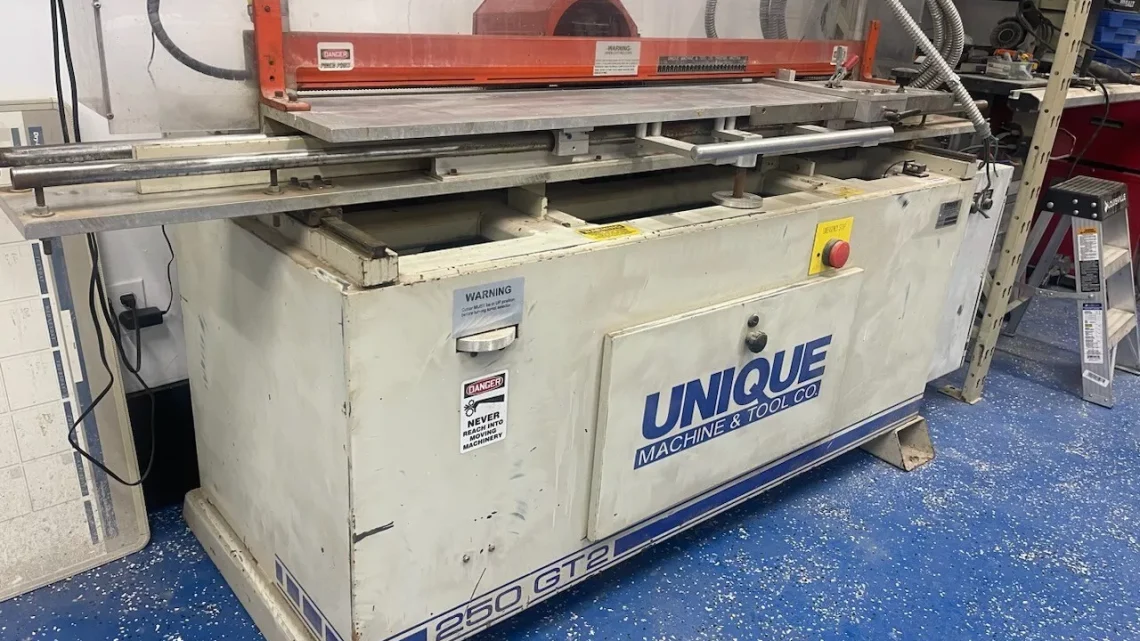
Here are industry-expert recommendations to follow before purchasing a pre-owned, second-hand, surplus or used Unique 250 GT2 Cabinet Door Machine (made in USA). These apply broadly to used woodworking machines, but many points are especially relevant for door-manufacturing equipment like this one.
Key Pre-Purchase Checks
1. Machine identity & history
- Confirm the exact model (e.g., 250 GT2), serial number, and build date from Unique’s records or vendor documentation.
- Obtain usage history: number of hours/cycles, types of doors made (solid wood vs. MDF), production environment (continuous high-volume vs. intermittent custom work).
- Ask why the machine is being sold (e.g., facility upgrade, relocation, business closure) as this may hint at hidden issues.
- Check for maintenance records: tool changes, spindle rebuilds, table resets, calibration history.
2. Mechanical condition
- Inspect the spindle and cutter turret system: the 250 GT2 uses a 10 HP direct drive motor (for example) and is designed for rapid door production.
- Check the table, clamp bars, and fixture system for wear. Door machines often cycle clamps and table stops heavily; look for signs of fatigue or misalignment.
- Examine the tooling stack/turret: tool carriers, cutters, knock-outs, indexing—since the machine uses a turret and pre-set tooling stack.
- Check guideways, motor drives, servo systems (if applicable), and ensure smooth operation without binding or irregular noise.
- Inspect air/hydraulic systems (if machine uses pneumatic/hydraulic clamps), dust extraction path, and extraction hood. These systems are critical for door machines but often overlooked in used-machine purchases.
3. CNC/control/software
- Identify the control system and ensure the operator panel works, all commands respond correctly, no unusual fault history.
- Verify software version and any upgrades. For a door machine, rapid changeovers and turret indexing software are crucial.
- Confirm that tooling offsets, arch templates, and door profiles still load correctly and that documentation/manuals are available.
- Check spare parts availability for the control system, drives, and turret mechanism for the Unique 250 GT2.
4. Accuracy & function test
- If possible, see the machine in action producing or cutting a typical door panel: check arch cut quality, stile/rail profiles, raised panel execution (if used), and repeatability across multiple cycles.
- Inspect finished door pieces (if available) for consistent fit, finish, no chatter marks, and correct dimensions.
- Check setup changeover time: is the machine still able to switch tooling and templates quickly (one-man, one-door in approx two minutes is a selling point).
- Check for table straightness, stop accuracy, clamps holding flatness across multiple pieces.
5. Environment & installation compatibility
- Check site requirements: footprint, clearance, dust extraction, power (10 HP motor appears in spec) and ensure your facility can accommodate. For example, the spec sheet says 10 HP direct drive motor.
- Investigate whether the machine has been relocated or refurbished, as alignment or calibration may have been affected.
- Confirm dust extraction and chip collection compatibility. Door machines generate high volumes of wood chips and require good extraction; if extraction system is weak, maintenance costs may rise.
6. Spare parts & serviceability
- Check availability and cost of critical spare parts: motor, cutters/tooling stack, clamp bars, fixture kits, safety guards, extraction hood, and pneumatics/hydraulics.
- Ask whether major components (spindle, drives, motors) have been replaced or are near end of lifecycle.
- For the Unique brand, check if the dealer network supports legacy 250 GT2 machines or if third-party service is needed.
7. Remaining useful life & total cost of ownership
- Estimate remaining life: if the machine is heavily used or has older components, you may face major maintenance soon (e.g., spindle rebuild, new cutters, new clamps).
- Beyond purchase price, budget for installation, alignment, tooling set-up, calibration, extraction system modifications, and training if the machine is somewhat outdated.
- Consider downtime risk: in a production door environment, downtime equals lost throughput. Ensure budget for spare tooling and preventive maintenance.
8. Documentation & compliance
- Ensure you receive all operating manuals, maintenance manuals, wiring/electrical diagrams, tooling lists, arch templates, and software backups.
- Check compliance with safety standards in your region (e.g., CE marking if importing to Europe, electrical compliance USA/your country, dust extraction ventilation standards).
- Ask for any alignment/flatness test certificates if available—these support accuracy claims.
9. Contracts, warranties & inspection rights
- Negotiate inspection rights: ideally the machine should be witnessed cutting or at least powered on for full cycle in the current owner’s facility.
- Include contingent clauses: e.g., “if spindle run-out exceeds X mm” or “table stop accuracy greater than Y mm” you may return.
- Clarify what tooling, fixtures, arch templates, guards and documentation are included in the sale (these often add significant value). For example the machine comes with tooling stack and arch templates.
Specific Considerations for the Unique 250 GT2 Cabinet Door Machine
- The machine is designed for 5-piece cabinet doors (stile, rail, panel, arches) and uses specialized tooling stacks. Ensuring tooling condition is critical.
- Arch capacity and thickness: ensure the clamp cylinders and table accommodate the material thickness and arch profiles you require (spec sheet shows extended clamp cylinders for part thickness from 1¼″ to 2¼″, entry door capacity).
- Tooling stack change and turret indexing are key to productivity – check that the turret indexing is accurate, clamps are still solid, and no excessive play or indexing errors.
- Dust extraction must be adequate—wood machining generates heavy chips and high dust volumes; ensure system servicing has been maintained.
- Check the availability of arch templates and if replacements/tooling for new profiles are still available (supplier support for tooling matters).
- Because door manufacturing involves rapid cycles and single-operator setups, ergonomics, safety guards, and changeover ease are crucial to keep labour costs down.