What Industry Experts Recommend Before Purchasing a Pre-Owned, Second-Hand, Surplus, Used Mitsubishi MAF RS150C CNC Horizontal Boring Mill made in Japan?
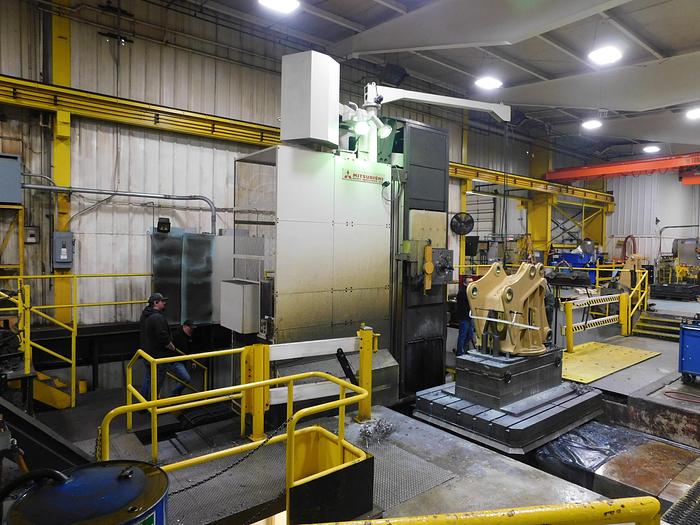
The Mitsubishi MAF-RS150C is a heavy-duty, high-precision horizontal boring mill widely used across energy, aerospace, mold & die, construction machinery, and large-component machining. Because these machines were built with exceptional Japanese engineering standards, well-maintained units can deliver decades of accuracy and reliability.
However, the value of a used unit can vary greatly based on condition, controls, usage environment, and retrofit history. Below are the key expert recommendations to ensure a successful purchase.
1. Verify the Mechanical Health of the Main Structures
Spindle Condition
- Request spindle vibration analysis and bearing noise checks.
- Verify spindle taper runout with a test bar (<0.005 mm is desirable).
- Ask if the spindle has been rebuilt and by whom (factory rebuilds are preferred).
Box Ways / Linear Guideways
- MAF-RS series machines often use hardened box ways for rigidity.
- Inspect for:
- scoring
- uneven wear patterns
- loss of lubrication
- If resurfacing was performed, request documentation.
Ram & Quill Condition
- The RS150C is known for its long Z/W axis ram stroke.
- Check for:
- quill play
- deflection at full extension
- backlash or worn gibs
- A laser or ballbar report of the Z/W axes is recommended.
2. Confirm the Accuracy of Travel Axes
Geometric Accuracy Tests
Request recent reports for:
- Laser calibration (X/Y/Z/W/B axes)
- Ballbar circularity tests
- Leveling and straightness measurements
Any deviation may indicate:
- heavy usage
- machine crashes
- misalignment
- lack of preventive maintenance
Repairs can be expensive on large boring mills, so data is crucial.
3. Evaluate the CNC Control and Electronic Health
Control Version
Many units originally came with Mitsubishi Meldas controls. Ask:
- Has the control been upgraded?
- Are spare boards available?
- Are parameters and backups included?
Servo & Drive System
- Inspect servo drives, amplifiers, feedback encoders.
- Ensure axes home correctly without alarms.
- Check for discontinued components—availability affects long-term serviceability.
Electrical Cabinet
Look for:
- overheating marks
- non-OEM wiring
- dirty filters
- missing documentation
A clean cabinet often reflects disciplined maintenance.
4. Evaluate the Machine’s Work History
Hours and Type of Work
The RS150C is used for:
- large steel components
- mold bases
- gearbox housings
- energy and construction equipment
Machines used for heavy roughing or continuous 3-shift industrial work may show more wear.
Ask for:
- total operational hours
- spindle on-time
- maintenance logs
- any collision history
5. Inspect the Table, B-Axis & Rotary Accuracy
Table Condition
- Inspect for scoring, gouges, or weld repairs.
- Check positioning repeatability.
B-Axis Rotary Table (if equipped)
- Confirm indexing accuracy and clamping torque.
- Verify hydraulic clamping pressure levels.
- Inspect rotary surfaces for damage or excessive backlash.
Rotary table rebuilds are costly—data is essential.
6. Hydraulics, Lubrication & Cooling Systems
Hydraulic System
- Check pump noise, pressure stability, and leak points.
- Ask if seals or valves have been replaced.
Lubrication System
- Verify metering units function correctly.
- Inspect for dry ways, clogged lines, or bypassed systems.
Coolant / Chip Removal
- Evaluate coolant tank condition & filtration.
- Inspect chip conveyors, augers, flushing pumps.
A neglected fluid system accelerates wear on expensive components.
7. Tooling, Accessories & Optional Equipment
A well-equipped used RS150C dramatically increases value:
Desirable Options
- right-angle heads
- extended boring bars
- facing heads
- spindle coolant
- high-pressure machining center
- rotary tables
- manual and CNC probes
- floor plates
- tool holders (ISO/NMTB/CAT)
- chip conveyor + filtration system
Check Compatibility
Make sure accessories match:
- spindle taper
- quill diameter
- table capacity
8. Confirm Rigging, Installation, and After-Sales Support
These machines typically weigh over 40,000–60,000 kg depending on configuration.
Ask About:
- original foundation specifications
- trucking restrictions
- disassembly & reassembly requirements
- leveling procedures
- recommended Mitsubishi service technicians
Incorrect installation can significantly degrade accuracy.
9. Request a Full Cut Demonstration Before Purchase
A live cutting test tells the real story. Evaluate:
- surface finish
- spindle load during roughing
- axis noise during rapid movement
- actual vs. programmed dimensions
- stability at long ram extension
Recording videos and measurements is highly recommended.
10. Determine the True Market Value
Pricing depends on:
- year of manufacture
- spindle taper & travel lengths
- accessories included
- mechanical accuracy reports
- spindle rebuild history
- condition of electronics
- geographic location and transport cost
Well-maintained RS150C units can command premium pricing due to their robust Japanese build quality and long service life.
Conclusion: Buy Based on Verified Data, Not Assumptions
The Mitsubishi MAF-RS150C is a world-class horizontal boring mill. A second-hand unit can offer enormous value if chosen carefully with full accuracy reports, spindle data, machine history, and proper inspection.
Industry experts always recommend:
- detailed mechanical inspection
- control and electrical evaluation
- documented accuracy verification
- demonstration under load
- confirmation of spare parts availability
By following the above guidelines, you can confidently acquire a used Mitsubishi MAF-RS150C that performs like a top-tier production asset while preserving capital.