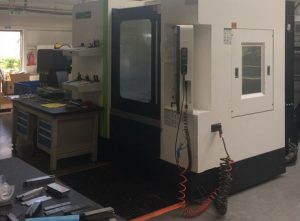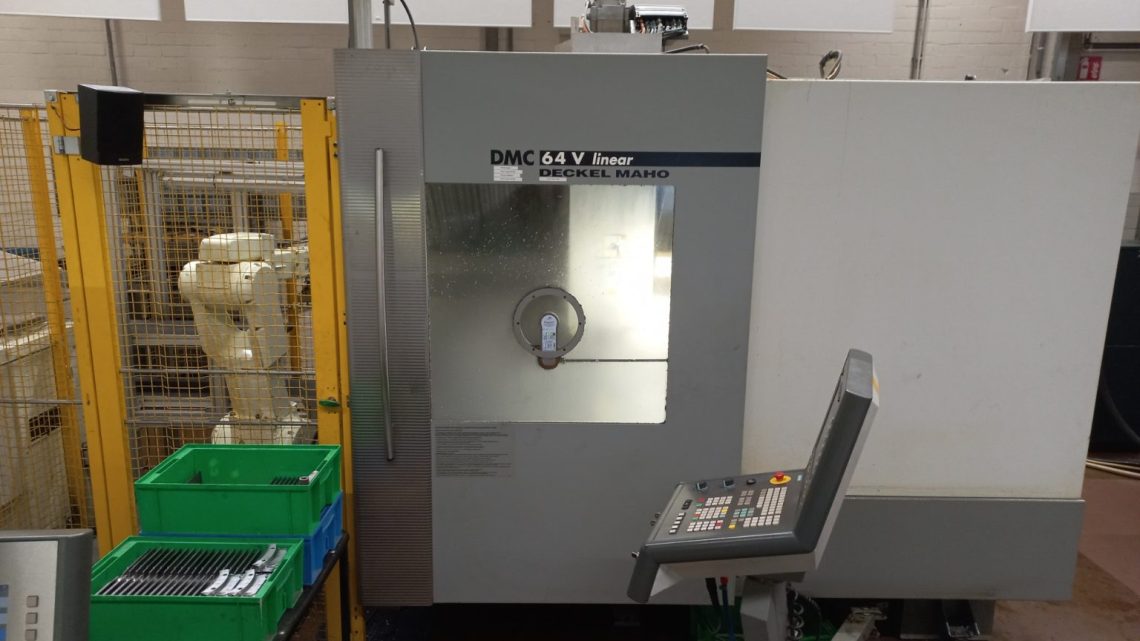
What Do Buyers Look for Before Investing in a Pre-Owned, Used, Secondhand, Surplus CNC Equipment Before Purchase Deckel Maho DMC 64 V Linear CNC Vertical Machining Center made in Germany?
1. Overall Condition & Maintenance / History
- Visual inspection of the frame / body / housing — Check for cracks, dents, weld repairs, misalignment, or signs of a crash/impact. Damage to frame or housing may adversely affect alignment and long-term stability.
- Signs of rust, corrosion, leaks — Look for rust on exposed metal surfaces, coolant or oil leaks (on bed, base, way covers), or signs that coolant/lubrication systems have been neglected. These are red flags about prior maintenance or misuse.
- Maintenance records & history — Ask the seller for service logs, repair history, breakdowns, previous part replacements (spindle, bearings, ball screws, etc.). A well-documented history suggests responsible ownership and easier forecasting of remaining useful life.
- Machine’s age and usage (hours / workload) — Know how many actual cutting hours (not just “power-on” hours). Heavy usage or frequent production jobs reduce remaining useful life.
- Suitability of machine for your needs — Ensure the VMC’s capacity (work envelope, spindle spec, axis travel, table size) matches the parts you intend to produce. A mismatch could mean the machine won’t serve your needs even if in good condition.
2. Mechanical Integrity: Spindle, Axes, Guides, Ball Screws
- Spindle condition — The spindle is “the heart” of a CNC milling machine. Run the spindle at different speeds; listen for unusual noises, vibrations, bearing noise, runout or wobble. Excessive play or vibration is a red flag.
- Axis movement, linear guides & ball screws — Check for smooth, backlash-free movement across all axes. Look for scoring, uneven wear, dry/bad lubrication, play in ball screws or guides. Worn guides or screws undermine machining accuracy.
- Tool holder / taper & tool changer (if equipped) — For machines with ATC (automatic tool changer) or tool magazine: inspect tool holders for wear or damage, test tool changes to make sure they happen consistently and accurately without misfires or retention issues.
- Lubrication / hydraulic / coolant / coolant pump / coolant lines — For machines with coolant or lubrication systems: ensure they operate properly, no leaks, pumps working, coolant clean. Neglected or leaky coolants/hydraulics indicate poor maintenance.
3. CNC Control, Electronics, Software & Documentation
- Controller / CNC electronics functionality — Power up the machine; verify that CNC controller works, that displays/buttons/switches all respond, no error messages, all axes home properly, limit switches / soft-limits function.
- Software compatibility & ease of integration — Ensure the controller (or control system) is compatible with your current tooling, CAM/CAD, and workflow. Older/legacy controllers may be hard to integrate or program.
- Availability of manuals, schematics, wiring diagrams, maintenance history, parts list — These documents are vital for future maintenance, troubleshooting, repairs, and may be hard to obtain for older machines.
- Spare parts availability & long-term support — For machines made in Germany like Deckel Maho, check whether spare parts are still available (from OEM or aftermarket), and whether technical support or spare-part supply chain remains viable.
4. Performance Testing: Dry Run & Test Part Machining
- Dry run / motion test — Without workpiece, run the machine through all axes, tool changes, spindle acceleration/deceleration, to check for smooth and consistent motion, absence of weird noises, vibration, binding.
- Actual test cut / sample part — If feasible, run a real machining test using typical material you plan to use. Machine a part and check dimensional accuracy, surface finish, repeatability over multiple cycles. This reveals errors or wear that might not show under idle motion.
- Check for precision & tolerance compliance — Ensure that output parts meet required tolerances consistently. Worn mechanical components (spindle bearings, guides, ball screws) may drift or produce inconsistent results.
5. Safety, Compliance & Working Conditions
- Safety guards, covers, shields, emergency stops, sensors — For a used machine, verify that all safety features are intact and functioning: guards, chip shields, splash guards, emergency stop buttons, limit switches, interlocks, etc.
- Cleanliness / shop environment history — Machines kept in clean, well-organized shops are more likely to have been properly maintained. If you see signs that former environment was rough (e.g. lots of dust, leftover chips, poor housekeeping), risk is higher.
6. Economics: Total Cost of Ownership, Risk & Value
- Compare purchase price vs expected remaining life and maintenance cost — A low price can be tempting, but if the machine needs immediate major repairs (spindle overhaul, guide replacement, electronic updates), total cost may end up high.
- Availability (or cost) of spare parts and servicing over time — If spare parts are rare or expensive, or if control/electronics are obsolete, maintenance and downtime costs might outweigh the savings of buying used.
- Resale or salvage value & fallback plan — Consider whether you can resell or refurbish if needed. Buying from reputable sellers or brokers, possibly with some limited warranty or support option, reduces risk.
Why This Matters for a Deckel Maho DMC 64 V / Similar VMC
Because a vertical machining center — especially a high-precision one like Deckel Maho — is designed to deliver precise, repeatable machining over many years, latent mechanical wear or misalignment can seriously degrade performance. If the spindle, guides, ball screws, control system or coolant/lubrication systems are worn or malfunctioning, you may end up with poor surface finish, inaccurate dimensions, frequent downtime or costly repairs.
Likewise, older machines may have harder-to-replace parts or controllers, so documentation and spare-part availability become critical. Ensuring the machine still meets your tolerances, and can be maintained affordably, is just as important as the initial purchase price.
Selling price alone can be misleading: what matters is what remains after inspection, evaluation, and potential refurbishment. A carefully inspected used VMC that passes all checks — mechanical, control, safety, functional test — can be a great value. But a poorly inspected, poorly maintained, or undocumented unit can turn into a costly headache.
My Recommended “Due Diligence Checklist” (for You) when Evaluating a Used Deckel Maho DMC 64 V
Here’s a succinct checklist you can use when evaluating / inspecting a used VMC before purchase:
- Perform a full visual inspection: frame, body, housing, signs of damage, rust, leaks.
- Inspect spindle: run at full speed, listen for noise/vibration, check for runout or wobble.
- Move all axes (X, Y, Z) through entire travel: check for smoothness, backlash, jerkiness.
- Check linear guides / ball screws for wear, smooth motion, proper lubrication.
- Test tool holder & any tool changer (if equipped): check for accuracy, retention, tool changes.
- Check lubrication / coolant / hydraulic systems for leaks, proper function, cleanliness.
- Power up CNC control panel: ensure controller boots, displays/buttons work, no error logs.
- If possible, run a test part: mill something representative of your typical workload — measure final part for accuracy, finish, repeatability.
- Ask for maintenance history / service logs / repair history / parts replacements.
- Request documentation: manuals, wiring diagrams, parts lists, maintenance logs.
- Verify availability of spare parts (OEM or aftermarket) for critical components: spindle, bearings, ball screws, electrical components.
- Confirm safety features: guards, shields, emergency stop, limit switches, way covers.
- Estimate total cost: purchase + transport + installation + any repairs/refurbishment + spare parts + downtime risk.
- Compare to alternatives (other used machines, new machines) — is the value really good after factoring in all above?
- Consider seller reputation — dealer vs private, availability of support, warranty or after-sales service, ability to inspect before purchase.