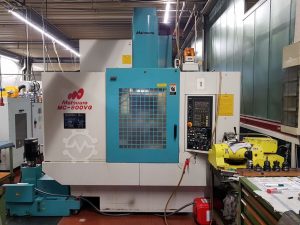
What Industry Experts Recommend Before Purchasing a Pre-Owned, Second-Hand, Surplus, Used Makino EDAF3 H.E.A.T. CNC Siner EDM made in Japan
Below is a detailed “industry expert” checklist and considerations you should carry into any inspection (or negotiation) for a used / surplus / second-hand Makino EDAF3 H.E.A.T. (sinker EDM / die-sink EDM). Because EDM machines are quite different from mechanical mills/lathes, there are special components (dielectric systems, electrodes, spark gap monitoring, tank structure, insulation, stability, etc.) that need extra scrutiny. Use this as a framework; adapt it based on the machine’s configuration, your tolerance for risk, and your shop’s capabilities.
What We Know / Baseline Specs (Makino EDAF3 “H.E.A.T.” & Sinker EDM Characteristics)
To help you detect exaggerations or mismatches, here are some baseline features and specs of the Makino EDAF3 and general insights into sinker EDMs:
- The Makino EDAF3 is a sinker (die sinking) EDM model.
- Its table / working area is about 700 × 500 mm (≈ 27.5″ × 19.7″)
- X / Y / Z travel is approximately 450 mm (X) × 351 mm (Y) × 351 mm (Z) for many EDAF3 units.
- The work tank dimension is about 850 × 650 × 400 mm
- The machine is designed with features like a “drop tank” system to improve access and automation integration.
- The EDAF series (including EDAF3) emphasizes rigidity, thermal stability, and accurate spark gap control (e.g. Makino’s “ArcFree” spark-gap / arc prevention technology)
- Makino offers “service inspection” programs that include geometry checks, perpendicularity / axis alignment checks, and leak testing.
- In EDM, unlike mechanical machining, your key concerns shift toward dielectric system health (cleanliness, insulation, flow, leaks), electrode system, spark gap stability & generator health, insulation integrity, motion precision under spark load, electrode wear / compensation systems, and tank / structure stability.
Given that, let me walk you through a comprehensive pre-purchase checklist.
Expert Pre-Purchase Checklist for Makino EDAF3 H.E.A.T. / Sinker EDM
Below is a structured evaluation plan (pre-visit screening, static inspection, dynamic / test EDM operations, risk assessment). Wherever possible bring a skilled EDM technician, measurement / inspection tools, and spare consumables.
| Phase | What to Inspect / Test | Why It’s Critical | How to Carry It Out / Acceptable Behaviors / Red Flags |
|---|---|---|---|
| Pre-visit / Vendor Screening | • Ask for machine identification: serial number, build year, model “EDAF3 H.E.A.T.” • Request service / maintenance logs (e.g. repairs to generators, servo units, electrode heads, dielectric pumps) • Ask for hours / burn cycles (how many hours of EDM operation, how much “on time”) • Request photos / videos: tank, electrode head in motion, dielectric flushing, control screens • Confirm what electrode tooling (graphite, copper electrodes), spare parts, filters, maintenance spares are included • Ask whether the machine has been relocated (moved, disassembled, reassembled) and by whom • Verify utility requirements: power supply (voltage, phases), dielectric / flushing systems, filtration, chip removal, cooling systems • Ask for known issues, wiring modifications, control retrofits | This background helps you identify potential red flags before traveling, ensures that the seller is knowledgeable, and provides baseline for cross-checking what you will inspect | Check whether the seller’s spec sheet matches what you see; ask for test motion video in advance; ensure that included spares / tooling are realistic for this model |
| Structural / Static Inspection | • Inspect the machine’s frame, castings, base structure for cracks, weld repairs, distortions, or evidence of repair • Check the work tank and tank structure for corrosion, leaks, cracks, weld patches in dielectric tank walls • Examine electrode head / ram housing for signs of wear, leakage (dielectric fluid) or damage • Inspect all covers, guarding, sealing surfaces and ensure they are present and in good condition (seals, gaskets, shields) • Check cable carriers, wiring harnesses, connectors, and ensure they are properly protected from splash, chips, fluid • Open control / power cabinets (if allowed) and check for wiring damage, burnt insulation, corrosion, prior modifications or hack repairs • Check foundation, leveling, whether the machine sits solidly and doesn’t rock • Inspect dielectric fluid lines, hoses, valves for leaks, embrittlement, brittle hoses | If frame or tank is compromised, the machine may not hold accuracy or may leak dielectric fluid, which is a serious problem. Damaged head / ram or gasket surfaces are expensive to fix. | Use visual inspection, bright lighting, mirrors, borescope if needed. Try applying light pressure on covers or seams to see if they flex / leak. Document any weld repairs or patches. |
| Motion / Mechanical Tests (Without Spark / Dry Test) | • Power up the machine (if allowed) and jog motion in X, Y, Z axes, ram / electrode head, possibly C-axis (if present) — look for smoothness, binding, jerky segments • Command small back-and-forth moves to detect backlash / lost motion in axes • Perform repeated home / reference cycles to verify whether axes return to exactly the same point (repeatability) • Move axes to travel limits, test limit switches or soft/hard stops • Test raising / lowering of the tank (if drop tank type), verify motion is smooth and repeatable • Check if the electrode head motion (ram travel) is consistent over full stroke, free of zones of drag or binding • Check for unusual noises (scraping, clicking) in guideways, bearings or lead screws • Check for proper operation of coolant / flushing / dielectric fluid circulation (dry run) | Even before EDM is turned on, mechanical defects in axes, guideways, or head movement will degrade performance and accuracy. Ensuring repeatability is key for precise spark machining. | Use a dial indicator, test bar, or indicator gauge, sweep axes, repeat multiple cycles. Document any zones of roughness or backlash. |
| Dielectric / Fluid System Inspection | • Inspect dielectric tank condition: presence of sludge, contamination, debris, discoloration • Check filters, filter housings, pumps, valves, and connections for wear, leaks, clogging • Run dielectric circulation (if possible in “clean flush” mode) and observe flow uniformity, turbulence, shocks, air bubbles, blockage • Test dielectric fluid conductivity, contamination level (dissolved solids, particles) • Inspect seals and gaskets in all fluid paths (ram seals, tank gaskets, pipe joints) • Check return fluid drains, overflow systems, level control systems • Observe any signs of dielectric leakage in parts of machine not intended to hold fluid • Inspect electrode cable / feedthrough seals for dielectric leakage or damage | The dielectric system is central to EDM operation. Contaminated fluid, leaks, clogging or unstable flow will severely degrade spark stability, accuracy, and may cause breakdowns. | Run pump for some time; observe for leaks, pressure drops, air ingestion; check filter media; take fluid samples (if permitted) for particulate / contamination analysis. |
| Electrode / Electrode Head, Tooling & Spark System Checks | • Inspect the electrode head / ram for vertical alignment, smooth motion, absence of binding • Examine electrode holders, clamping systems, connectors, cable / electrode wiring for wear, cracks or damage • Check whether electrode change / tool change (if the machine supports ATC / electrode changer) is functional, reliable • Inspect the spark generator / power electronics for signs of repair, overheating, discoloration • If there is a spark-gap monitoring / arc protection system (ArcFree or equivalent), test whether it is present and functional • Check whether electrode wear compensation / offset systems work (i.e. electrode distance calibration, compensation) • Inspect insulation in the electrode circuits (coatings, connectors, wire insulation) | The electrode system is the “business end” of EDM. Any misalignment, poor holding, or generator defects degrade accuracy, increase electrode wear, or cause arcing faults. | Mount a test electrode, move it toward surface under no spark, test clamping, measure mechanical runout. Check generator controls, read fault logs, see whether compensation routines can be accessed. |
| Test EDM Operation / Spark / Machining Trials | • Bring a known conductive workpiece (or allow seller-supplied test) and perform a simple EDM burn (plunge or roughing) • Monitor spark stability, gap control behavior, whether arcs or short circuits occur • Examine surface finish of the burned area, electrode wear pattern, overcut consistency • Run multiple cycles, measuring dimensional repeatability (depth, diameter, parallelism) • Test under different workpiece positions within the tank (center, near tank wall) to see consistency • Observe how the machine recovers from arc events, whether it resets reliably • If the machine supports unattended / automatic burning, test the stability of long cycles (e.g. overnight) • After a burn, measure any drift / offset in zero positions, backlash in axes under spark load • Check whether generator parameters (pulse width, off time, peak current) respond and can be adjusted | The real test is how well the machine performs EDM under load. Generator stability, gap controls, electrode compensation, spark stability, and repeatability under real use are what make (or break) value. | Use a depth gauge, micrometers, surface measurement, and compare multiple cycles. Document any deviations or drift. Note any frequent breakdowns or arc faults during the test. |
| Geometric, Stability & Thermal Checks | • Check ram / electrode alignment vertical / perpendicular to the table / workpiece plane • Verify X vs Y axis orthogonality, Z alignment • Sweep a test probe / indicator across the table motion to detect nonlinearity or twist • Run a circular interpolation test / circular motion (if supported) to check circularity error (axial symmetry) • Let the machine run burns / standby for a period, then repeat key alignment measurements to detect thermal drift • Check that the machine structure (tank base, frame) remains stable during motion (no distortion) | Because EDM is very sensitive to minor offsets, thermal drift, or structural shifts will degrade precision, particularly over long burns. | Use precision gauges, reference bars, indicators, test probes. Measure before and after warm-up and compare. |
| Electrical / Control / Software & Safety Checks | • Inspect control / CNC interface, check whether generator / EDM controls boot cleanly, display is intact, interface keys / touchscreen work • Browse EDM parameter menus, gap compensation tables, electrode offset routines, burn parameter sets • Check alarm / fault logs and history • Inspect wiring in control cabinets: look for burnt insulation, loose wires, discolored connectors • Inspect high-voltage / power electronics for signs of thermal stress or repair (resoldering, replacement) • Test safety interlocks, emergency stops, cabinet door interlocks, flood deluge / dielectric safety systems • Ensure that all high-voltage enclosures are present, well sealed, and compliant with safety norms | The control and HV systems are expensive to repair or replace. Poor wiring, signs of overheating, or missing safety guards are serious liabilities. | Cycle through parameter adjustments, monitor error messages, test interlocks. Visual inspection of boards, connectors. Check for missing covers or safety bypasses. |
| Auxiliary Systems, Cooling, Filtration & Consumables | • Inspect cooling / chiller systems, cooling water lines, heat exchangers (if any) for corrosion, leaks, flow restrictions • Check dielectric temperature control (if the machine has temperature stabilization features) • Inspect filtration systems (coarse / fine filters, filter media, cartridges) • Check electrode storage / handling systems (if present) • Evaluate condition of consumables (spare electrodes, filters, seals, guide bushes) • Inspect any programmable flushing / jet / flushing nozzles, plumbing and valves | Auxiliary and consumable systems support EDM’s reliability. Poor cooling or filtration shortens generator life, degrades stability, and increases maintenance cost. | Run cooling / chiller, measure flow / temperatures, check for leaks or pressure drop. Inspect filter media. Test flow in flushing nozzles. |
| Risk Assessment, Repair Cost Estimation & Negotiation | • Document all observed defects / deviations / wear issues, quantify them where possible • Research spare part availability (Makino generator modules, electrode head parts, seals, filters, control boards) • Estimate cost to refurbish: dielectric tank repair, generator rebuild, alignment, sealing, wiring, component replacement • Factor in rigging, transport, foundation, leveling, installation and recommissioning costs • Use your “punch list” of defects as a negotiation tool rather than just accepting a fixed “used discount” • If possible, negotiate a trial / burn-in period (e.g. 30 days) or partial warranty on critical modules (generator, head alignment, dielectric integrity) | EDM machines are specialized; many costs are hidden (generator repairs, electrode head wear, insulation degradation). You want to budget conservatively and catch as many faults pre-purchase as possible. | Prepare detailed pricing for component replacement / rebuilding. Show comparative quotes. Use defects as leverage. |
| Documentation & Transfer / Acceptance | • Ensure you receive original manuals: mechanical, electrical, generator / EDM control, parts lists • Confirm serial / model plate matches internal references and documentation • Get backup copies of the EDM parameters, gap compensation tables, electrode offset tables • Ensure any included electrodes, spare parts, filters, consumables, tooling are formally transferred • Sign a purchase agreement describing condition, acceptance test results, warranty / guarantee period (if any) | Without full documentation, future servicing, repair, or fine tuning becomes far more difficult and costly. The machine’s “soul” is in its parameter sets and controls. | Cross-check serial numbers, ensure all spares / tooling are listed, get digital backups of control data, ensure wiring / electrical diagrams are included. |
Specific Red Flags / “Deal Killers” for Sinker EDM / Makino EDAF3 Machines
Here are particular issues (beyond the general checklists) that are especially serious in sinker EDMs like the EDAF3:
- Cracks or leaks in the dielectric tank: if the tank wall or base has been welded / patched, it may not hold dielectric fluid reliably over time.
- Damaged or degraded ram seals / head seals that allow dielectric leakage into the machine structure or into electronics.
- Generator modules with repeated past repairs, burned parts or discoloration — these may soon fail.
- Entangled electrodes / electrode holders with heavy wear or scoring, which degrade spark control or cause misfires.
- Inoperative spark-gap / arc protection or “ArcFree” systems. If those are nonfunctional, the machine may misfire or arc destructively.
- Dielectric fluid contaminated with particles, metal debris, or conductive contamination (leading to erratic spark behavior).
- Dielectric circulation / filtration system poorly designed or degraded (e.g. clogged, undercapacity).
- Out-of-spec linear axes motion (backlash, inconsistent movement) under spark load.
- Thermal instability: the machine drifts as it warms, or the machine was operated in a poorly temperature-controlled environment.
- Already reworked or worn guideways in electrode head or axes.
- Control or high-voltage electronics that are no longer supported or use obsolete parts.
- Missing or tampered safety / HV covers, or signs of “board surgery” or unauthorized modifications.
- Refusal by seller to run test burns, or limiting your ability to do spark trials — that’s often an attempt to hide generator / spark issues.