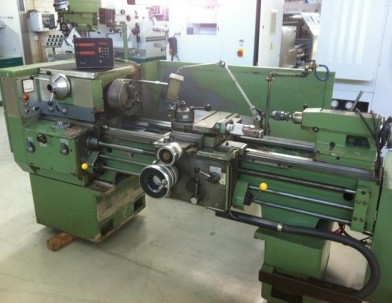
What Industry Experts Recommend Before Purchasing a Pre-Owned, Second-Hand, Surplus, Used BOEHRINGER VDF D 420/800 Universal Lathe made in Germany
If you’re considering buying a used / surplus / second-hand Boehringer VDF D 420/800 (or generally a VDF / Boehringer universal / conventional lathe made in Germany), industry experts and seasoned machinists suggest a rigorous, methodical inspection and evaluation. Below is a detailed due-diligence guide (checklist + pitfalls + negotiation tips) tailored to large universal lathes like the VDF series.
What We Know (Context & Benchmark Specs)
Before inspecting, it helps to understand typical spec ranges so that you can spot deviations or misrepresentation.
- The Boehringer / VDF line includes heavy universal / cycle / CNC-capable lathes with swings over bed from ~420 mm and in larger models up to 1,500 mm. (The “420 / 800” nomenclature often hints at center height or swing, and maximum turning length, though vendor variations exist.)
- These machines are built with rigid cast-iron frames, box beds, heavy cross slides, and robust headstocks to handle large diameters and turned workpieces.
- Many VDF / Boehringer universal lathes also support both manual and cycle / semi-automatic modes, sometimes even CNC retrofit capabilities.
- Published listings for similar VDF / V / D series machines show large spindle bores, wide ranges of spindle speeds (often from very low rpm up to ~1,000+ rpm depending on gearing or inverter drive), and long distances between centers.
So when you inspect, keep those benchmarks in mind: swing, bed width, spindle bore, distance, speed capability.
Expert Checklist for Evaluating a Used VDF / Boehringer Universal Lathe
Below is a structured checklist you can carry through your inspection. Bring along a machinist / metrology technician and measurement tools (dial indicators, test bars, straightedges, feeler gauges, etc.).
1. Pre-Visit / Documentation & Vendor Screening
- Ask for serial / model identification, build year, original specification sheet / drawing.
- Request service logs, repair history, past major overhauls (spindle rebuilds, bed regrinding, slide rebuilds).
- Ask for running hours / usage data (power-on hours, machining hours, duty cycles).
- Request photos/videos (in operation, axes jogging, spindle running) to preliminarily screen condition.
- Clarify what accessories and tooling are included (chucks, steady rests, dividing heads, collets, tailstock, tool posts).
- Ask about any modifications or retrofits (C-axis, driven tools, CNC upgrade, power feed units).
- Confirm utility requirements (power voltage, motor ratings, lubrication system, coolant, chip management).
- Ask whether the machine has been transported / reinstalled, and by whom (poor re-installation is a common source of misalignment or frame stress).
This “paperwork” stage helps you spot discrepancies before you travel, and prepares you to ask informed questions on site.
2. Visual & Structural / Static Inspection
- Examine the bed, carriage, cross slide, headstock, tailstock, and frame castings for cracks, welds, distortions, or past repairs.
- Check for corrosion, pitting, surface rust, particularly on exposed and sliding surfaces.
- Inspect way covers, guards, chip shields, bellows: missing or damaged covers are red flags (chip ingress accelerates wear).
- Check the spindle nose / bore / taper area for scoring, burrs, or damage.
- Inspect the tailstock quill, tailstock alignment mechanism, whether it moves smoothly and fits squarely.
- Open (if allowed) electrical / drive cabinets: inspect for burnt wiring, discolored insulation, prior repairs, dust, or chip accumulation.
- Check for looseness or play in base bolts, leveling shims, mounting surfaces—machine should sit solid and level.
3. Mechanical / Motion Tests (without cutting)
- Power the machine (if seller allows) and jog the carriage / cross slide / cross feed / tailstock slowly and at higher speeds. Listen for sticking zones, rough spots, binding, jolts.
- Command small back-and-forth moves to measure or feel backlash / lost motion in each axis.
- Perform repeated reference / zero returns to see how consistently axes return to the same point.
- Move axes toward travel limits; test limit switches, hard stops.
- Rotate the spindle from low speed up to working range (if safe), listening for bearing noise, vibration, hum.
- After spinning, test for radial / axial play in the spindle using a test bar and dial indicator.
- Check gears, lead screws, feed drive mechanisms, couplings, for signs of backlash, looseness, or wear.
4. Tailstock, Steady Rests, and Accessories
- Check the tailstock quill movement: smooth retract / advance, no play or wobble.
- Inspect steady rests / follow rests (if included) for wear, alignment, adjustability.
- Check how well collets, chucks, tool posts seat and whether their mounting faces are in good condition.
- Test any power feeds, cross feeds, automatic feed mechanisms for smooth operation.
5. Test Machining / Load Trials
- Bring sample test bars or known parts and perform turning passes (roughing, finishing) to see how the machine handles real load.
- Measure resulting parts: diameter, straightness, cylindrical form, surface finish, taper, run-out.
- Run multiple cycles to observe repeatability and drift over time / heat warm-up.
- Try turning at different positions along the bed (beginning, middle, end) to assess consistency of performance across the working envelope.
- Under moderate cutting load, listen / feel for anomalies ( chatter, vibration, motor overloading ).
- After machine warms (after tens of minutes), repeat key measurements to detect thermal drift.
6. Geometric / Metrology & Precision Checks
- Use a test bar and dial indicators to verify spindle radial and axial run-out.
- Check parallelism, squareness, perpendicularity between axes (e.g. cross slide vs bed, carriage vs spindle).
- Sweep a straightedge / granite surface across bed and carriage to detect wear or twist in ways.
- Measure backlash quantitatively in the cross and longitudinal axes.
- Check the flatness of the ways, straightness of travel over long distances.
- After warm-up, repeat these checks to quantify thermal effects.
7. Wear, Maintenance & Lubrication Systems
- Inspect the lubrication / oiling system: volume, cleanliness, oil condition, filter, pump.
- Check for oil leaks, clogged oil lines, broken grease nipples, poor lubrication in slides.
- Inspect leadscrew protection (bellows, covers) for damage.
- Look for signs of chipped chips or coolant ingress into the ways or drive mechanisms.
- Check gears, gearboxes, spindle drive train (if belt / gear type) for wear, backlash, misalignment.
8. Electrical, Drives, Control Systems
- Inspect servo / drive motors (if CNC / semi-automatic) for overheating, noise, vibration.
- Examine wiring for loose connections, insulation damage, previous repairs / splices.
- Check switchgear, fuses, contactors, circuit breakers for signs of wear.
- If any CNC or digital control is retrofitted, test its booting, parameter menus, signal I/O, motion commands.
- Request / examine documentation, schematics, wiring diagrams, control manuals, if available.
9. Risk Assessment, Refurbishment Estimate & Negotiation
- Document all deviations, faults, worn areas, repair needs.
- Estimate cost of reconditioning: bed scraping, way regrinding, spindle overhaul, alignment, electronics repair.
- Check spare parts availability for Boehringer / VDF components (gears, spindle bearings, slide elements).
- Factor in transportation, rigging, foundation work, installation, alignment, calibration costs.
- Use your defect list as negotiation leverage rather than a fixed percentage discount.
- Request a short acceptance period, or guarantee on critical components (spindle, bed alignment) if seller will permit.
Red Flags & “Deal Killers”
Some issues are severe enough you might walk away unless the price is deeply discounted. Watch for:
- Severe way damage — deep scoring, pitting, crooked wear, or twist in bed ways.
- Spindle bearing noise / play — humming, vibration, or axial looseness are costly to repair.
- Large backlash in axes — excessive play means drive / screw / nut wear or coupling issues.
- Non-repeatability in zero return / homing — poor geometry or drive problems.
- Misalignment between headstock, tailstock, carriage — inability to turn long straight parts.
- Evidence of structural repair / crack welding — especially in frames, beds, saddles.
- Obsolete or unsupported control / drives — if parts or electronics are no longer available, future maintenance is at risk.
- Heavy modifications / non-OEM retrofits done poorly — may introduce misalignment or weaken structure.
- Missing covers, seals, guards — which allow chip / coolant ingress into critical parts.
- Seller refuses motion tests, opening cabinets, or trial cuts — this usually hides problems.