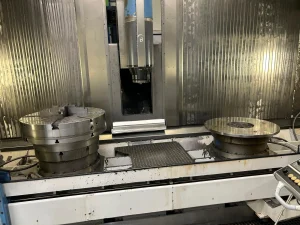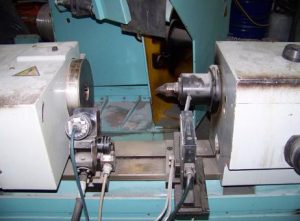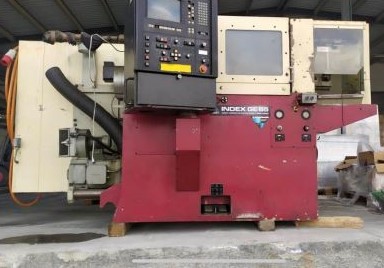
What Industry Experts Recommend Before Purchasing a Pre-Owned, Second-Hand, Surplus, Used Index GE CNC Lathe made in Germany
Here’s a refined, expert-level checklist and set of recommendations (based on industry best practices and machinist experience) you should use before buying a pre-owned / surplus / used CNC lathe (e.g. a German make, such as Index, or equivalent quality lathe made in Germany). Many of these points are drawn from how seasoned machine tool buyers, refurbishers, and shop owners evaluate used assets. Use this as a “due diligence” framework, and ideally bring along a trusted technician or metrology specialist when you inspect in person.
What Experts Emphasize: Key Principles & Risks
Before diving into the checklist, here are some high-level “rules of thumb” that industry veterans often cite:
- The spindle and headstock are the heart — if those are in poor condition, a lot of value is lost.
- The ways / bed wear often set the real precision limit — even if other parts are good, a lathe with worn ways may never return to tight tolerances.
- Hour counters and “power-on hours” are only a partial guide — what matters more is how it was used (modes, loads, abuse, maintenance).
- Obsolete controls / software are a hidden risk — many a good lathe has been devalued because its CNC or control electronics are obsolete or unrepairable.
- Documentation, parts availability, and service history matter enormously — even a well-built lathe can be a money pit if spares and schematics aren’t available.
- Test under load in your “real use case” — many latent defects only show up under actual cutting conditions (vibration, deflection, thermal drift).
- Don’t overlook logistics, rigging & installation costs — for heavy, precision German lathes, transport, alignment, and foundation setup can be expensive and complex.
With those in mind, here’s a structured checklist.
Expert Checklist for Evaluating a Used CNC Lathe
Below is a detailed, staged checklist (visual inspection, mechanical, motion, control, test cuts, plus risk evaluation) to guide your inspection.
| Stage | What to Inspect / Test | Why It Matters / Risk If Problematic | Suggested Methods / Tolerances |
|---|---|---|---|
| Pre-visit Preparation | • Request machine’s make, model, serial number, year, country of manufacture; • Request maintenance logs, repair history, parts replaced • Ask for photos/videos (exteriors, control cabinet, spindle taper, ways) • Ask for spindle hours / power-on hours and cut hours • Confirm what tooling, chucks, collets, steady/rest attachments, and accessories come with the machine • Confirm electrical, coolant, chip-conveying, and auxiliary systems included | To screen out ill-kept or hopeless machines before wasting travel time You will want to compare the machine’s history vs what you see on site | Ask seller to run video of the lathe moving axes, spindle at various speeds, tool changes, showing control interface |
| Visual / Structural Inspection | • Overall cleanliness and appearance • Rust, pitting, corrosion on exposed surfaces • Damage, dings, welded repairs, distortions, cracks • Enclosure and guarding, access covers • Chip trays, coolant sumps, coolant piping • Bed, saddle, carriage, cross-slide surfaces for visible wear or signs of abuse | Excessive rust, corrosion or damage often imply neglect Field repairs (bad welds) risk misalignment Poor guarding or missing enclosures may indicate neglected safety | Use good lighting, mirror, borescope if possible |
| Bed, Ways & Guiding Systems | • Check wear on bed ways / guideways: uneven wear, “cupped” surfaces, scrapes • Move carriage from headstock end to tailstock end with slight clamp loosen to detect how far it moves before “sticking” — this is a rough “wear gauge” test. (As described in used-lathe checklists) • Check cross slide / compound movement smoothness • Inspect way covers and bellows for damage or missing parts • Examine saddle, turret (if rotary) mounts, tool post slides, tailstock alignment | Way wear is among the most serious defects. It limits the achievable accuracy and may require regrinding or refurbishment. Damage or missing way covers accelerate wear. | Use a straightedge/dial indicator across the ways; check flatness and twist. Use a test indicator on carriage movement, check for binding, “bumps,” jumpiness |
| Spindle, Headstock & Bearings | • Run spindle at slow, intermediate, and high speeds (forward and reverse) and listen/feel for abnormal noise, vibration, or chatter • After a few minutes, check temperature of spindle housing (warm is OK, but very hot is a red flag) • Check for radial and axial play (using indicator on nose or test bar) • Inspect spindle taper for wear, scoring, damage • If gear-driven or ranged spindle, check gear changes engage cleanly and smoothly • If spindle drive is belt or direct, inspect belts or coupling, alignment | Spindle bearings failing or damaged spindle parts are among the costliest repairs Noise, vibration, or heat suggests bearing wear, misalignment, or internal defects Wear in the taper or nose may cause tool-holding inaccuracy | Run at full RPM for 5–10 minutes; mount test bar and sweep with dial gauge to check runout; feel for side-play and end-play |
| Ball Screws / Lead Screws / Drives | • Jog each axis (X, Z, maybe Y or B if lathe is multi-axis) slowly and look / listen for binding, backlash, rough sections • Run each axis at various speeds to detect noisiness, resonance, or “dead zones” • Inspect screw surfaces (if visible) for scoring, rust, damage • Check for backlash or lost motion (command small moves back and forth) • If possible, measure positioning repeatability | Worn screws or nuts can lead to accuracy loss, backlash, drift Drive defects (motors, amplifiers) reduce performance | Use test indicator, command known moves and check actual movement Jog test across full travel; see if behavior is uniform |
| Control, CNC, Electronics & Wiring | • Power up the machine; check control boot, screens, keypad, buttons, emergency stops • Browse menus, parameter screens, compensation settings • Check whether the software / control version is current / supported • Verify memory, battery backups, whether program storage is intact • Inspect wiring, PLCs, drives, servo amplifiers, control cabinet for signs of overheating, burnt connectors, missing covers • Check communication ports (USB, Ethernet, serial) and PLC I/O • Ask for electrical schematics, ladder diagrams, wiring documentation • Inspect control panel wiring, fuses, terminal blocks, cable trays | A lathe is only as useful as its control. Obsolete or broken electronics often get machines scrapped. Poor wiring or overheated parts are maintenance headaches or safety risks Missing schematics impede future repair Without control support, upgrades and spare parts may be very expensive | Note if the control is original or an aftermarket retrofit Check whether spare parts (modules, cards) are available in your region |
| Auxiliary Systems (Coolant, Chip Removal, Hydraulics, Pneumatics, Tailstock, Bar Feeds) | • Check coolant pumps, filtration, piping, signs of leaks, rust, clogging • Inspect chip conveyor or chip removal systems, guards, torque arms • If hydraulic or pneumatic circuits exist (tailstock, collet clamping, steady rest), test pressures, check hoses, valves, leaks • Check tailstock alignment, movement, quill function • Test chuck / collet actuators, check chucks / jaws, tool holders, tuners, steady rest movement | Auxiliary systems often get neglected; failure in these can incapacitate the machine even if the core is good Leaking or failed subsystems reduce reliability and increase downtime | Run coolant system, check flow, inspect for scale, leaks. Operate tailstock under load if possible |
| Safety, Guards & Compliance | • Verify that all safety interlocks, limit switches, door guards, sliding windows, emergency stops function correctly • Check that machine is compliant with local safety standards (electrical, guarding, CE, OSHA, etc.) • Inspect protective covers, windows, shields, chip guards • Confirm that any modifications or retrofits have not compromised safety | Legal and insurance implications; safety must never be compromised Non-conforming machines may require expensive upgrades or may be illegal to run | Test E-stop, open enclosures and see whether motion is inhibited, test door latches, limit switches |
| Test Cut / Trial Run Under Load | • Perform trial machining on representative material (steel, alloy, etc.) using a test program (e.g. turning, facing, boring) • Cut a series of features (cylinders, squares, grooves) and measure dimensions, geometry, run-out • Check surface finish, vibration marks, chatter • Run repeated cycles to test consistency and drift • Measure part tolerances, concentricity, straightness, roundness • Monitor the machine during cut for stability, power draw, thermal behavior | Many defects (vibration, misalignment, thermal drift) only show up under real load Good trial cuts give confidence and help you gauge “how good” the machine can deliver | Bring metrology tools (micrometers, dial indicators, roundness gauge, surface finish tester) Cycle repeatability tests (e.g. same cut multiple times, measure variation) |
| Metrology / Geometric Checks | • Use precision dial gauges, test bars to check: – Spindle axial / radial run-out – Tailstock alignment (in line with spindle) – Bed twist or deflection – Turret indexing accuracy (if turret lathe) – Squareness, perpendicularity, parallelism of axes • Thermal drift tests (measure a feature immediately after cut vs after warm-up) | Geometric errors limit achievable tolerances If alignment is off, parts will not meet spec even if control is perfect | Use certified metrology standards, comparison bars, calibrated gauges |
| Risk / Value Assessment & Negotiation | • Estimate what parts or repairs might be needed (bearings, screws, spindle, electronics) • Research parts and support availability (for that German model) • Check whether upgrades or control retrofits are feasible • Assess the downtime and refurbishment cost vs benefit • Use defects found to negotiate discount • Ask for a “warranty period” or acceptance period (if dealing through a broker) • Ensure rigging, transport, installation, leveling, calibration costs are included or estimated | Even a well-functioning machine may require tens of thousands of dollars in rework or upgrades. A “bargain” is only a bargain if the risk is understood | Prepare a punch list of defects & estimate cost. Compare with quotations for new or fully refurbished equivalents |
| Documentation & Transfer / Ownership Checks | • Obtain original factory manuals, parts lists, electrical schematics, calibration certificates • Verify machine serial / ID plate matches documentation • Check title, ownership, maintenance record, any liens • Ask for spare parts, tooling inventory transfer • Ensure seller signs a bill of sale, condition clause, acceptance terms | Without proper documentation, servicing, calibration, and repair become far harder Title or lien issues can create legal risk | Make sure documentation is legible, preferably digital & physical. Verify all transferred items are included |
Additional Recommendations & Tips from Industry Experts & Machinists
Here are extra insights and frequently cited recommendations from forums, blogs, and machine buyers:
- Run the machine under all axes: Many defects only manifest when all axes move in concert (e.g. turret lathe with B-axis, C-axis)
- Ask for the “alarm history” from the control, if available — many CNC controllers log past errors or fault events, which can reveal chronic issues
- Inspect “soft limits / homing accuracy / reference moves” — check whether homing is repeatable and whether the axes reliably return to zero or home positions
- Check the spindle’s “cold start vs hot behavior” — some problems only occur when thermal expansion is in play.
- Look for signs of “washout” or coolant damage — e.g. coolant in ways, leaks, erosion around edges
- Verify spare parts and control support in your region — even a German-made lathe can become problematic if spare modules, boards, or key parts must be imported at high cost
- Prefer machines with recent major overhauls or refurbishments — these often come with known replaced parts (bearings, ballscrew, control upgrades)
- Bring an independent metrology / machine-tool technician with you — many buyers report that having a second eye catches hidden defects (bearing noise, drive issues) that would otherwise be missed.
- Set aside a contingency / refurbishment budget — when buying used heavy equipment, reserve ~10-30 % of purchase price for unforeseen repairs, alignment, calibration, or electronics upgrades
- Negotiate based on defects, not a fixed % off list price — if you find a worn spindle or a bad ball screw, use those as bargaining chips rather than trying to force a fixed margin.