09/11/2025
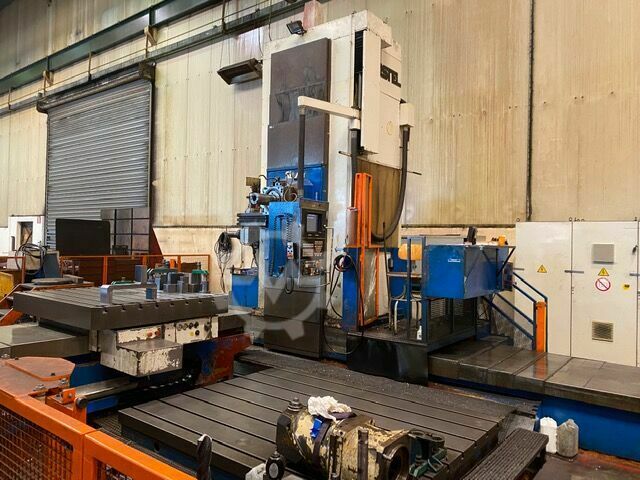
What Industry Experts Recommend Before Purchasing a Pre-Owned, Second-Hand, Surplus, Used CASTEL SILVER LINE CNC Horizontal Boring Machine made in Italy?
Here are industry-expert recommendations to follow before purchasing a pre-owned, surplus, second-hand CNC horizontal boring machine such as a Castel “Silver Line” (made in Italy). These apply broadly to used CNC boring machines, but many points are particularly relevant for large-format machines like this.
Key Pre-Purchase Checks
1. Machine identity & history
- Confirm the exact model, serial number, and build date of the machine.
- Check the machine’s service and usage history: hours run, major repairs, any rebuilds. A useful guide: look for full maintenance logs.
- Verify the machine came from a clean production environment (not abused or neglected).
- Ask about why the machine is being sold (upgrade, shutdown, relocation) as this may hint at hidden issues.
2. Mechanical condition
- Inspect the spindle and bearings: listen for abnormal noises, check for run-out or vibration.
- Check guideways, ball screws, and ways for wear, scoring, or corrosion. Smooth movement without binding is critical.
- For a horizontal boring machine, also check table travel, clamping mechanisms, column integrity, and whether any large structural element has been repaired or welded.
- Inspect tool changers/ATC, hydraulic systems, and firmly check for any signs of oil/coolant leaks, corrosion or contamination.
3. Control system & software
- Make sure the CNC control (which may be proprietary to Castel or a compatible system) is in working order: the panel, software version, parameters, error history.
- Check availability of spare parts, firmware updates, and support for the control system.
- Ensure the machine’s program memory, backlash compensation, and any linear scale feedback (if present) are functioning.
4. Accuracy & function test
- Request a demonstration or test cut if possible: check bore book accuracy, repeatability, surface finish of bored holes—especially for large machines where rigidity matters.
- Perform a visual inspection of the work area for signs of sloppy work or poor maintenance (chips, coolant residue, rust).
- Check for backlash in axes and check table/travel accuracy. Many used-machine guides emphasise this step.
5. Environment & installation compatibility
- Because these machines are typically heavy, check the machine’s footprint, weight, required power & hydraulics, and whether your site can accommodate it (floor loading, access, crane/lift).
- Check if machine was relocated before and whether its foundation/grid was re-leveled correctly.
- Confirm the machine’s coolant, air supply, hydraulic supply, and drain requirements. The previous environment matters for longevity.
6. Spare parts & serviceability
- For an Italian-made machine (Castel), check availability of parts in your region: spindle bearings, linear guides, control parts, hydraulics.
- Ask whether any major component replacements have been done (spindle, drives, linear scales) and whether documentation exists.
- Determine lead times and cost for key spares (e.g., spindle cartridge) because downtime on a large machine is costly.
7. Total cost of ownership
- Beyond purchase price, budget for installation, transport, commissioning, re-leveling, alignment, potential refurbishment. These are often overlooked.
- Factor in expected remaining life: if the machine is many years old and heavily used, you may face upcoming major expenses.
- Check remaining warranty (if any), or whether seller offers any guarantee/acceptance period.
8. Documentation & compliance
- Obtain all manuals (mechanical, hydraulic, electrical), wiring diagrams, CNC parameter sheets.
- Ensure you can meet any regulatory or safety standards in your region for machine installation and use (CE-mark, electrical compliance, etc.).
- Check machine alignment and calibration certificates if available, to support accuracy claims.
9. Negotiation & purchase terms
- Negotiate based on condition, hours, known issues (e.g., spindle had noise, ball screw replaced) and make sure these are documented in writing.
- Clarify whether sale includes tooling, fixtures, attachments, manuals.
- If possible, inspect machine in your facility or via video walkthrough, and include right of return or inspection clause in purchase agreement.
Special Considerations for Horizontal Boring Machines (HBC) like the Castel Silver Line
- These machines often have very large tables and long travels: check for table flatness over large spans, and whether table surfaces are still within tolerance.
- Bore alignment over long axis: misalignment can result in costly rework.
- Check for wear in spindle overhang, boring head adapters, large radius boring bars.
- Confirm whether “horizontal” table can tilt or swivel if applicable; check rotational axes (B/C) for play.
- Large machines may have heavy chip loads and coolant contamination – examine internals for excessive wear due to chip/wear debris.