09/11/2025
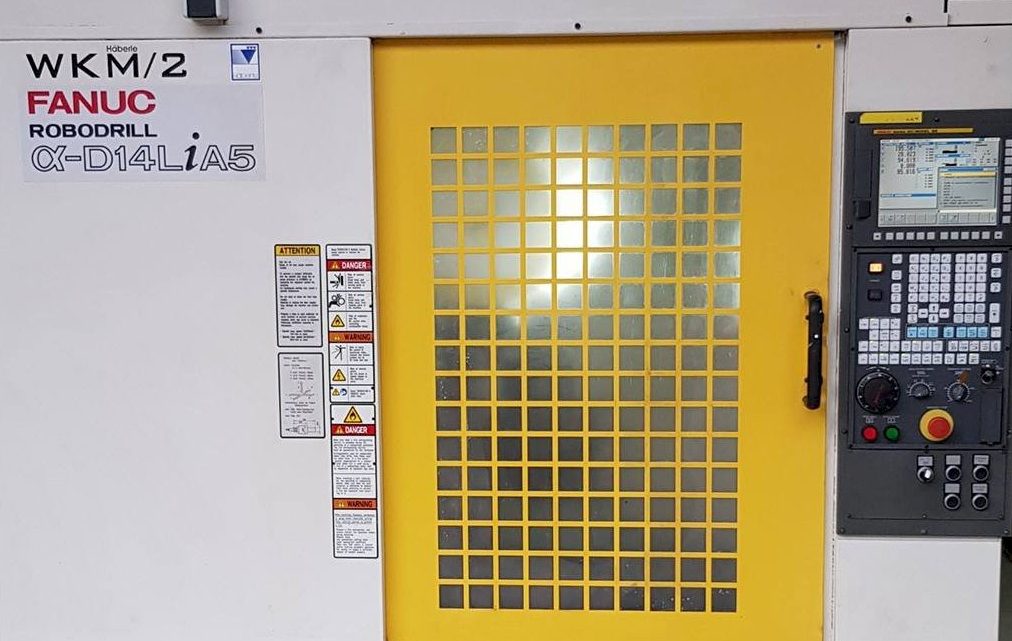
What Industry Experts Recommend Before Purchasing a Pre-Owned, Second-Hand, Surplus, Used FANUC ROBODRILL Alpha α-D14LiA5 CNC Drilling & Tapping Center made in Japan
When considering purchasing a FANUC ROBODRILL α‑D14LiA5 (or similar pre-owned, surplus, used CNC drilling & tapping centre made in Japan), here are industry-expert-recommended checks and considerations to make sure you are investing smartly and mitigating risk.
What to check before purchase
Here are key areas you should investigate:
- Machine history & usage
- Ask for the spindle hours (the actual cutting time) and power-on hours. Machines with lower cutting hours are generally preferable.
- Find out what kind of materials the machine was used on. For example, if it mostly cut heavy cast iron or very abrasive materials, wear may be greater.
- Inspect for how well the machine has been maintained: any records of service, parts replaced, major breakdowns.
- Visual & mechanical condition
- Do a visual inspection of the machine: check for signs of abuse, corrosion / rust, wear on covers, missing panels, damage to the structure.
- Check the spindle condition and bearings: operate the spindle (if possible) and listen for unusual noises or vibration. Worn bearings or damaged spindles are very expensive to repair.
- Inspect guide-ways and ball-screws for wear, scoring, play/backlash. Since they affect positioning accuracy and repeatability.
- Check the tool-changer mechanism (if present) for smooth operation, any misalignment, broken pockets or retention clips.
- Check for leakage, oil/coolant leaks, chip build-up, damaged way covers or protective covers. Such things often betray poor maintenance.
- Control system & software compatibility
- Identify the CNC control type (in this case likely a FANUC controller) and ensure that the machine’s software is up-to-date or at least supported. Older controls may restrict functionality or future parts availability.
- Ask for the manuals, wiring diagrams, maintenance logs, parts lists. Lacking documentation is a red flag.
- If the machine uses custom or outdated software modules, check if upgrades are possible and what the cost would be.
- Ensure the machine is set up, running, and you can see it making parts (or at least tested) rather than just standing idle. On-site demo strongly recommended.
- Accuracy, geometry, repeatability
- Check the machine’s positioning accuracy. Use a gauge block, or measure a known part. Look for signs of backlash when reversing axes.
- Check the spindle taper for wear, clean tool-holder fit, check the machine tramming (especially head tilt in drilling/tapping machines) and table flatness. For example: “check the taper condition and head tram” was mentioned for ROBODRILL-type machines.
- Assess the machine under actual working load if possible (i.e., do a test cut). See how it performs in practice, not just idle.
- Spare parts, serviceability & brand reputation
- With a Japanese-made machine (made by FANUC in this case), ensure that spare parts are readily available in your region and that skilled service support exists.
- Investigate the availability of consumables, tooling, and whether any major components (spindle, ball-screws, drives) have been replaced recently or will soon need replacement.
- Consider brand reliability: Fanuc machines generally have strong support but that doesn’t remove risk of major component failures.
- Total cost of ownership & hidden risks
- Make sure to budget not just purchase price, but the cost of moving/transporting the machine, installation, leveling, foundation, commissioning, and any required refurbishments.
- Ask about any crash history or accident history. A machine that has crashed may have hidden damage (e.g., to ways or spindle).
- Consider what happens if axes components wear out: costs to remedy. One user stated: “The most expensive fixes … spindle, gearbox, vector drive, ball screw replacements, and axis drives.”
- Check if the machine is still meeting production requirements you have (speed, tapping capability, rigidity, access to tooling). Since the ROBODRILL series is high-speed, light duty, you may want to confirm it suits your machining purpose.
Company-specific checklist for ROBODRILL α-D14LiA5
Given you are looking at a specific model made in Japan, here are a few model-specific things to check:
- Confirm the model number exactly: α-D14LiA5 (or similar). Ensure it matches the documentation.
- Check spindle taper—these machines have high speed spindles and good maintenance is key.
- The “LiA5” variant might indicate certain options (like L = large, i = integrated, A5 = version). Ask what options are present (e.g., thread tapping unit, high-speed spindle, cooling systems).
- Since the machine was in Japan originally, ask about whether it was used for light work (aluminium, plastics) or heavy duty (steel, castings) – that will affect wear.
- Check if the machine was relocated or shipped many times – this can affect alignment and geometry (axes may have been knocked out of level during transportation).
- Verify the machine’s power requirements and compatibility for Türkiye/EU—voltage, phase, control panel language (English vs Japanese), cooling system standards.
- Review transport & installation costs: machines coming from Japan may require extra shipping, customs, crane, re-foundation, etc.
Red flags to watch
- No maintenance/service history, missing manuals or wiring diagrams.
- Machine cannot be demonstrated under power or making a test part.
- Excessive noise or vibration in the spindle or axes.
- Significant wear visible on way covers / ball screws / tool changer.
- Unknown or excessive hours of use, especially heavy duty work.
- Control system so old it cannot be serviced or parts are obsolete.
- Crashes or stories of damage that you cannot verify.
- Machine has been “reset” or hours have been tampered with (some controls allow hours to be reset) – always validate.
Summary Table
| Check Category | Key Questions to Ask / Inspect |
|---|---|
| Usage & history | What are spindle hours? What material was machined? Records? |
| Visual & mechanical | Condition of spindle, ways, ball screws, tool changer, leaks? |
| Control & software | Which control version? Manuals available? Upgradable? |
| Accuracy & geometry | Measured accuracy? Backlash? Spindle taper wear? |
| Parts & serviceability | Spare parts available? Service support? Potential big costs? |
| Ownership & hidden costs | Transport/installation costs? Crash history? Total cost? |