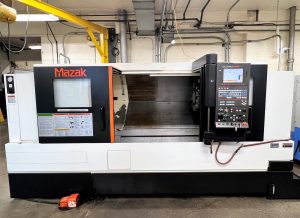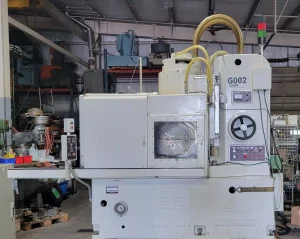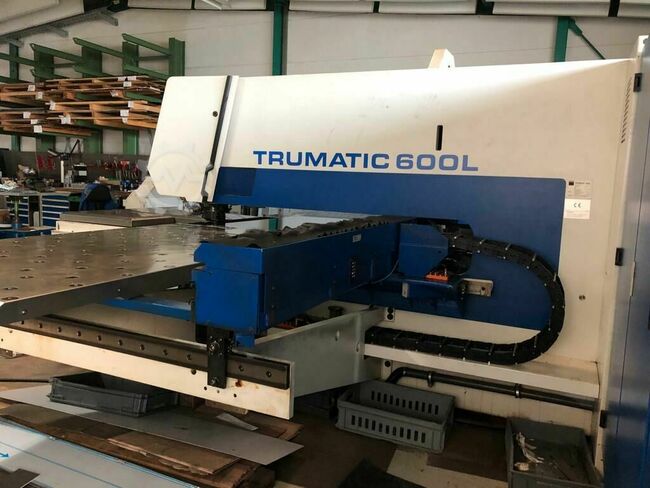
What Do Buyers Look for Before Investing in a Pre-Owned, Used, Secondhand, Surplus CNC Equipment Before Purchase TRUMPF 600 L CNC Laser Cutting Machine
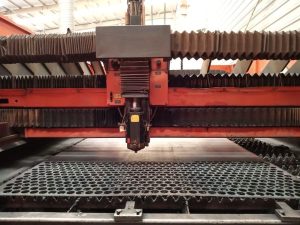
Here’s a detailed guide / checklist of what a buyer should look for before investing in a pre-owned / surplus TRUMPF 600 L (or similar TRUMPF laser / punch-laser) CNC cutting machine. Many of these items are general to used CNC / laser equipment, but others are specific to laser / punch-laser machines like TRUMPF 600 L (CO₂ or hybrid systems).
Rough benchmark & what “good specs” look like (for TRUMPF 600 L / similar)
Before inspection, get hold of the machine’s spec sheet (or the seller’s listing) so you can compare what you see against “ideal” or expected values. Some relevant reference data for TRUMPF 600 L / Trumatic 600 L machines include:
- The TRUMPF “Trumatic 600L” is often a combination punch + laser (CO₂) machine (punch-laser hybrid).
- Punching force: ~ 220 kN (≈ 22 tons) in many listings.
- Laser power: typical units show ~ 1.8 kW, ~ 2.4 kW in some upgraded versions.
- Maximum sheet thickness / material capability: e.g. steel up to 8 mm in punching capacity.
- Machine travel / usable area: examples show work area ~ 3,035 × 1,280 mm or similar for both punching and laser modes.
- Control systems: many units use Siemens Sinumerik 840D for controlling the machine.
- Axis speeds: example for combined laser punching machine “TC 600 L” shows X-axis top speed ~ 90 m/min, Y ~ 60 m/min, simultaneous ~ 108 m/min.
- Dimensions & weight: these are heavy and bulky, often in the tens of tons. One listing gives machine weight ~ 23,000 kg.
When inspecting a used unit, be sure the claimed spec is close to the original or acceptable deviation. Large deviations or missing functionality should be red flags.
What to Inspect / Test (On-Site / In-Person)
Here’s a systematic checklist you or your technical inspector should run through. Bring measurement tools, a test piece (sheet metal), gauges, and possibly vibration/thermal sensors.
1. General / External Condition
- Frame, structure, base: look for cracks, welds, distortion, alignment shifts, or signs of repair.
- Covers, guards, seals, doors: check for wear, missing panels, torn bellows, chip ingress.
- Rust, corrosion, pitting: on surfaces, edges, sheet support surfaces, the machine bed or surrounding areas.
- Leakage: coolant, hydraulic oil, pneumatic leaks, gas lines. See hoses, joints, seals, valves.
- Wiring & cabling: check for frayed wires, loose connections, heat damage, cable strain, dust or chip damage.
- Leveling, foundation, mounting: check if the machine has shifted, moved, or been poorly relocated in the past.
- Chip / debris accumulation: dirty interiors or clogged chip conveyors / filters suggest neglect.
- Cooling / ventilation: fans, vents, filters should be intact and clean.
These external indicators often reflect the internal health (how carefully previous owners maintained it).
2. Laser / Optical System
Since TRUMPF 600 L (or the comparable models) use a laser, the optical and laser systems are critical and often expensive to fix or replace. Key checks:
- Laser source & tube: inspect the laser resonator (CO₂ tube or source) for signs of aging, misalignment, or damage.
- Power output: measure actual laser power (if possible) and verify it matches spec (or is at acceptable level).
- Optical path / mirrors / lenses: examine mirrors, protective windows, lenses, beam path cleanliness, alignment, contamination or coating wear.
- Beam quality: check beam focus, shape, divergence—impaired optics degrade cutting performance.
- Cooling / gas supply to laser: verify that the cooling system (water / chillers) and gas supplies (CO₂, He, N₂ or assist gas) are functional, stable, and with adequate capacity.
- Protective windows / nozzle / head condition: check for erosion, carbonization, damage, and whether spare parts are available.
- Beam alignment: see whether the beam is properly aligned along the path (test with tool or alignment target).
- Exhaust / fume extraction: confirm extraction system is intact, ducting is clean, filters or scrubbers are in place.
If the optical system is degraded, you may need costly replacements or realignment services.
3. Punching / Mechanical Systems (if it’s a punch/laser hybrid)
For punch-laser combination machines (which many “600 L”-type TRUMPF machines are), also inspect the mechanical / punching subsystem:
- Punch drive / ram: inspect ram movement, smoothness, absence of play or vibration.
- Punch tooling / turret / tool holders: check tool holders, punch stations for alignment, wear, looseness.
- Punching cylinders, sliders, guides: check for wear, seals, binding, lubrication.
- Turret indexing: test turret indexing accuracy, speed, repeatability, and whether indexing is smooth and precise.
- Punching force / mechanism: verify the punching force (220 kN typical) by a test or known standard if possible.
- Die alignment / tool change: check tool changes, die alignment, tool seating, clamping and release mechanisms.
- Punching stroke control: check sensors, position feedback, limit switches, ram height control.
If the punching mechanisms are worn or poorly maintained, it can degrade performance or cause tool breakage.
4. Motion / Axes / Mechanical Motion Components
- Jog / traverse each axis (X, Y, Z, possibly others): see for smooth motion, no binding, stiction, rough segments.
- Backlash / lost motion: use a gauge or indicator to measure backlash in each axis in both directions.
- Linear guides / rails: inspect for wear, scratches, pitting, scoring, or signs of repair.
- Ballscrews / timing belts / lead screws / nuts: check for wear, noise, free play, and presence of metal debris in nuts or housings.
- Support bearings / guides / pillow blocks: listen/feel for noise or play in bearings.
- Lubrication / oiling / greasing systems: test auto-lube systems, check lines, filters, reservoirs, pressures.
- Travel limits / mechanical stops: verify limit switches, safety stops, overtravel detection.
The better the axes and motion systems, the more accurate, faster, and reliable the machine will be.
5. Control, Electronics, and Drives
- Power up control: watch boot messages, alarms, warnings, error logs.
- Operator panel & interface: test buttons, display, softkeys, emergency stop, interlocks, indicators, keypads.
- Parameters, offsets, I/O: see whether you can access machine parameters, stored offsets, macro programs, I/O mapping.
- Program transfer / interface: test DNC / network / USB / serial / Ethernet file transfers and compatibility.
- Test motion commands: jog, incremental moves, homing, limit switch behavior, reference moves.
- Run a test program (simple cutting pattern) and monitor axes movement, speed, accelerations, synchronization, deviations, lags.
- Under load: observe how the machine handles actual cutting—watch for dropped axis motion, slowdowns, interpolation errors.
- Inspect electrical cabinet: drives, servo amps, power supplies, capacitor status, fans, wiring, connectors.
- Cooling of drives / electronics: ensure proper cooling and ventilation, check fans and filters.
- Documentation & schematics: ensure the machine includes full electrical schematics, wiring diagrams, ladder logic, control manuals, parameter backups, software media. Missing documentation greatly increases risk.
Many buyers decline deals if control or schematic documentation is missing or incomplete.
6. Test Cutting & Performance Under Load
- Run an actual cutting job using material and thickness similar to what you will use.
- Measure resultant parts: dimensional accuracy, edge quality, burrs, kerf, perpendicularity, surface finish.
- Test repeatability: run multiple cycles and check variation / drift over time.
- Long-run stability: let the machine run for an extended period (30, 60 min or more) and monitor drift, temperature effects, deviations.
- Max load / speed performance: push the machine with more aggressive feed / depth to test near its limits.
- Check for chatter, vibration, misfires especially in corners or direction changes.
- Edge quality: inspect cut edges for dross, melt, heat-affected zones, and how clean the cuts are.
- Material handling / sheet handling / clamping: verify sheet support, clamps, vacuum or pallet handling are functioning under load.
If performance under load is poor, many other components may be compromised.
7. History, Documentation, Parts, & Spares
- Maintenance / service logs: request historical logs, repairs, optical alignments, mirror replacements, etc.
- Operating / cutting hours (and how many are “beam ON” hours).
- Parts replaced / upgrades / retrofits: find out which critical components were swapped or upgraded.
- Spare parts availability: especially for laser optics (mirrors, lenses, nozzles), gas system, resonator module, control modules, servo drives.
- Control / electronics support: check whether the control and drive modules are still supported, or if third-party equivalents exist.
- Original documentation: operation / maintenance manuals, spare parts catalogs, wiring diagrams, optical alignment diagrams, software backup media, calibration certificates.
- Calibration / certification history (if any).
- Warranty or guarantee terms: even used sellers sometimes offer limited warranties for a short period.
If the machine is poorly documented or parts are obsolete, your risk increases significantly.
8. Contract, Warranty, Acceptance & Logistics
- Negotiate an acceptance / trial period after delivery, where you can thoroughly test performance; if it fails, you can reject or renegotiate.
- If possible, secure a limited warranty on major components (laser tube / optics, control, drives) for a short time.
- In the contract, clearly list the machine’s condition, known defects, included accessories, test conditions, acceptance criteria, and rights in case of underperformance.
- Plan for shipping, rigging, disassembly / reassembly, alignment, calibration, utilities hookups (power, gas, cooling, exhaust, ventilation, grounding).
- Verify that your facility can accommodate the machine’s size, weight, crane capacity, foundation, ventilation, and access.
- Include budget for installation, leveling, commissioning, calibration, spare parts, and unforeseen repairs.
- Upon installation, have skilled service technicians perform alignment, calibration, safety checks, optical alignment, and acceptance runs to verify the machine meets promised tolerances.
Red flags / Deal-Breakers to Watch For
Below are issues that often signal serious problems or unwise investments:
- Optical path damage or misalignment — if mirrors, lenses, or optical train are degraded, replacement or re-alignment is costly.
- Laser resonator tube near end-of-life or severely degraded — replacing the laser source is expensive.
- Excessive wear in mechanical / punching mechanisms (if hybrid) — if ram, turret, guides are worn, performance will suffer.
- Missing or malfunctioning gas / cooling / ventilation systems — these are critical for maintaining laser performance and part quality.
- Cracked, misaligned, or warped frame / bed structure — structural integrity is essential for repeatability.
- Control or drive systems missing, faulty or obsolete — especially if you cannot access replacement modules or software.
- Lack of documentation (optical alignment diagrams, electrical schematics, software backups) — without these, servicing becomes much riskier and more expensive.
- No opportunity for full test cut under real load — if seller refuses you to cut real material, it’s a warning sign.
- Parts unavailable or prohibitively expensive (spare optical components, control modules, gas mixers, etc.).
- Significant performance degradation: e.g. poor cut quality, drift, inability to maintain tolerances under load.
- No acceptance period or contract protections — if seller insists on “as-is” with no recourse, that’s high risk.