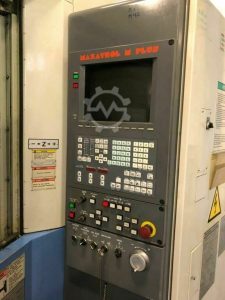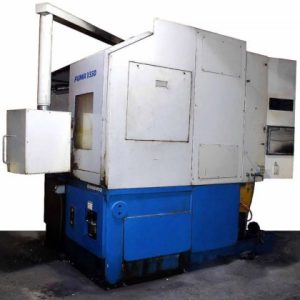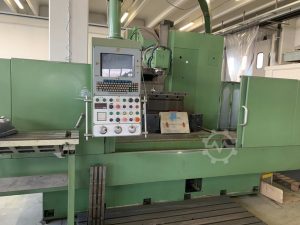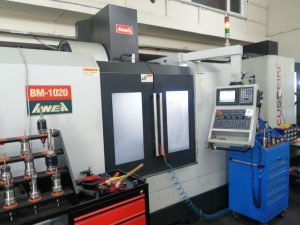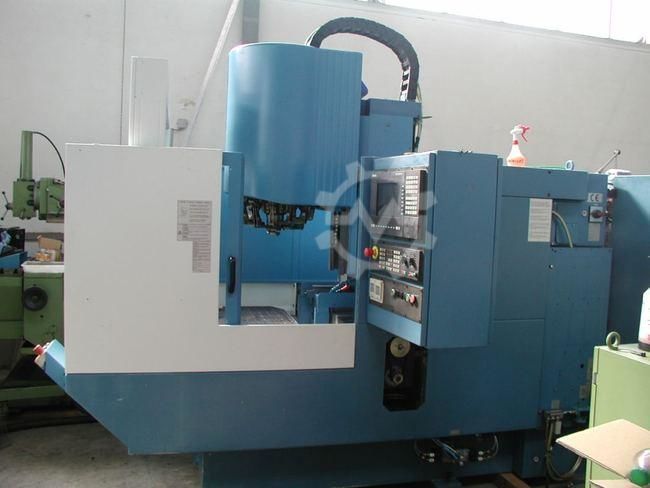
What Do Buyers Look for Before Investing in a Pre-Owned, Used, Secondhand, Surplus CNC Equipment Before Purchase Chiron FZ 12 W CNC Vertical Machining Center made in Germany
Here’s a comprehensive guide and checklist for what a buyer should look at before purchasing a used / surplus Chiron FZ 12 W (or similar high-speed CNC vertical machining center). Many parts of this are general to used CNCs, but some are specific or more critical for a machine like the the Chiron 12-series.
I’ll begin with known specifications (so you know what to compare against), then go into inspection criteria, test procedures, red flags, and risk mitigation.
Known spec “benchmark” (for Chiron FZ 12 W / 12-series)
These specs help you know what “good” looks like and what to expect. Use them as reference when you see a used unit.
- According to Chiron’s stock machine data: X / Y / Z travels ~ 550 / 400 / 360 mm (for a variant)
- The stock “12 Series” machines are described as compact, rigid, thermally stable, with vertical traveling column and good chip flow.
- In used listings, common FZ 12 W units show travels X = 550 mm, Y = 300 mm, Z = 425 mm
- Typical spindle speed is up to ~ 15,000 rpm in certain “W” or higher versions
- Tooling: Many 12-series machines use HSK-A50 taper for tooling
- Tool changer: up to 48 tools in some stock machines
- Rapid feed / traverse speeds on many units: ~ 40 m/min in X/Y, ~ 60 m/min in Z in Chiron’s spec sheet for FZ 12 W variant.
- Power / spindle: ~ 37 kW maximum (in the “stock machine” listing)
Use those as your “expected envelope” — if a used machine’s specs deviate significantly, that’s worth probing.
What to inspect / verify (on-site / pre-purchase)
Below is a structured checklist you (or a trusted technician) should go through when evaluating a used Chiron FZ 12 W (or similar). Bring measuring tools (test bars, dial gauges, vibration meters, thermal gun, etc.).
1. Fit and “match to your work” checks
- Work envelope / travels: Confirm the actual usable X, Y, Z strokes (versus the theoretical). Sometimes travel is limited by clampings or collisions.
- Table / max load: Verify table dimensions and maximum allowed workpiece weight (including fixtures).
- Tool interface / taper: Confirm the spindle’s tool interface (HSK-A50 or variant) and whether that matches your tooling.
- Tool magazine / capacity: Check how many tool slots the machine has and whether that meets your tooling needs.
- Spindle speed / power: Confirm the spindle’s maximum rpm, torque, and power rating.
- Control type / version: Check which control (Siemens, Fanuc, etc.), software versions, module presence, etc.
- Machine footprint / weight: Make sure your shop has the space, floor strength, crane capacity, power, foundation, etc.
If the machine’s specifications (travels, spindle speed, tool capacity) do not meet your intended application, it may not be usable without major modifications.
2. Visual / structural inspection
- Frame, base, castings: Look for cracks, repairs, welds, distortions, or signs of abuse.
- Guideway covers, bellows, guards: Are they intact? Torn or missing covers allow chips, coolant, and debris to enter and accelerate wear.
- Rust, corrosion, pitting: Inspect exposed surfaces, slide surfaces, table, column, and castings.
- Chip / coolant leakage: Look for leaks in piping, seals, fittings, coolant tanks, and around the spindle or head.
- Wiring, cables, connectors: Check for frayed wires, loose connections, signs of overheating or charring.
- Panels, covers, doors: Condition, alignment, access, locks.
- Base alignment / leveling feet: See if the machine has shifted or been moved roughly.
These external signs often give early warning of neglect or abuse.
3. Spindle / spindle drive / tool interface
- Run the spindle at various speeds (low, mid, high). Listen for noise, vibration, bearing hum, grinding.
- After sustained running, check temperature (is the spindle overheating?).
- Measure runout (radial and axial play) via a test bar or dial gauge.
- Check spindle taper / interface surfaces for wear, scoring, damage. Use a known good toolholder to test seating.
- If the machine has through-spindle coolant or spindle cooling systems, verify those are functional.
- Inspect the spindle drive motor, coupling, bearing supports, and lubricants.
- If there is tool change (ATC), test tool changes and inspect grippers, alignment, sensors.
Because the spindle is one of the most expensive parts to rebuild or replace, its condition is critical.
4. Axes, guideways, ball screws, backlash
- Jog each axis (X, Y, Z) through full travel. Feel for stiffness, binding, or “dead spots.”
- Use a dial gauge to measure straightness, tramming, or deflection across travel.
- Measure backlash / lost motion on all axes in both directions.
- Inspect guide surfaces (linear guides, slideways) for wear, scuffs, scoring, pits.
- Check ball screws (or lead screws), nuts, and their support bearings. Listen for rough spots, test movement.
- Check lubrication / automatic lubrication systems, oil lines, filters, reservoirs.
- Evaluate how much wear compensation margin remains (whether the machine can still be adjusted or re-lapped to restore geometry).
These control the accuracy, repeatability, and performance under load.
5. Tool changer / magazine / tool handling
- Cycle all magazine/tool stations. Test indexing under no-load and loaded conditions.
- Test tool change operations: pick up, place down, reliability, speed, alignment.
- Check gripper condition, clamp mechanism, sensors, alignment of each pocket.
- Confirm that magazine rails, guides, sensors, and drives are intact and not misaligned.
- Verify whether spare grippers or magazine components are available.
If the ATC is faulty, the machine might still work manually, but productivity suffers.
6. Control, electronics, drives, and software
- Power up the control and observe boot messages, alarms, warnings.
- Test all control panel functions, soft keys, displays, emergency stop (E-stop) circuits, interlocks.
- Access parameters, offsets, stored programs, backup memory, error / alarm history.
- Test motion commands: jog, incremental moves, homing, reference moves, limit switch behavior.
- Run a test program (simple contours, pockets) and monitor actual vs commanded motion.
- Test communication (DNC / file transfer, USB, Ethernet, serial ports) if available.
- Under load, watch for stalling, dropouts, lag in axis motion.
- Inspect the electrical cabinet: servo / drive modules, power supplies, cooling fans, capacitor condition, wiring neatness.
- Confirm that documentation is included: electrical schematics, wiring diagrams, ladder logic / control logic, operator & service manuals, backup media. Missing documentation is a serious risk.
Many used CNC buyers consider missing control / wiring / software documentation a deal breaker.
7. Performance / test cut
- Perform a real machining test using material similar to what you plan to run.
- Inspect the output part: dimensional tolerance, repeatability, surface finish, geometry (flatness, roundness, concentricity).
- Run the machine for an extended time (30 min to 1 hour or more) to check for drift, thermal effects, changes in accuracy.
- Try heavier cuts or deeper feeds to push the machine and see how it handles load.
- Monitor for vibration, chatter, deviation, tool wear anomalies.
- Verify whether commanded feed and speed changes are correctly executed.
If under load it fails to hold geometry or shows instability, that’s a warning sign.
8. History, documentation, parts & spares
- Ask for maintenance logs / service history, especially any repairs of spindle, drives, axes, or major overhauls.
- Request running hours / cutting hours. The cutting hours are more telling of wear than power-on hours.
- Get records of parts replaced, upgrades or modifications, and invoices if possible.
- Verify the availability of critical spare parts (bearings, drives, control modules, tool changer parts).
- Check whether the control / electronics modules are still supported by the manufacturer or third parties.
- Check that all original documentation is present: operation & maintenance manuals, parts catalogs, wiring diagrams, schematic diagrams, software backups.
- If the machine was retrofitted (e.g. control upgrade, spindle upgrade, axis upgrade), inspect the quality of that work.
A well-documented history and available spares reduce risk dramatically.
9. Contract, warranty, acceptance & logistics
- Negotiate an acceptance / trial period after installation, so you can verify that the machine meets performance guarantees.
- Try to secure a limited warranty (for example, on spindle, drives, control) if vendor allows.
- On the contract, explicitly document “as is” vs “guaranteed condition,” included accessories, known issues, and that your test is part of final acceptance.
- Plan for transportation, disassembly/reassembly, leveling, foundations, utilities (power, coolant, air), chip handling, wiring, commissioning costs.
- Ensure your facility has appropriate infrastructure: floor strength, crane / hoist capacity, clearance, power supply, ventilation, etc.
- Budget contingency for unexpected repairs once the machine is installed and tested.
- During installation, ensure alignment, calibration, and test checks are performed before full production use.
Red flags / deal-breakers to watch out for
When inspecting a used Chiron FZ 12 W, certain issues should cause you to step back or drastically renegotiate:
- Spindle bearing damage, noise, or excessive play — repairing or replacing is expensive.
- Severe wear or irreparable damage to guideways, axes, or ball screws.
- Control / electronics missing, faulty, or obsolete modules — especially if no schematics or backups.
- ATC / tool changer failures or severe misalignment — tool changes failing or misfeeding reduce uptime.
- No opportunity for a real test under load — if the seller refuses, that’s suspicious.
- Missing or incomplete documentation (manuals, wiring diagrams, schematics, software backups).
- Obsolete or unavailable spare parts — if critical parts are not available, future maintenance becomes a gamble.
- Signs of abuse, impact, collisions, or major repairs without good records.
- Exhausted wear compensation — if the machine has no margin left for alignment or correction, accuracy cannot be restored.
- Misleading or exaggerated specifications — e.g. a claimed 15,000 rpm spindle when the drive / motor may not support continuous use at such speeds.
If you see multiple red flags, the deal may be too risky or require a large discount.