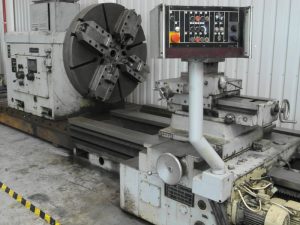
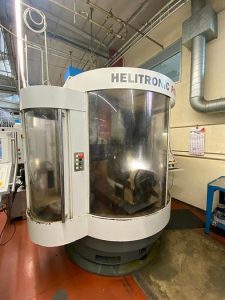
What Do Buyers Look for Before Investing in a Pre-Owned, Used, Secondhand, Surplus CNC Equipment Before Purchase TORNOS MULTISWISS 8X26 CNC Bar Automatic Multi Spindle Lathe made in Switzerland
When evaluating a pre-owned / used / surplus Tornos MultiSwiss 8×26 (or equivalent multi-spindle Swiss / automatic bar lathe) for purchase, buyers tend to scrutinize a number of mechanical, control, service, and risk factors. Below is a structured checklist and guidance—tailored to the nature of multi-spindle bar automatics—on what to look for, red flags, and decision criteria.
I. Understand the Baseline / OEM Spec Sheet
Before visiting the machine, collect the original or ideal specification sheet (or brochure) for the exact 8×26 model (or variant). Use this as your “gold standard” to compare the condition and deviations.
From Tornos’ published specs, for the MultiSwiss 8×26:
- Bar capacity: 8 – 26 mm bar passage
- Max part length: ~ 65 mm
- Max spindle speed: 8,000 rpm
- Main spindle output: ~ 11.00 kW
- Number of linear axes: 18
- Number of rotating (C) axes: 8 + 1 (option)
- Feed / cut oil systems, coolant filtration, oil tank capacities, etc. (see full spec sheet)
Knowing those numbers in advance helps you flag underperformance, wear, or mismatch.
II. Visual & Structural / Exterior Evaluation
These checks are “low hanging fruit” but can reveal fatal or costly defects.
- Frame, bed, base, and construction integrity
- Look for cracks, weld repairs, cold joints, or signs of past impacts
- Check for twist, sag, or distortion in the bed or base
- Surface corrosion, pitting, especially in chip / coolant zones
- In multi-spindle / bar machines, check the bar guide housing, feeder mounting points, and alignment features
- Way covers, bellows, protective shrouds, guards
- Make sure way covers are intact (no tears, holes, misalignments)
- Ensure that covers move freely without binding
- Inspect for dirt, chip ingress inside covers
- Bar feeder / bar stock handling systems
- Inspect the bar feeder (if included) and its interface
- Check the support rollers, guiding tubes, vibratory tube feeders, collets, clamps
- Examine wear or scoring inside the bar guide tube
- Coolant / lubricant / hydraulic systems
- Look for leaks or stains around piping, valves, connections
- Inspect piping, hoses, pump reservoirs, seals, internal piping
- Evaluate condition (cleanliness) of coolant tank and filters
- Foundations, leveling, anchoring
- Are leveling screws intact, not stripped or bent?
- Are there shim patterns / indentations suggesting previous movement?
- If relocated, was the machine re-leveled properly?
- Controls enclosure & environment
- Inspect the CNC / control cabinet: dust, rust, moisture, aging of wiring
- Cooling fans, ventilation grills, heat sinks for control electronics
While structural flaws may not always kill the machine, they impose high repair / alignment costs, especially for precision Swiss-type machines.
III. Kinematics, Motion, & Mechanical Checks
This is where many used machines fail silently. You must test motion, alignment, repeatability, and internal wear.
- Jog & smooth motion of axes
- Command each linear axis and rotary / C-axes (if present) to move over full stroke
- Listen and feel for binding, changes in friction, irregular zones
- Reverse directions to check hysteresis or stick-slip
- Backlash / lost motion / “deadband”
- Use a dial indicator or other precision measurement to quantify backlash in each axis
- In multi-spindle machines, cumulative errors in multiple axes can degrade concentricity
- Check for lost motion repeated reversals
- Guideways, slides, cross slides, linear rails
- In a Swiss-type, cross slides and guideways take heavy duty — inspect for wear, scoring, fretting, chips or nicks
- Run a slide manually (if safe) to detect bumps or resistance
- Rust, spalling, or “rough zones” are red flags
- Spindle & main axis condition
- Run spindle(s) unloaded at varying speeds – listen for noise or vibration
- Check radial and axial runout via test bar / dial indicator
- Inspect bearing seals, lubrication paths
- Watch for vibration or growing noise over time
- Counter-spindle, pick-off spindle, and sub-spindles
- If the machine has counter-spindles or pick-off spindles, test their run, alignment, backlash
- These are common wear areas in multi-spindle machines
- Tooling, turret, slide indexing, tool stations
- Test turret indexing or slide changes, ensure smooth transitions
- Inspect tool stations, grippers, attachments for wear
- Check retention / clamping / seating accuracy of tooling
- Barrel indexing / spindle indexing mechanism
- MultiSwiss machines use barrel indexing; check the indexing locks, mechanical accuracy, repeatability
- Check mechanical drive parts, worm gears, servo linkage, indexer backlash
Even modest wear in multiple small axes can compound into unacceptable part error, so gauge how much cumulative error exists.
IV. Control, Electrical, Software & I/O Systems
Swiss-type machines typically have complex control logic, and failure here is costly.
- CNC controller boot, interface, fault logs
- Power on, check for errors, alarms, fault history
- Confirm that soft limits, local referencing, homing, offsets work
- Test program upload/download (USB, network)
- Ensure backups / parameter memory still work
- Drives, amplifiers, motor cables
- Inspect wiring harnesses, shielding, connectors, strain reliefs
- Jog small axes and monitor for overheating or drive faults
- Listen for hiss, hum or interference
- Sensors, limit switches, interlocks, I/O wiring
- Trigger limit switches, emergency stops, safety doors — verify correct response
- Check sensors (tool break, bar detection, collet open/closed)
- Inspect wiring harnesses, terminal blocks, cleanliness, labels
- Power supply, grounding, filters
- Check that incoming power is stable and correct
- Inspect line filters, surge protectors, transformers
- Cleanliness and cooling inside control cabinet
- Ventilation / air circulation in control cabinet
- Control software / versions / upgrades / obsolescence
- Identify the CNC version (Fanuc, TISIS, TB-DECO, or another)
- Ask if software upgrades, firmware, license keys are available
- Check whether spare modules or replacement parts for control are still supported
- Bar feeder / automation electronics interface
- If the machine comes with bar feeder or automation, test the interface, signals, timing, control logic
A machine with mechanical integrity but failed or unsupported control is often not usable without high investment.
V. Accuracy, Repeatability & Test Cutting
This is the final proof: can it produce parts consistently within your required tolerances?
- Run a calibration / test piece
- Select or provide a reference test part (typical operations)
- Measure features: concentricity, diameters, surface finish, straightness, roundness, runout
- Compare them to your spec tolerances
- Repeatability / multiple cycles
- Run the same part or features multiple times to check for drift or variation
- Shift bar, tool, change conditions — measure deviation
- Thermal stability / warm-up drift
- Run continuously for 30+ minutes, check whether dimensions shift
- Monitor temperatures of axes, spindle, headstock
- Dynamic / “real cut” test
- If safe, perform a representative production cut and watch for vibration, chatter, deviation
- Check chip control, clearances, lubrication under load
If it fails at test parts, even if it looks good mechanically, you may end up paying more in rework or reconditioning.
VI. Service History, Documentation & Upgrades
A used Swiss-type machine with good documentation is much lower risk.
- Maintenance / repair logs (lubrication, parts replacement, rebuilds)
- Spindle hours / usage history
- Overhaul or refurbishment records
- Original manuals: mechanical, electrical, control, I/O
- Wiring diagrams, schematics, ladder logic, backup parameter sets
- Firmware versions / upgrade history
- Records of modifications, retrofits, or non-OEM parts
Tornos emphasizes planned / preventive maintenance, and often offers overhaul services.
Also, many Tornos machines are supported via overhaul or spare parts programs even for older machines.
Lack of documentation or evidence of “service negligence” is a red flag.
VII. Spare Parts, Support & Obsolescence Risk
One of the biggest risks in buying any older or specialized Swiss-type machine is parts obsolescence and service support.
- Availability of critical spares
- Spindle bearings, motor drives, encoder assemblies
- Turret / indexing modules, slide carriages, cross slide components
- CNC modules, interface cards, I/O boards
- Support by OEM / third-party
- Does Tornos (or authorized dealers) still support this 8×26 model?
- Are there regional service centers able to service this model?
- Are retrofit / upgrade paths possible (e.g. updated CNC, newer control cards)?
- Remanufactured / aftermarket replacement parts
- For modules no longer made by OEM, can third-party vendors provide replacements?
- Are there known “drop-in” modern upgrades?
- Software / license / control obsolescence
- If the control uses proprietary modules or keys, ensure these are still supported
- If firmware or update paths are closed, you may be stuck with outdated functions
If spares or support are scarce, any mechanical repair becomes high risk.
VIII. Commercial & Risk / Negotiation Considerations
After collecting objective data, you must convert into economic decision making.
- Estimate refurbishment, repairs, parts costs
- Set a contingency / “unknowns” buffer (e.g. 15–25 %)
- Negotiate conditional acceptance (final payment contingent on meeting performance metrics)
- If possible, ask for a short “run-in / probation” period
- Factor in transport, installation, alignment, startup costs
- Consider downtime, operator training, calibration period
- Evaluate resale / salvage value
Swiss-type multi-spindle lathes command premium value, so if you can bring one to full working condition, it might still have good residual value.
IX. Red Flags Specific to MultiSwiss / Swiss-Type Multi-Spindle Machines
Here are issues that are especially common or risky for multi-spindle Swiss/bar automatics:
- Bar guide, feeder, collet wear / damage — since the bar is fed continuously, wear inside feeding tubes or collets is common.
- Indexing wear in barrel / spindle indexing — wear or looseness here directly impacts synchronization and concentricity.
- Cross-slide axis wear — these small axes carry a lot of load for small motions, easy to degrade.
- Tool station / gripper wear — tooling mechanisms in Swiss machines often see high cycle counts and may be worn or misaligned.
- Thermal drift / heat management — compact designs can accumulate heat; cooling / thermal management must be intact.
- Control aging / obsolescence — Swiss machines rely heavily on advanced control logic; older control may be unsupported or lacking modern connectivity.
- Poor maintenance, neglected lubrication, contamination of coolant — which can accelerate wear in small axes and bearings.
- Multiple axes “stacked” errors — since there are many axes, small errors in each axis add up; even modest wear can cascade into out-of-spec parts