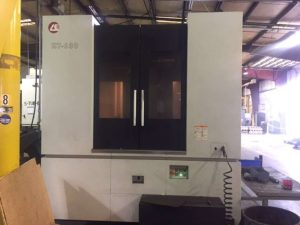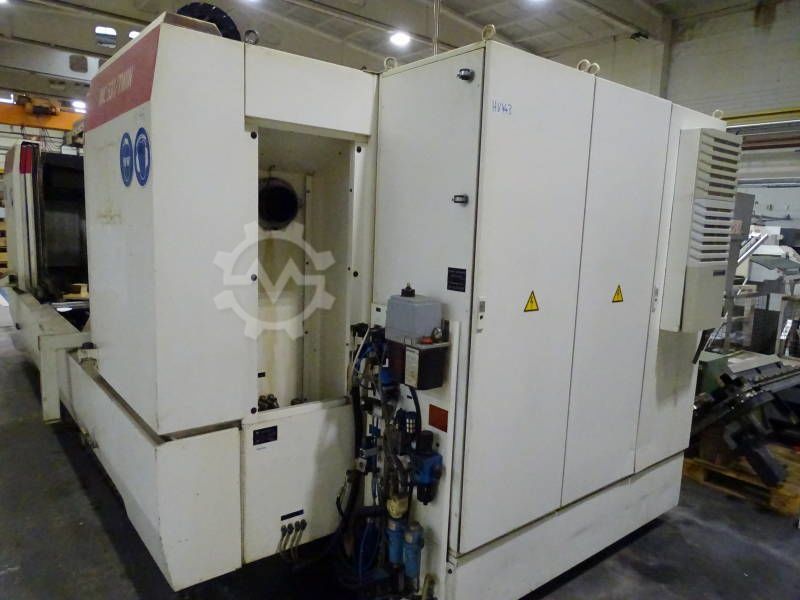
What Do Buyers Look for Before Investing in a Pre-Owned, Used, Secondhand, Surplus CNC Equipment Before Purchase STAMA MC533 TWIN Spindles CNC Vertical Machining Center made in Germany
Below is a detailed checklist and guidance on what to look for specifically when evaluating a pre-owned / surplus CNC (vertical machining) center — with notes tuned to a twin-spindle / dual-head type machine such as a STAMA MC533 (or similar) made in Germany. Use this as a reference during onsite inspections, negotiations, and risk assessment.
Why extra caution with twin-spindle / multi-spindle machines
Twin-spindle (or dual-head) machines add complexity beyond a single-spindle machine. With two spindles and possibly synchronized operations or interlaced workflows, failure in one spindle or its drive system can degrade or halt the entire productivity. Also, alignment between the two spindles, synchronization, and back-lash or mechanical play become more critical. Thus, when evaluating a twin-spindle machine, you need to inspect both spindles, their drives, and the mechanical coupling or synchronization mechanisms with particular care.
Also, spare parts, tooling adapters, and control compatibility may be more challenging for dual-spindle variants, particularly in older machines.
So the checklist below emphasizes not only general CNC machine inspection but also the added risks and inspection points relevant to twin-spindle systems.
Checklist: What Buyers Should Look For
Below is a structured checklist (mechanical, electrical, controls, documentation, etc.) you can use when inspecting a candidate machine.
| Area | What to Inspect / Test | Specific Considerations for Twin-Spindle / STAMA | Why It Matters / Risk |
|---|---|---|---|
| Machine identity & specs | • Confirm exact model (MC533 TWIN or variant) • Year of manufacture, factory serial number • Technical spec sheet (travel, spindle rpm, tool magazine, work envelope) • Check design drawings, spare parts lists | For example, STAMA MC533 is sometimes sold as 5-axis or dual spindle versions; ensure you know exactly which configuration you are evaluating. Also, STAMA’s “System 5” platform covers multiple multi-spindle options with defined spindle distances, tooling, etc. | Prevents mis-match between what you think you’re buying and what you get; ensures you can source correct spares. |
| Visual / structural inspection | • Check for frame distortions, cracks, stress marks • Inspect machine base, column, saddle, cross beams • Look for signs of crash (tool or head collisions) • Check for corrosion, rust, pitting, welds, patch repairs • Inspect covers, guards, way covers, chip guards | In twin-spindle machines, unexpected loads or collisions can more easily occur if one head misaligns. Any distortion can degrade both spindles’ accuracy. | Structural damage is often expensive or impossible to rectify precisely. |
| Spindles & heads | • Spin each spindle individually at various rpms; listen for noise, vibration, bearing hum • Check spindle runout (taper, face, radial) • Measure axial play / lateral play using dial indicators • Inspect bearing seals, lubrication system, oil reservoirs • If heads are interchangeable or adjustable, check alignment between the two spindles • Check spindle drive motors, coupling, belts or gearboxes (if used) • Thermal behavior — do they heat up under no-load or light load? | Since you have two spindles, a failure or excessive wear in one can degrade throughput. Also, spindle synchronization (if used) must be precise. The alignment between spindles is critical when switching between them in production. | Spindles are among the most expensive and hardest parts to service or replace. Worn bearings, misalignment, or damage reduce machining quality or cause scrap. |
| Axis drives, ball screws & guideways | • Move axes in all directions at different speeds; listen for noise, binding, slipping • Use a dial indicator or laser interferometer to check positioning accuracy, repeatability, backlash • Visually inspect ball screws, nuts, couplings for wear or damage • Inspect guideways (linear rails, dovetail, box ways) for scoring, wear, lubrication condition • Check way-lubrication system (automatic grease / oiling) • Inspect axis motors, encoder feedback, motor cables and couplings | In twin-spindle machines, the axes may be subject to higher dynamic loads or more frequent positional changes. Also, any small inconsistency will propagate into both spindles’ performance. | Poor axis behavior leads to inaccuracy, scrap, unpredictable behavior, or downtime for repair. Ball screws and guideways are among the “consumable” wear items that are costly to refurbish. |
| Tool changing & magazine | • Exercise the tool magazine fully: move every slot, check indexing, accuracy • Inspect tool holders, magazine arms, grippers, clamps • Check tool change times, speed, reliability • Look for signs of impact damage, wear on slots • Check for tool retention, ejector pins, hydraulic or pneumatic actuation as applicable | Twin-spindle machines typically require more complex tool handling (two spindles may need separate tool banks or shared banks) — tool change failures or slowness can bottleneck throughput. | Tool magazine issues are common failure points; replacement is expensive and causes downtime. |
| Cooling, lubrication & chip / coolant systems | • Inspect coolant tanks, pumps, piping, valves, filters • Check for leaks, rust, contamination • Flush coolant and check condition • Check spindle coolant-through systems (if applicable) • Inspect lubrication systems (central, automatic, or per-axis) • Check for chip conveyors, chip handling, coolant return • Inspect way covers, wipers, seals | Twin-spindle machines often share or duplicate coolant and chip removal systems, so failure in one area can affect both heads. Also, coolant contamination or leaks can damage precision surfaces. | A failed coolant or lubrication system can cause overheating, scoring, or accelerated wear, potentially damaging spindles, guideways, etc. |
| Control system & software | • Bring the control online; check startup, boot sequence, alarms, error history • Test key control functions: axis jogging, programmed moves, canned cycles, macros, subroutines • Check for custom or user modifications, parameter changes • Confirm software version, CNC control model (e.g. Siemens 840D, or variant) • Check compatibility of programming format, control interface, data ports • Review backup of control programs and parameters • Test communications (Ethernet, serial, USB, etc.) • If spindle synchronization or interleaving is used, test the switching / handoff logic between spindles | Many STAMA machines use Siemens 840D or equivalents (for example, listings show “Siemens 840D” for MC533) In twin-spindle machines, the switching or coordination logic is critical and may be customized or legacy. | Control glitches, parameter corruption, or software mismatches can render the machine unusable until reprogrammed. Legacy or custom mods may be unstable or undocumented. |
| Electrical systems & wiring | • Inspect the electrical cabinet: cleanliness, wiring, terminal blocks, fuses, relays • Check for signs of overheating, burn marks, poorly reworked wires • Check power supply, transformers, voltage stability • Inspect servo drives, inverters, amplifiers for faults or error LEDs • Check cable routing, flexing cables, drag chains • Verify grounding, shielding, EMC or noise suppression | Errors in electrical systems often emerge after shipping or under load. With two spindles, power draw is higher and coordination between drives is more complex. | Electrical failures can be difficult and costly to troubleshoot or repair; sometimes parts are obsolete. |
| Operational testing / trial cuts | • Run the machine empty (no-load) through full travel, speed ranges • Make a test cut in a representative material (same or similar to what you will use) • Check surface finish, dimensional accuracy, shape of features • Monitor for chatter, vibration, temperature drift • Test switching between spindles (if part of workflow) • Test feedrate ramping, acceleration / deceleration • Monitor error codes or warnings during live operation | This is perhaps the most revealing test — many hidden defects surface only under load. For twin-spindle, test both spindles individually and in tandem (if the machine is meant to alternate operations). | If the machine cannot reliably produce parts within your tolerances, it may be worthless to you even if it “powers on.” |
| Maintenance, use history & documentation | • Ask for full maintenance logs, service history, parts replaced • Ask for operating hours (both “power-on” hours and cutting / machining hours) • Inquire about type of materials machined (aluminum, steel, cast iron, etc.) — harder materials cause more wear • Ask for crash or repair history • Check for existing spare parts, tool sets, repairs kit • Get all manuals, schematics, wiring diagrams, parts lists • Check whether the machine has been refurbished or upgraded previously • Confirm who installed it and whether there is factory support or local service agents | Machines used for lightweight materials (aluminum, plastics) tend to show less wear than ones used for heavy steels or hard materials. | Historical data helps you estimate remaining life, hidden costs, potential failure modes, and downtime risk. |
| Spare parts, consumables & support | • Verify availability of spares (bearings, seals, drives, encoder modules, VFDs, modules) • Check whether the control is obsolete or still supported • Ask what consumables remain (filters, lubrication consumables, coolant, belts) • Confirm whether there is a local or regional service / support network | If key parts are unavailable or costly, you might end up with a “brick” if something fails. | |
| Logistics, installation & site conditions | • Check the machine’s footprint, weight, foundation requirements • Ensure your facility has necessary power supply (voltage, phase, amps) and cooling or compressed air • Confirm access for cranes, rigging, removal of covers, doors • Check environmental conditions (temperature, humidity, dust) at the seller’s site and your shop • Plan for alignment, leveling, thermal stabilization after installation • Factor in shipping, packing, insurance, reassembly, calibration costs | Even a “cheap” machine can become prohibitively expensive when logistics and reinstallation are included. | |
| Risk evaluation & warranty / terms | • Negotiate inspection window or acceptance period after installation • Ask for limited warranty or performance guarantee where feasible • Include clauses for latent defects, hidden damages • Price in contingency for repairs, parts replacement, retrofits • If possible, involve a third-party inspector or metrology expert • Check legal ownership, liens, customs / import issues (if imported) | Used equipment always carries risk; having contractual protections or fallback plans can save big losses. |
Specific Tips & “Gotchas” (from practice and community wisdom)
- Always run the spindle(s) at full speed and in all gears (if multi-gear units) to listen for abnormal noise or bearing hum.
- Move axes at slow speed and feel for “stickiness,” binding, or backlash — sometimes small defects appear only at low speed.
- Check all sensors, proximity switches, limit switches — often these are modified or replaced non-OEM and may fail.
- Be suspicious of machines being sold “as is” with minimal documentation or no opportunity to run a test cut.
- Ask whether any “hard crashes” were ever recorded, and if so, which structural or kinematic parts were replaced or realigned.
- For a twin-spindle, check whether the machine has synchronous functions or interleaving between spindles; test transitions or handoff logic.
- Check alarm logs/history in the CNC to see recurring faults (temperature, axis overloads, spindle alarms).
- For machines that have been idle for long periods, lubrication, seals, and electronics are at risk of degradation even without use.
- Always budget for re-alignment, calibration, and possible part replacements (bearings, seals, belt drives) after installation.
- Involve someone with metrology / calibration expertise, especially to check geometry, backlash, and accuracy before you commit.
Application to STAMA MC533 TWIN (or similar)
While I don’t have a full detailed service manual for the MC533 TWIN, here are some observations and cautions from existing listings and specs:
- The STAMA MC533 is sometimes described as a 5-axis vertical machining center with Siemens 840D control.
- Some STAMA machines (in the System 5 family) support 2-, 4-spindle versions with known spindle distances and configurations.
- Machine listings for STAMA MC533 (5-axis) mention travels like 640 × 400 × 400 mm, 12,000 rpm spindle, tool magazine 72 tools.
- STAMA dual-head variants may use shared systems (coolant, chip removal) and have dedicated synchronization logic, which can be a maintenance burden.
- Be especially careful that the dual spindles were always well balanced, not run with one head idle for long periods, and that both spindles haven’t diverged in wear or alignment.
- Often, multi-spindle machines demand more from the support and maintenance infrastructure; ensure local familiarity with servicing STAMA machines or IS0 / Siemens CNC support.
Summary & Recommendation
- A twin-spindle CNC is a potent productivity asset if in good condition and properly cared for—but it carries higher risk than single-spindle machines due to complexity and synchronization demands.
- During inspection, you must treat each spindle as nearly a separate machine, plus the coordination systems between them.
- Be rigorous in testing, documentation review, operational trials, and risk mitigation (warranty, inspection window, contingency budget).
- In many cases, bringing an independent expert or CNC service engineer to the inspection is justified.