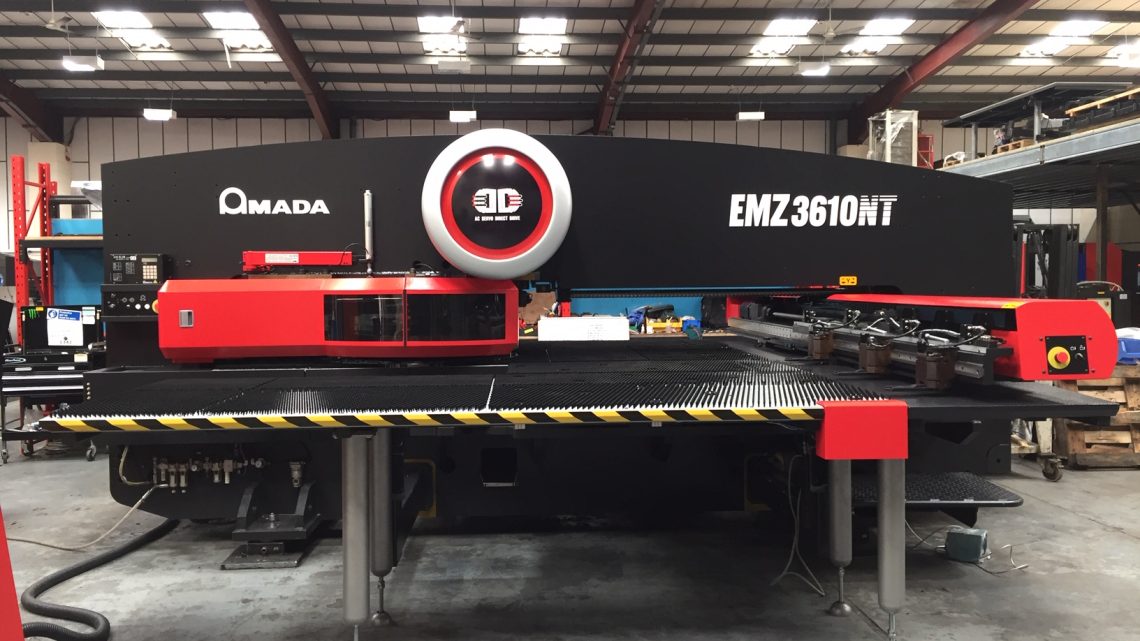
What Do Buyers Look for Before Investing in a Pre-Owned, Used, Secondhand, Surplus CNC Equipment Before Purchase Amada EMZ 3610 NT CNC Punching Press 30 Tonnes made in Japan
When considering purchasing a pre-owned / used / surplus CNC machine, especially a CNC turret punch press like the Amada EMZ 3610 NT (30-ton class, made in Japan), buyers must perform very careful due diligence. Below is a detailed checklist and commentary tailored to that model. Use this as a reference to negotiate, inspect on site (or via a trusted technician), and evaluate total cost of ownership.
Why due diligence is critical
- Used machines are sold “as is” in many cases — defects, hidden wear, missing parts, or obsolete control systems can greatly affect usability or require expensive repairs or upgrades.
- A machine that seems cheap up front might cost more in downtime, parts, or integration than buying new or better-condition used.
- Especially for complex machines (servo drives, tooling turrets, CNC control, pneumatic/hydraulic systems), each subsystem is a potential failure point.
Key specifications of Amada EMZ 3610 NT (for reference)
From listings and datasheets, typical specs include:
- Punching force ~ 30 t (≈ 300 kN)
- Working area (X × Y) ~ 2500 × 1525 mm (with repositioning up to 5000 mm in X)
- Max sheet thickness (mild steel) ~ 4.5 mm
- Machine weight in the 24–25 ton range (≈ 24,500 kg)
- Number of turret stations: 45 (with AutoIndex stations)
- Control: AMNC (Fanuc / Amada’s CNC)
Knowing these specs helps you verify that the offered machine matches what you need (capacity, travel, tooling, etc.), and to check whether listed condition or modifications are plausible.
Detailed Pre-Purchase Checklist
Below is a structured checklist. I divide it into mechanical, electrical / control, tooling / auxiliary systems, documentation & support, site & logistics, and commercial / contractual aspects.
| Area | What to Check | Why It Matters & Tips |
|---|---|---|
| Mechanical & Structural | Frame & base | Inspect the machine’s frame and base for cracks, bending, welding repairs, corrosion. A warped frame ruins alignment and causes errors. |
| Guideways / ways / rails | Check for wear, scoring, rust, pitting, scratches. On a punch press, accurate movement of X/Y axes is critical. Use a dial indicator or laser test to verify straightness and repeatability. | |
| Drive mechanism (servo, belts, couplings)** | For servo-driven systems, inspect servo motors, gearboxes, couplings for play, noise, backlash. Listen for grinding or abnormal vibration during a test move. | |
| Ball screws / lead screws (if used) | Check for backlash, smoothness, lubrication. Worn screws degrade positioning accuracy. | |
| Turret / punching mechanism | Inspect turret bearings, index mechanism, turret drive motors, turret alignment. The turret is under high stress—any wear or looseness can compromise accuracy or cause crashes. | |
| Tool stations & clamping hardware | Ensure all punch/forming stations function, clamps and hold-downs operate reliably, no broken tooling pockets, and there is no excessive play in tooling interfaces. | |
| Back gauge / repositioning mechanism | For machines with repositioning (X longer than the bed), check the repositioning drive, clamps, alignment after repositioning. | |
| Lubrication & coolant systems | Check oil / lube pumps, filters, lines, nozzles, reservoirs. Leaks, clogged lines, or non-functioning lubrication can accelerate wear. | |
| Pneumatics / hydraulics | Many presses use pneumatic/hydraulic systems for clamps, hold-downs, turret indexing, etc. Check valves, cylinders, hoses, pressure maintenance, leaks. | |
| Machine alignment & repeatability | Perform test moves; measure repeatability and accuracy over full travels. A test part punch is ideal. | |
| Electrical / Control / Electronics | CNC control unit & display | Power it up. Check that the control (AMNC) boots without errors; buttons, touch screens, displays must work. Verify that all axes and functions can be commanded. |
| Wiring, connectors, cabling | Look for frayed wires, brittle insulation, loose connectors, signs of overheating (discoloration), repairs or splices. | |
| Servo drives, amplifiers, motors | Check condition, cooling fans, capacitors (bulging or leaking), noisy operation, etc. | |
| Spare electronics & parts | Ask whether spare boards / modules are included. Obsolete electronics are a huge risk if a drive or control board fails. | |
| Control software & licenses | Ensure the software is genuine, licensed, upgradable. Ask whether the original parameter backups, configuration files, source code, or manuals are included. | |
| Safety interlocks, E-stop, guards | Test emergency stops, light curtains, interlock switches, safety circuits. Safety compliance is non-negotiable. | |
| Tooling / Accessories / Consumables | Tool set condition & completeness | Are punches, dies, forming tools included? Are they worn, chipped, mismatched? The turret is only useful with good tooling. |
| Tool holders / adapters | Ensure any special adapters or holders needed are available and fit. | |
| Spare tooling pockets or extra stations | Having extra unused turret pockets or interchangeability is beneficial. | |
| Supporting equipment | Vacuum slug removal, air blow, scrap conveyors, chip extraction, cooling pumps, filters — check operational condition. | |
| Documentation & Service Support | Maintenance / service history | Ask for logs, maintenance schedules, repair invoices. A well-documented machine is often better maintained. |
| Electrical schematics, wiring diagrams, manuals | These are essential for servicing or troubleshooting later. | |
| Parts list, spare parts availability | Find whether original spare parts are still available for that model. Older models may have parts that are costly or hard to source. | |
| Control & software documentation / backups | Parameter settings, backups, machine configuration. | |
| Calibration / certification | If machine was periodically calibrated or certified, that adds confidence. | |
| Site / Logistics / Environment | Floor load & level | The machine is heavy (≈ 20–25 tons). Check that the floor can support it and is level enough. |
| Power supply / voltage / phase / stability | Ensure your facility has the matching electrical supply (voltage, phase, current, frequency) that the machine expects. | |
| Compressed air / pneumatic supply | If the machine uses pneumatic or vacuum systems, the facility must provide clean, dry air at required pressure. | |
| Access / rigging / installation | Check doorways, crane capacity, lifts, clearances. Some parts (turret, arms) may need careful disassembly/assembly. | |
| Environmental factors | Dust, humidity, temperature extremes can accelerate wear. | |
| Commercial / Contractual | Inspection clause / acceptance test | In the sales contract, include conditions like successful test punch runs, acceptance period, or refund if major defect found. |
| Warranty / guarantee | Even if limited, any guarantee from the seller (e.g. one month, parts only) is beneficial. | |
| Price breakdown | Ask for clear separation of machine cost, tooling, spare parts, transportation, reinstallation. | |
| Spare parts / consumables package | Negotiate inclusion of spare punches, dies, filters, belts, etc. | |
| Transportation & installation cost | Often underestimated; integration, leveling, calibration, and commissioning add significant cost. | |
| Insurance / liability during transit | Clarify who is responsible during shipping or handling. |
Things especially relevant for the Amada EMZ 3610 NT
Because you asked specifically about this model, here are some model-specific notes and caveats:
- Many listings show the EMZ 3610 NT with ~63,000 machine hours in used condition.
- Verify that the machine’s travel ranges, turret station count, and sheet thickness ratings match your expectations and what is listed by the seller (there are variants).
- Confirm whether the machine has option modules such as punch-and-forming (P&F) units, multi-tapping units, vacuum slug removal, or automatic tool changers — these greatly affect capability.
- The control system is AMNC; check whether the seller has the latest software updates, backup files, and licensing.
- In catalogs, some machines are listed with 4.5 mm max thickness — if you plan to punch thicker materials, confirm whether the machine has been modified or overworked.
- Because the machine is heavy (~ 25 tons), the cost of rigging, base, foundation, leveling, and calibration will be non-trivial.
Recommended On-Site / Remote Tests & Trials
When you (or a technician) visit the seller’s site, ideally perform:
- Visual inspection (frame, rails, surfaces, rust, repairs)
- Power-up & boot test of CNC control — check error logs, boot messages
- Dry motion test — move axes without load, observe smoothness, noises, backlash
- Test punch run — run a simple sample program to punch a sheet, check accuracy, quality of holes, repeatability
- Turret indexing test — select different tool stations, index multiple times
- Repositioning / back gauge tests — verify reposition accuracy, alignment consistency
- Load test — punch thicker / tougher materials (if you plan to use such materials)
- Monitor electrical loads — check current draw, voltage stability, any abnormal heating
- Inspect wiring, drives, and control cabinets — open panels and visually inspect internals
- Check safety systems — emergency stop, guard interlocks, safety circuits
- Check lubrication / coolant / pneumatic systems under operation — observe for leaks, pressure drops, flow consistency
- Measure geometric accuracy — e.g. punch a grid of holes and measure deviation
Red flags & deal-breakers
- Significant structural cracks, weld repairs on the frame
- Excessive play or looseness in turret, axes, or guideways
- Control or drive electronics obsolete and impossible to replace
- Missing or severely worn tooling, or nonstandard tooling with no replacements
- No documentation, no schematics, no maintenance logs
- No possibility to run acceptance test or “as-is” without inspection
- Damage in transport, missing major assemblies
- Mismatch in power / voltage / phase that cannot be reconciled
Cost & ROI considerations
- Factor transportation, rigging, installation, leveling, calibration into your total cost (often 10-20 % of machine cost or more).
- Account for spare parts inventory, tooling, consumables — used machines typically require more preventive maintenance.
- Be realistic about remaining useful life — older machines may have parts nearing wear limits.
- Consider downtime risks — how quickly can you source parts/repair if something fails?
- Estimate productivity vs your required throughput — if the machine is slower or less efficient than advertised, your ROI shrinks.