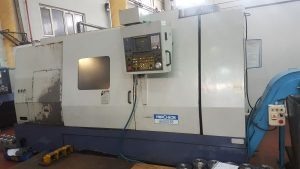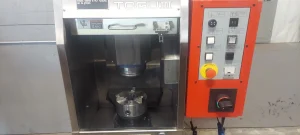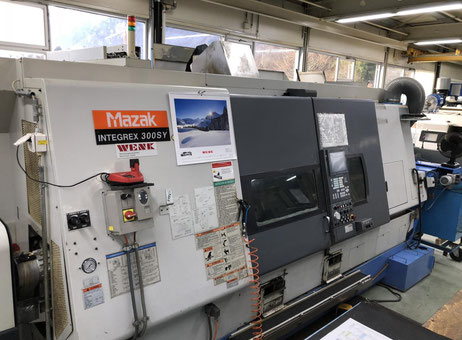
What Do Buyers Look for Before Investing in a Pre-Owned, Used, Secondhand, Surplus CNC Equipment Before Purchase MAZAK INTEGREX 300 SY CNC Multi-Tasking Turn-Mill Center made in Japan
When evaluating a used / surplus Mazak INTEGREX 300 SY (or a similar multi-tasking turn/mill center in the “Integrex 300” family), buyers need to perform very careful due diligence. These machines combine turning, milling, and often multiple axes (C, B, Y, etc.), so the number of potential failure points is large.
Below is a detailed checklist of what serious buyers look for, from general CNC machine criteria to specific checks for an Integrex 300 SY (or similar). Use this as a guide during site visits, inspections, or contractual negotiations.
Key Reference Specs & What to Benchmark
Before visiting the machine, you should gather the original or typical specifications for the model under consideration, so you can detect exaggerations or missing features. For INTEGREX 300 / 300 SY / 300 IV / 300 ST variants, here are some sample spec ranges and features from used machine listings:
| Spec | Typical Value / Range | Notes / Source |
|---|---|---|
| Swing / Turning diameter | ~ 25.9″ (≈ 658 mm) | Many used INTEGREX i-300 / i-300S units list this. |
| Distance between spindles / bed length | ~ 59.8″ (≈ 1,520 mm) | Common in used “INTEGREX 300S” machines. |
| Spindle speed (main / sub) | ~ 4,000 rpm | A frequently cited spindle speed for both main and sub in many units. |
| Milling / live tooling spindle | Up to ~ 12,000 rpm | Many machines include a milling spindle / B-axis / live tooling in their spec sheets. |
| Power / motors | Tens of kW (30 kW class) | Main spindle and other axes / milling drive motors tend to be robust. See used spec sheets. |
| Tool Magazine / Turret capacity | Many have large tool magazines (often dozens of tools) | For multi-tasking, tool capacity is an important feature. |
| Axes & extra axes | X, Y, Z, C-axis, B-axis, sub-spindle, live tools | Many INTEGREX 300 variants include Y-axis, C-axis indexing, or B-axis tilting. |
Important: The “SY” in the model name often indicates a variant (for example, “S” for “second spindle” or extra capability, “Y” for including a Y-axis), so the actual features can vary by serial / build. Always get the exact variant spec from the seller (nameplate, build sheet) and compare against what is present.
If a seller claims specs far beyond typical (e.g. very long bed, extremely high spindle rpm, exotic axes) without documentation or evidence, treat it as a red flag.
Comprehensive Inspection & Due Diligence Checklist
Use this as a structured guide when you go to inspect a candidate machine. Some items require specialized measurement tools, so bring along a trusted machinist, metrology instruments, or an independent inspector if possible.
1. Documentation, History & Modifications
- Obtain all original manuals, electrical schematics, parts lists, build sheets, and service / repair logs.
- Ask for the machine’s running hours, cutting hours vs idle hours, and types of jobs run.
- Inquire about any major overhauls, spindle rebuilds, control refurbishments, or modifications (e.g. adding live tooling, Y-axis, new control upgrades).
- Ask for records of tool crashes, spindle collisions, or major incidents.
- Request videos / photos of the machine in operation (axes moving, tool changes, synchronization, etc.).
- Check whether the control system software is standard (Mazatrol, Matrix, Smooth, etc.) or heavily patched/modified.
This gives you a baseline of how “used” the machine really is and what hidden wear or repairs might be required.
2. Structural & Machine Frame
- Inspect the machine’s base, bed, columns, cross-members for cracks, weld repairs, distortions, or misalignments.
- Check alignment and flatness of the bed / carriage ways with precision tools (straightedges, surface plates, dial indicators) over the full travel.
- Check for wear, scoring, rust, pitting on guideways, ways, rails, and sliding surfaces.
- Ensure all covers, way wipers, seals, and protective covers are intact — missing wipers often cause contamination ingress.
- Check rigidity and stability: apply light load or use a test indicator / vibration probe to see whether the structure deflects or exhibits creep under load.
Structural integrity is the foundation for maintaining accuracy under heavy cutting or long cycles.
3. Spindles (Main & Sub) & Bearings
- Run both main and sub spindles through their full rpm range at no load; listen carefully for rumble, hums, or odd noises.
- Use a test bar or precision indicator to measure radial and axial runout on spindle noses / taper area.
- Check for axial play (push/pull gently) or lateral looseness.
- Examine spindle lubrication (oil / grease / oil-air) and cooling systems (if present). Check for leaks around seals or housing.
- Ask whether bearings have ever been replaced or serviced, and see documentation if yes.
- Inspect spindle nose, taper, and mating surfaces for wear or damage (gouges, chips, scratches).
- Monitor spindle temperature under sustained operation; excessive heat can indicate bearing wear or lubrication issues.
Spindle integrity is one of the most expensive and crucial areas; bearing failure or misalignment can render the machine unusable for precision work.
4. Axes & Motion Systems (X, Y, Z, C, B, etc.)
- Jog each axis (X, Y, Z) through full travel in both directions at varying speeds; observe for smoothness, binding, “dead zones,” jerkiness, or irregular motion.
- Use a precision indicator / test instrument to measure backlash, repeatability, positional accuracy, and linear error across travel.
- Inspect ball screws, nuts, support bearings, linear guides, and slides for wear, scoring, looseness, or play.
- Check lubricant delivery to ball screws / guides; if automatic lubrication systems exist, test whether they function properly and deliver oil/grease adequately.
- Verify limit switches, homing routines, proximity sensors, and referencing behavior.
- For C- or B-axes: test angular indexing accuracy, backlash in rotation, and whether motion is smooth and repeatable.
- Inspect the coupling, bearing supports, and feedback / encoder systems for all axes.
Wear or looseness in axes degrades accuracy, leads to chatter, and can amplify under cumulative axis motions in multi-tasking routines.
5. Tool / Turret / Tool Magazine / Live Tooling
- Cycle the tool magazine, turret, or tool changer through all stations; check for indexing errors, misfeeds, or hesitation.
- Inspect the gripper/clamp mechanisms, sensors, slide rails, magazine rails, and tool pockets for wear or damage.
- Test tool changes under different axes or orientations to ensure reliability.
- Check the live tooling (if present) or C-axis driven tools — run some mild loads to verify torque, vibration, and coupling integrity.
- Inspect tool holder interfaces, tool taper surfaces, and confirm they match your tooling (or are standard).
- Check tool change time versus spec — significant slowness suggests mechanical fatigue or degradation.
- Ensure that the turret or tool magazine has no excessive play or slop.
Tool handling is critical in multi-tasking machines — an unreliable tool changer or live tool system can ruin cycle times or cause crashes.
6. Control / Electronics / Wiring / Drives
- Power up the control; test the user interface, parameter screens, override functions, axis moves, program loading, etc.
- Check the control’s error logs / alarm history to look for recurring faults or warning states.
- Inspect the electrical cabinet: wiring harnesses, connectors, insulation, cable routing, cooling fans, cleanliness, signs of heat damage or repairs.
- Test servo drives, motor controllers, amplifiers, encoders, limit switches, and associated feedback wiring.
- Check software / firmware versions; see whether upgrades or maintenance support are possible.
- Verify backup / memory retention systems (e.g. battery, flash memory) for part programs and parameters.
- Run axis motion and tool-change commands in the control to confirm responsiveness, stability, and no error anomalies.
- Inspect any retrofit / patch wiring or modifications by prior owners — non-OEM modifications can be problematic.
The electronics and control back-end are often the weak link in older multi-task machines; outdated or damaged modules can be expensive or impossible to replace.
7. Cooling, Chip / Chip Removal, and Auxiliary Systems
- Inspect coolant system: tanks, pumps, piping, nozzles, filters, valves. Look for sludge, rust, contamination, leaks.
- Run coolant flow; verify that it reaches all tool / workpiece zones, is stable and without fluctuation or air ingestion.
- Test chip conveyors, chip chutes, and disposal systems — ensure smooth, continuous chip removal without blockages.
- Inspect air / mist systems, filtration, and coolant recirculation systems.
- Check auxiliary systems like coolant chillers, temperature control, compressed air, vacuum systems (if present).
- Ensure sensors, valves, pumps, and regulators are functional and responsive.
Poor fluid / chip management degrades tool life, amplifies wear, and can damage machine components.
8. Operational / Test Machining Trials
- Run “dry” axis moves and tool changes first to observe motion, synchronism, and control behavior.
- Perform test machining using representative parts / materials (turning, milling, drilling, facing).
- Measure resulting parts for accuracy, repeatability, surface finish, oversize or taper errors.
- Run extended cycles under load to detect thermal drift, control stability, or performance degradation over time.
- Test simultaneous multi-axis operations (if the machine supports them) to confirm synchronization, path accuracy, and no collisions.
- Monitor vibration, chatter, tool deflection, and responsiveness under cutting forces.
- After warm-up, re-run test parts to see whether geometry or dimensions shift (i.e. thermal effects).
Real machining under realistic loads is the definitive test — many hidden defects only show themselves under cut loads.
9. Safety & Compliance
- Confirm that all guards, interlocks, doors, shields, and safety circuits are intact and functional.
- Check emergency stops, grounding, cover panels, and enclosure integrity.
- Validate whether any safety systems have been bypassed, tampered with, or disabled.
- Ensure compliance (or ability to retrofit) with local safety / machine regulations (e.g. CE, ISO, OSHA) in your country.
- Inspect chip / coolant splash protection, shielding against flying debris, and electrical safety.
Operating a machine with compromised safety is a legal and operational hazard; this must be squared prior to purchase.
10. Spare Parts, Serviceability & Obsolescence Risk
- Investigate whether Mazak or authorized service providers in your region still support the INTEGREX 300 SY / its control modules, servo drives, spares, etc.
- Check for availability (OEM or aftermarket) of spare modules (control boards, drives, encoders), spindles, bearings, couplings, etc.
- Ask whether the seller includes spare parts, backup modules, or consumables.
- Assess whether any prior modifications used custom or non-standard parts that may be hard to replace.
- Evaluate upgrade / retrofit paths (e.g. newer control, newer spindle, additional axes) and their feasibility for the model.
Even a well-functioning machine can become impractical if parts become unobtainable or prohibitively expensive.
11. Logistics, Installation & Total Cost of Ownership
- Determine the machine’s physical dimensions, weight, and whether disassembly / partial teardown is required for transport.
- Ensure your facility has the rigging capacity (cranes, forklifts) and access to bring the machine in.
- Check whether the floor is adequate (load bearing, leveling, anchoring).
- Plan for alignment, leveling, calibration, commissioning, and test cycles after installation.
- Confirm your facility’s utilities (power, coolant supply, compressed air, chip disposal) match the machine’s requirements.
- Budget for “hidden” refurbishment after delivery (seal replacements, bearing refresh, alignment, tuning).
- Include insurance, transport risk, and downtime in your cost estimates.
Often the “getting it working” cost is a large part of the real investment, not just the purchase price.
12. Contract / Payment Terms / Acceptance Conditions
- Negotiate a conditional acceptance period after delivery, during which you can test, verify, and reject if performance is unsatisfactory.
- Try to secure limited warranties for critical systems (spindles, control electronics, drives).
- Require the seller to disclose all known defects, repair history, or modifications in writing.
- Define clearly responsibilities for damage in shipment, installation, alignment, and repairs after delivery.
- Withhold final payment until after satisfactory testing in your facility.
- Include “as-is unless otherwise specified” clauses carefully and ensure testing rights are protected.
A sound purchase agreement mitigates much of the risk inherent in buying used high-complexity machinery.
“Red Flags” & Warning Signs to Heed
During inspection, certain findings should prompt serious caution or cause you to walk away unless the price and repair path are very favorable:
- Spindles with excessive noise, axial or radial play, or signs of bearing failure
- Axes with sticky spots, erratic or jerky motion, binding, or large backlash
- Tool changer / turret mis-indexing, failures, or sloppiness
- Live tooling or driven tool axes that don’t perform reliably
- Control electronics missing, burned, corroded, or relying on obsolete/unsupported modules
- Wiring harnesses with signs of overheating, insulation damage, poor splices
- Safety systems bypassed or nonfunctional
- Poor coolant / chip system (rusted tanks, clogged lines, leaks)
- Structural damage, weld repairs, or signs of major collision or mishandling
- Lack of documentation, refusal to allow full test machining
- Performance markedly below claims (slower spindle speeds, reduced travel, poor finish)
- Difficult or impossible access to spare parts or no parts support nearby
Each of these, especially in combination, greatly increases your risk.
Summary & Buyer Strategy
- Start by collecting the exact variant and build specification from the seller (model, serial number, options) so you know precisely what features should be present.
- Use published or typical specifications for the INTEGREX 300 family to benchmark claims, and be skeptical of claims far beyond known norms.
- Execute a systematic inspection across structure, spindles, axes, tooling systems, control, electronics, fluids, and safety systems.
- Always perform real machining trials under load on representative parts and materials to verify accuracy, repeatability, surface finish, and cycle performance.
- Ensure you have contractual protections: conditional acceptance, warranties if possible, disclosure of defects.
- Confirm viable parts and service support for your region — this is crucial given the complexity of a multi-tasking machine.
- Budget for installation, alignment, calibration, refurbishment, and startup costs — these often rival or exceed the “discount” from buying used.