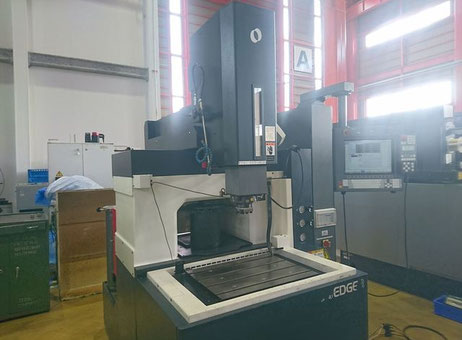
What Do Buyers Look for Before Investing in a Pre-Owned, Used, Secondhand, Surplus CNC Equipment Before Purchase Makino EDGE3 CNC EDM Die Sinking Machine made in Japan
When considering a pre-owned / used / surplus Makino EDGE3 (or EDGE3i / EDGE3S family) sinker EDM (die sinking EDM), buyers must inspect many subsystems, because EDM machines are complex, precision systems with numerous interdependent parts (electrical, mechanics, dielectric/fluid systems, control, electrodes, thermal stability). Below is a detailed due-diligence checklist tailored to Makino EDGE3 series machines, plus special risk areas, red flags, and strategies.
Reference Specs & Baseline Characteristics for Makino EDGE3 / EDGE3i
First, knowing the nominal specifications helps you validate claims by a seller and detect exaggerations or missing features. Some reference figures:
| Spec / Feature | Typical / Published Value |
|---|---|
| Travels (X × Y × Z) | 450 × 300 × 320 mm |
| Table / Work Area | 600 × 450 mm maximum working area |
| Workpiece / Table Load | Up to ~ 800 kg |
| Tank / Dielectric Volume / Work Tank | Tank approx. 800 × 550 × 350 mm |
| Rapid Traverse | ~ 5,000 mm/min |
| Electrode / Tool Changer | Many units include 16-station electrode changer; electrode weight capacity ~ 50 kg |
| Control / Head / C-Axis | Some models use MR head with full C-axis rotation, a rotating head, etc. |
| Power / Electrical / Utilities | Standard requirement ~ 200/220 V 3-phase, dielectric supply, air supply (~0.6 MPa) |
Any listing or seller claim should be compared against these reference values. If, for instance, a claimed X travel is far larger, or electrode changer capacity is unusually high, ask for verification or drawings.
Detailed Inspection / Evaluation Checklist
Here’s a breakdown of subsystems and checks you (or your technical inspector) should perform:
| Subsystem | What to Inspect / Test | Purpose / What Risks to Detect |
|---|---|---|
| Documentation & History | • Ask for original machine manuals, wiring diagrams, parts diagrams, service / repair logs, and any retrofit records. • Inquire about hours of operation, usage profile (mold work, general EDM), electrode usage, maintenance history. • Ask about any major repairs (power supply replacement, head rebuild, dielectric system overhaul). • Check whether the control software has been upgraded, patched, or replaced. | Machines well documented allow you to anticipate wear items. Unrecorded modifications or repairs are risk points. |
| Machine Structure & Alignment | • Check the machine base, frame, column, cross members for cracks, welds, distortions, or misfits. • Inspect the table mounting and leveling; use precision gauges (straightedge, dial test) to confirm flatness and alignment across the table. • Inspect alignment of head / electrode mounting surfaces and check that the head is perpendicular and well-aligned to the table. • Examine rigidity of structure and stiffness under small loads or probe deflection. | Structural misalignment or distortion is a root cause of error, drift, or inability to meet tight tolerances. |
| Head / Electrode Mechanism / C-Axis / Spindle (if rotating head) | • Cycle the head through its mechanical axes (including C-axis if present) and check for smooth, backlash-free motion. • Test electrode mounting/unmounting – check for accurate clamping, repeatability, and no slippage. • Check for axial / radial runout of the electrode mounting interface using a test electrode or precision mandrel. • Examine head bearings for wear, noise, looseness. • Check wiring/connection of C-axis rotation (if present) and verify its control and indexing accuracy. | The head / electrode interface is critical for precision EDM operations; wear, misalignment, or backlash leads to poor surface finish, taper, or erroneous machining. |
| Motion Systems (X, Y, Z Axes, Feed Drives, Ball Screws, Linear Guides) | • Jog the axes (X, Y, Z) over full travel in both directions; look for stick/slip, dead spots, irregular motion. • Use a dial indicator or precision gauge to measure backlash, positional accuracy, repeatability under small steps. • Inspect ball screws, nut backlash, linear guides, bearings, for wear, scoring, or looseness. • Check lubrication system (if automatic) and confirm that lubrication reaches all critical components cleanly and sufficiently. • Test limit switches, homing routines, proximity sensors, and axis referencing. | Worn axes or excessive backlash degrade accuracy, especially in small electrode positioning, micro EDM, or tight tolerances. |
| Dielectric / Fluid System | • Inspect dielectric tanks (main tank / work tank) for corrosion, rust, sediment, contaminant buildup, or fluid degradation. • Check filters, filter elements, piping, valves, pumps, and flush lines. • Run dielectric flow – check circulation rate, pressure, no leaks, stable flow, no air ingestion. • Inspect dielectric chiller / cooler (if installed) and confirm it works, maintains correct fluid temperature. • Check fluid quality (viscosity, contamination, particle content). • Examine tubing, seals, connectors, and ensure no cracks or leaks. | The dielectric fluid is a lifeblood of EDM. Contaminated or unstable dielectric systems cause process instability, electrode failure, surface defects, and possible electrical shorts. |
| Electrical / Power Supply / Cabling / Electronics | • Power up the machine and test the control interface, load control functions, readouts, diagnostics. • Inspect the power supply / EDM generator unit: check condition, cooling, fans, internal components (if accessible). • Inspect wiring harnesses, connectors, cable insulation, grounding, and signs of overheating or patching. • Check power cabling, fuses, breakers, surge protection, filters. • Review fault logs / alarm history. • Test interface connectivity (Ethernet, USB, remote access) if equipped. | Power supply units in EDM are high-stress electronics. Faulty or aging generator electronics often are expensive or difficult to repair. |
| Electrode Changer / ATC (if present) | • Cycle the electrode changer fully through all stations; observe indexing accuracy, speed, and reliability. • Check the gripper mechanism, sensors, and repeatability of mounting; test gripper strength. • Inspect magazine, rails, slide, and wear surfaces. • Test swapping electrodes manually / automatically under conditions. • Check electrode weight limits, permissible mass, and whether heavier electrodes cause issues. | If electrode handling is unreliable, machine autonomy suffers. Misfeeds, gripper failures, or tool changes during a run can ruin production. |
| Operational Test / Trial Machining | • Run the machine in “dry” motion mode (no discharge) to check that all axes and head operations are smooth. • Run test EDM operations with representative electrodes and workpiece material (light cuts, roughing, finishing) to see stability, surface quality, electrode wear, spark uniformity, drift. • Monitor electrode wear, machining rate, accuracy of depth/position. • Run extended cycles to see whether performance degrades over time (thermal drift, dielectric instability). • Compare actual performance to published specs (e.g. surface finish, overcut, speed) for that model. | Real EDM performance often shows up problems not evident in static checks — e.g. unstable discharges, drift, poor finish, inconsistent machining. |
| Safety & Compliance | • Ensure all safety guards, interlocks, door covers, splash shields, and safety circuits are functional and not bypassed. • Check emergency stops, grounding, and that electrical enclosures are sealed and safe. • Confirm compliance (or retrofits) for local safety standards (e.g. CE, safety codes). • Ensure proper dielectric spill containment or fluid handling safety. | EDM machines often involve high voltage and dielectric fluids — any safety bypass or faulty shield is a serious risk. |
| Parts Support, Spare Units, Obsolescence | • Verify whether Makino or authorized service firms still support the EDGE3 / EDGE3i line (spare power units, electronics boards, servo modules, filters, pumps). • Check availability of spare electrodes, consumables, filters, dielectric parts. • Ask whether the seller supplies spare or backup modules (boards, cables, spare parts). • Investigate aftermarket / third-party suppliers of parts. • Assess whether control or electronics are proprietary or obsolete (difficult to replace). | A machine is only as good as your ability to maintain and repair it. If parts are discontinued or expensive, downtime risk grows. |
| Logistics / Installation / Infrastructure | • Determine the machine’s weight, footprint, crane / rigging requirements, and whether disassembly is needed. • Check whether your facility’s floor, foundation, clearance, power supply, dielectric fluid handling, cooling, and exhaust systems can support the machine. • Plan for leveling, alignment, calibration, and commissioning time. • Account for transport risks, risk of damage to sensitive components (head, generator) during shipping. • Budget for re-commissioning, calibration, test EDM runs after installation. | Hidden costs in transport, installation, alignment, or setup often outstrip what is “saved” on the purchase. |
| Contract / Warranty / Acceptance Conditions | • Insist on a conditional acceptance agreement—allow you a period after delivery to test and reject if specifications are not met. • Seek any available limited warranty or guarantee (even for critical subsystems) from the seller. • Require that the seller disclose all known defects, repairs, or modifications in writing. • Define responsibilities for transport damage, installation, calibration, spare parts, and defect remediation. • Consider withholding part of payment until performance acceptance in your facility. | A well-structured contract protects you from undisclosed faults, misrepresentations, or surprises after delivery. |
Specific Risk Areas / “Weak Spots” for Makino EDGE3 / Sinker EDMs
Because of the nature of EDM machines and the specific design traits of the EDGE3 line, there are some special caution points:
- Generator / Power Electronics Aging
The EDM power supply generates high-frequency, high-voltage discharges. Over time, components (capacitors, switching devices, insulation) degrade. A failing generator can result in unstable arcs, diminished cutting performance, and difficulty obtaining spares. - Dielectric Contamination / Tank Wear
Over years, dielectric fluid becomes contaminated with metallic particles, sludge, or corrosion by-products. If filters are insufficient or poorly maintained, internal surfaces, piping, and pumps suffer wear or clogging. Cheap or poor filtering can accelerate failure. - Electrode Handling / Gripper Wear
The grippers, rails, and slide systems in electrode changers are subject to mechanical wear. If sensors misalign or do not detect, electrode misplacement or collisions may happen during machining. - Thermal Drift & Stability
Because EDM requires micro precision, thermal shifts in structure, temperature of dielectric, or circuit drift can affect accuracy over long runs. Some models integrate internal dielectric tanks within the structure to improve thermal stability (reducing external tank influence). - Obsolete / Proprietary Controls
Older EDGE3 machines may use older electronics or proprietary boards that are no longer manufactured. If circuit boards fail, replacements might be expensive or unavailable. Check whether upgrades or retrofit paths exist. - Wear on Motion Components / Bearings
Though EDM speeds are not as high as milling, the axes still move frequently and need to reposition electrodes. Wear or looseness in guides, drive nuts, ball screws will degrade positional stability. - Structural Settling or Misalignment After Repairs
If the machine has been re-located, had repairs, or had structural work, alignment may have been compromised. Even small misalignments in electrode orientation can degrade parts. - Hidden Damage from Past Failures or Collisions
Past electrode crashes, overturning, or internal short circuits may have damaged internal circuits, head assembly, or structural alignment. Look for signs of repairs, welded sections, or replacements.
Red Flags and Deal-Breakers
When inspecting, be especially cautious or walk away if you find:
- Power supply / generator unit shows signs of overheating, burn marks, internal repairs, or is nonfunctional
- Poor dielectric condition: heavy contamination, rust, sludge, seals failing
- Axes that stutter, jam, or exhibit erratic motion
- Excessive backlash or play in axes or head mechanism
- Electrode changer malfunctions, mis-indexing, or gripper misalignment
- Head / electrode holder runout or looseness
- Control system with missing modules, error history, or reliance on obsolete electronics
- Inconsistent or poor performance during test EDM machining (poor finish, erratic arc, unstable cutting)
- Safety systems missing, bypassed, or damaged
- No ability to test under load or run representative jobs before purchase
- Lack of documentation or refusal to disclose past repairs or modifications
- Structural damage, weld repairs, or misalignment evidence
- Seller refuses conditional acceptance or to allow final testing after delivery
Any one of these, depending on severity, may be a red flag that the machine will need expensive repair or will underperform.
Summary & Strategy
- Use published EDGE3 / EDGE3i specifications (travels, tank size, electrode changer, power unit, etc.) as your benchmark to challenge seller claims.
- Perform a comprehensive inspection across mechanical, motion, dielectric system, power electronics, electrode systems, and safety.
- Run live EDM tests under representative conditions (electrode + workpiece) to confirm real-world performance and stability.
- Verify control system, electronics, and spare part support — ensure you can maintain or repair the unit in your region.
- Build your purchase contract with conditional acceptance, warranties, disclosure obligations, and installment payments tied to performance tests.
- Budget for refurbishment, alignment, dielectric system renewal, calibration, and commissioning costs in your total cost of ownership.