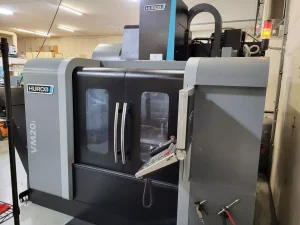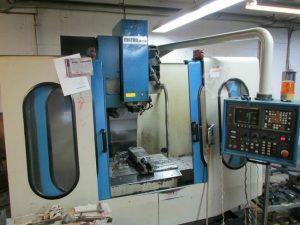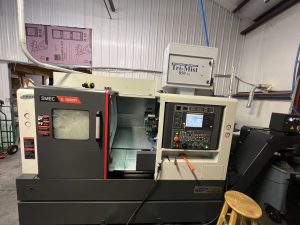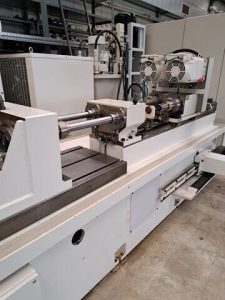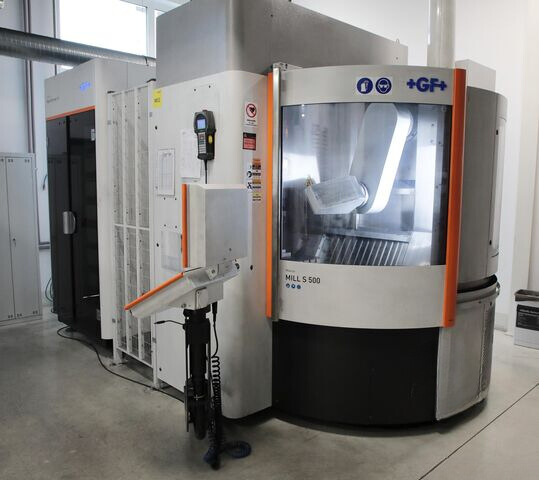
What Do Buyers Look for Before Investing in a Pre-Owned, Used, Secondhand, Surplus CNC Equipment Before Purchase +GF+ Mikron MILL S500 CNC Vertical Machining Center 5 Axes made in Switzerland
Buying a pre-owned / used / surplus 5-axis CNC machining center like a GF / Mikron MILL S500 is a high-stakes decision. The upside is you can gain advanced capability at lower cost, but the risks are larger than with a brand-new purchase. Below I’ll lay out a comprehensive checklist and key technical caveats (general + specific to machines like the MILL S500) to help you evaluate such machines properly.
Key Considerations / Risk Areas
Here is a high-level checklist of what experienced buyers tend to inspect or demand before committing:
| Area | What to Check / Ask | Why It Matters / Red Flags |
|---|---|---|
| Machine History & Usage | Operating hours, cut hours vs “power-on” hours, duty cycles, past workload, original application | A machine might have many hours but low cutting load vs heavy cutting. A history of heavy or abusive use can degrade components far faster. |
| Maintenance & Service Records | Logs of preventive maintenance, repairs, parts replacements, spindle rebuilds, calibration history | Good documentation is a strong signal of how well it was cared for. No records = risk. |
| Spindle & Bearings | Run it at various speeds, listen for noise or vibration, measure run-out, check for lubrication leaks or heating | The spindle is one of the most expensive and critical components to repair or replace. Any “growling,” excessive heat, or wobble is a red flag. |
| Linear Drives / Motors / Actuation System | Check linear motors or drives (especially in machines that use them), torque tables, rotary axes, backlash, motor health, encoder signals | If actuators are worn, it reduces accuracy and repeatability. In a 5-axis machine, the rotary and tilt axes are especially delicate. |
| Guideways, Ball Screws, Rails & Bearings | Inspect for wear, scoring, chatter, binding, smoothness of movement; check compensation or axis calibration errors | Wear here translates directly to loss of precision. |
| Thermal Stability & Structural Integrity | Check for frame cracks, alignment, leveling, warping; consider temperature compensation systems, base, machine stiffness | Over time, thermal drift and structural fatigue can degrade quality. |
| Control System / CNC Electronics / Interface | Which control (Heidenhain, Siemens, etc.), software version, ability to get spare parts, interface compatibility, backups, PLC, servo drives, I/O boards | If the control is obsolete or proprietary, you may struggle with future support or retrofits. |
| Power, Cabling, Wiring & Electrical Systems | Check cable harnesses, connectors, danger of corrosion, overcurrent protection, grounding, noise interference | Faulty wiring is safety risk and can cause intermittent issues. |
| Hydraulics / Pneumatics / Auxiliary Systems | If there are systems for coolant, chip conveyors, mist/dust extraction, clamping, lubrication, hydraulic tables, air supply, etc. | A “perfect” mill is only as good as its supporting systems. If these are failing or missing, cost of repairs adds up. |
| Tool Magazine / Tool Changer / Tool Arm Systems | Check for smoothness, mechanical wear, indexing accuracy, socket condition, broken grippers, collisions or past damage | Malfunction here causes downtime or tool crashes. |
| Swivel / Rotary / Tilting Table | For 5-axis: test motion, torque limits, backlash, encoder consistency, freezing or seized movement | One bad rotary axis can cripple 5-axis performance. |
| Accuracy & Geometric Tests | Run tests: e.g. ballbar tests, circularity, straightness, repeatability, positional accuracy across full travel | This is the ultimate proof that the machine still meets your tolerances. |
| Inspection while Running / Under Load | Machining test with actual cuts, checking for vibration under load, thermal drift over hours, cooling systems in line, stability over time | Some defects only manifest under load or after thermal stabilization. |
| Spare Parts & Serviceability | Ask: Are parts (spindles, motors, control boards) still manufactured? How about dealer support in your region? | Even a great machine is useless if you can’t get replacements. |
| Upgradability / Future-proofing | Can you retroactively upgrade control, add modules, adapt newer software, modernize axes? | A machine should not be a dead-end. |
| Price vs Cost-of-Restoration / Refurbishment | Be realistic about what you’ll need to spend on refurbishment, transport, alignment, electrical updates, etc. | The “cheap” machine may cost more to fix than a newer used one. |
| Warranty, Guarantee or As-Is Terms | Try to negotiate some form of limited guarantee or return window if possible | Helps cover you against hidden defects. |
| Seller Reputation & Inspection Rights | Work with reputable dealers or sellers; insist on onsite inspection rights or third-party inspections | Many problems are concealed unless closely inspected. |
| Logistics, Installation, Alignment & Commissioning Costs | The cost to disassemble, transport, install, level, align, test, and commission must be factored | Even the best deal can be undone by installation surprises. |
Specific Considerations for a GF / Mikron MILL S500 5-Axis Machine
Because the MILL S series (and S500 variant) has advanced features (linear drives, high-speed spindles, active thermal compensation, and full 5-axis motion), there are additional areas you must probe carefully. Here are the features and caveats specific to this machine, plus how they influence your inspection:
Key Known Specs & Features (for reference):
- The MILL S / X series is marketed for dynamic precision using direct linear drives on all axes.
- It supports axis feed up to 100 m/min in some configurations.
- High-speed STEP-TEC spindles (e.g. up to 42,000 rpm with HSK-E40) are common in the series.
- Active thermal compensation / “Ambient Robust” technologies are part of the design intent.
- The machine is designed with a compact footprint, robot integration, and advanced ergonomics.
- In the S500 variant, the tool magazine capacity can be quite high (e.g. 68 tools) and chip / coolant systems are robust.
- The S500 design allows for both milling and grinding capabilities (in some variants).
Given these advanced features, here’s what to watch out for:
| Feature | What to Inspect / Test | Risks / Failures Common in Advanced Machines |
|---|---|---|
| Linear Motors / Direct Drives for All Axes | Check for loss of force, coil damage, heating, and feedback encoder quality. Verify drive currents, repeatability, and static friction / cogging | These motors can degrade if overdriven or overheated; replacement is expensive. |
| Active Thermal Compensation / Closed-Loop Temperature Control | Check sensors, look for evidence of drift in long cut tests, monitor thermal stability over hours | If thermal compensation is failing, precision at scale is lost. |
| Spindle & High RPM Capability | At high RPMs, any imbalance or bearing wear is magnified—test under no-load, moderate load, and high load. Check run-out, vibration, axial/radial play | A high-speed spindle failure is among the costliest repairs. |
| 5-Axis Kinematics / Rotary / Tilting Axes | Check backlash, torque limits, fluid seals, encoders, axis synchronization, lock accuracy | These axes wear complex mechanical parts, and calibration is delicate. |
| Tool Magazine & Tool Change System in High-Speed Environment | Because tools are changed rapidly and often, mechanical wear is likely. Test all tool changes, check repeatability and reliability under speed | Mis-indexing, broken fingers, or tool arm errors are common issues. |
| Control Electronics / Firmware for 5-Axis & Multi-Axis Motion | Check licensing (does every axis module have correct license?), control software versions, input/output reliability, diagnostics, error logs | Obsolete modules or proprietary firmware can be impossible to replace later. |
| Cooling, Chip, Mist / Dust Removal Systems | Because 5-axis machines often run aggressive cuts, chips, coolant, or dust systems may have been heavily used. Inspect pumps, filters, conveyors, piping, coolant lines, oil contamination | Failure in these support systems often leads to more widespread damage (e.g. coolant leaks damaging electronics). |
| Foundation, Rigidity, Vibrations | Because the machine is dynamically capable, any looseness, anchoring issues, or foundation settling can undermine performance | At high speeds, even small flex or vibration ruin surface finish and accuracy. |
| Retrofit / Upgrade Path | Because 5-axis is already advanced, check whether spare parts or upgrades (additional axes, software updates, control upgrades) are still supported by GF or third parties | The inability to upgrade will limit you in future. |
Practical Steps & Strategy During Inspection / Negotiation
Here’s how you should approach the inspection and what tactics often help:
- Bring a Competent Machinist / Specialist
If you are not deeply experienced with 5-axis CNC machines, bring someone who is. They can detect subtle signs of distress that non-experts will miss. - Demand Live Demonstration & Test Cuts
Insist on seeing the machine operate with real workpieces (not just air moves). Do challenging cuts to see how the machine behaves under load and over time (hours). Look for drift, chatter, thermal changes, performance consistency. - Run Calibration / Accuracy Tests
Use standard tests (ballbar, circular interpolation over full travel, positional repeatability tests) to quantify deviations. Compare with spec sheet tolerances. - Check All Axes Across Full Travel
Don’t just test near one portion of the range. Test axis movement near limits, in all directions, under varying loads, to ensure linear errors or nonlinearity is not masked. - Thermal / Warm-Up Drift
Let the machine run for several hours and measure drift in position as it warms up. Check whether the compensation systems are keeping pace. - Check for Signs of Crashes / Repairs / Overhauls
Look for repainting or different colored metal, replaced panels, misaligned parts, non-original welds, broken safety covers. Sometimes machines have been in collisions. - Ask Deep Questions about Previous Use
- What kinds of materials were machined (aluminum, steel, titanium, composites)?
- Was the machine run 24/7 or only limited shifts?
- Were there any accidents, crashes, overloads?
- Why is it being sold?
- What components were replaced or rebuilt, and when?
- Inspect Electronics Cabinets / Wiring
Ask to open control cabinets and see the condition of the wiring, signs of overheating, dust, moisture. Check fan/filter status and cleanliness. - Verify Spare Parts Availability & Cost
Make a list of likely wear parts (linear motor modules, spindle bearings, encoder boards, rotary axis seals). Ask for part numbers and check whether they’re still sold or available via aftermarket. - Negotiate a Contingency Reserve / Price Buffer
Because of hidden defects, always assume you’ll need to set aside 10–25 % of your acquisition cost for remediation / fine-tuning / part replacement. - Clarity on Ownership, Warranty & Return
Get written guarantees or return rights where possible (e.g. a short “running” warranty, or a clause that machine performance must meet certain metrics). - Logistics / Installation / Commissioning Costs
Budget for the cost of disassembly (if needed), packing, transport, rigging, foundation preparation, leveling, alignment, initial calibration, and verification on-site. - Evaluate ROI vs Risk
After factoring in refurbishment and servicing, calculate whether the total cost still makes sense compared to buying a newer or lightly used machine.
Decision Thresholds & Red Flags
While every deal is unique, here are some heuristic red flags and “deal-breaker” signs:
- Obvious spindle vibration, noise, or run-out.
- Rotary or tilt axes that have been locked or non-functional.
- Lack of documentation or maintenance history.
- Completely obsolete control for which parts are not obtainable.
- Missing major support systems (tool magazine, cooling, chip systems) and no replacements.
- Cracks or visible structural damage.
- Pricing that seems “too good to be true” (often because seller expects you to pay for hidden defects).
- The seller refuses any inspection, test cuts, or detailed questions.