What Do Buyers Look for Before Investing in a Pre-Owned, Used, Secondhand, Surplus CNC Equipment Before Purchase Finn-Power E 5 Lui CNC Punching Press made in Finland
Here is a detailed due-diligence / inspection guide tailored for a Finn-Power E series (e.g. “E 5 / E5 Lui / E5 U / E5x / E series”) CNC turret punching press (sheet-metal punching / forming machine). Because punch presses have hybrid mechanical / hydraulic / servo / turret / die systems, many things can go wrong or degrade with use. Use this as a checklist when evaluating a used machine (alongside contractual protections).
Below is what experienced buyers look for, broken into categories. I also include sample “red flags” and suggestions for how to test.
Background & Reference Specs for Finn-Power E series
First, it helps to know what typical capabilities for the E series are, so you can spot exaggerated claims or missing features. Some reference data:
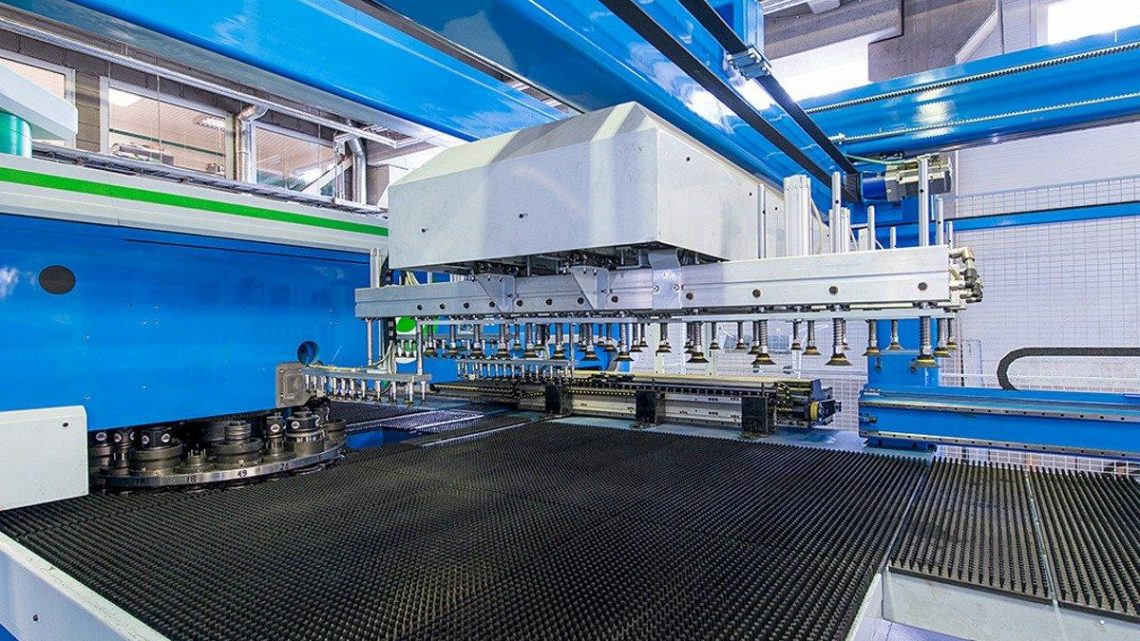
- The E series turret punch press (E5 / E6 / E8) uses a servo-electric ram / punching mechanism.
- The machine architecture includes three linear axes (X, Y, and the ram axis) + turret index axis (0–360°) + tool change (TUR) axis.
- Typical tool turret: 20 stations in many E series machines.
- Clamping / sheet hold mechanisms (pneumatic) to grip the sheet during punching.
- Typical punching forces: many used E5 units are quoted around 20 tons (200 kN) punching capacity.
- Common work envelope (sheet size) in used listings: e.g. 2,500 mm × 1,250 mm (X × Y) for E5 U models.
- The E5 is often equipped with a Siemens control (e.g. SINUMERIK / 840D) or Finn-Power’s NC interface system.
- The machine uses safety devices: emergency stops, light curtains / safety beams, and interlocks.
When the seller gives you specs, confirm that the actual machine (turret count, punching force, sheet size, control type) matches a credible configuration for the E series.
Inspection & Evaluation Checklist
Here is a structured checklist of what to inspect / test in a used Finn-Power E series punching press. Use this to guide a site visit or inspection.
1. Documentation & History
- Original machine manuals, electrical schematics, parts lists, and service manuals.
- Logs of maintenance, repairs, and servicing (especially turret, ram, drive system, clamps).
- History of usage: hours of operation, types of materials punched, thicknesses used.
- Records of any collisions, turret crashes, misfeeds, or accident repairs.
- Any retrofits / modifications (e.g. additional clamps, upgraded control, changed tool turret) and documentation of them.
- Photos or videos (if possible) of the machine in operation (axes motion, punching cycle, turret indexing).
Strong documentation reduces risk of hidden defects.
2. Structural / Mechanical Condition
- Check the frame, base, supports, and structural members for cracks, weld repairs, deformation, or signs of damage.
- Inspect turret mounting and turret support structure for wear, looseness, or cracks.
- Check for rigidity — whether there’s play or flex in components that should be stiff.
- Ensure all covers, guards, and protective panels are present and undamaged.
Structural issues can propagate misalignment and reduce long-term accuracy.
3. Turret / Tool Station / Indexing
- Rotate the turret (in manual / JOG mode) and listen carefully for grinding noise, binding, or misalignment.
- Check indexing accuracy: the turret must index cleanly to each position without wobble or delay.
- Inspect tool holders, punches, die holders, and ensure they seat properly, engage cleanly, and are not excessively worn.
- Inspect lifting pins, tool holder guide surfaces, and wear on turret surfaces.
- Test tool change (if auto tool change is present) and confirm reliability.
- Confirm how many tool stations are installed and whether all are functional.
- Check that forming, indexing, multi-tools (if present) function properly.
A degraded turret is one of the most critical failure points for productivity and accuracy.
4. Punching Mechanism & Ram / Drive System
- Observe the ram / punch axis movement (up/down) in test cycles: look for smoothness, vibration, noise, or hesitation.
- Check alignment of the punch to the die station: whether ram impact is centered and not hitting off-axis.
- Use test tooling to punch sample holes and inspect whether the punch-die alignment and clearance are correct.
- Inspect the drive / servo system for the ram: motor, couplings, linkages, sensors.
- Inspect for wear, play, backlash in the ram drive mechanism.
- Check for fatigue or cracks in linkages or connecting parts.
- Check auxiliary systems (cooling of drive, lubrication, pneumatic or hydraulic assists) if present.
The punching axis is central to the machine’s core function—any misbehavior here is a serious risk.
5. Clamps / Sheet Holders / Sheet Feed / Back Gauge
- Inspect clamp arms, pneumatic cylinders, liners, pads, and mechanical parts of clamps for wear or leakage.
- Test clamp operation: open/close, locking, hold-down force, speed, durability.
- Inspect sheet detection sensors, sheet presence detectors, and ensure they are functional and not bypassed.
- Test the back gauge: X / Y back gauge movements, repeatability, positioning accuracy.
- Check that the back gauge fingers (fingers or stops) are intact and correctly aligned.
- Confirm the sheet feed system (if the press has automatic repositioning) works smoothly without jamming or misfeeds.
Loose or failing clamps or misaligned gauge systems can cause mispunches, collisions, or damage to tools.
6. Control System / CNC / Electronics / Wiring
- Power up control panel: test screen / user interface, keypads, menus, command inputs, overrides.
- Check alarm / fault logs stored in the controller.
- Inspect electrical cabinet: wiring harnesses, connectors, insulation, cleanliness, signs of overheating or repairs.
- Check servo drives, amplifiers, control cards, and any modules for wear or damage.
- Confirm software / firmware version, compatibility, whether updates or backups exist.
- Test axis motion commands from the control (X, Y, ram, turret).
- Inspect wiring for the turret index system and tool change circuits.
- Check that the control can load / save programs and that interface ports (USB, Ethernet) work (if applicable).
Poor or damaged electronics are expensive to replace or repair; old or obsolete modules are a risk.
7. Safety & Guards / Interlocks
- Ensure all safety guards, light curtains, safety fences, and interlocks are present and functional.
- Test emergency stop buttons — in all operator locations — and validate that all axes stop immediately when triggered.
- Check whether any safety circuits have been bypassed or disabled.
- Inspect covers, doors, and ensure their safety switches (door open sensor, turret door limit) operate correctly.
- Ensure the machine meets or can be upgraded to meet local safety standards (CE, ISO, OSHA, etc.).
Safety is not optional — a machine missing or bypassing safety features is a liability.
8. Operational / Test Punching Trials
- Run the machine in dry / motion-only mode first: axis motions, turret indexing, clamp actuation, back gauge movement. Check for smooth, consistent behavior.
- Run sample punching tests using representative sheet material (same thickness, same metal) to confirm hole quality, positioning accuracy, repeatability, and surface finish.
- Test multiple cycles over extended time to see if performance drifts (e.g. due to heating, lubrication issues).
- Measure hole dimensions, check for burrs, check if punch-die clearance is appropriate.
- Test turret indexing under load, and test speed changes during punching.
- If the machine has forming tools or multi-tools, test those operations too.
- After warm-up, re-run test parts to check repeatability and drift.
Performance under real conditions reveals issues not visible in static checks.
9. Lubrication, Guideways & Wear
- Inspect all linear guides, rails, slides, and surfaces for wear, scoring, corrosion, or pitting.
- Check lubrication lines, oil / grease delivery, whether automatic lubrication systems (if present) work properly.
- Confirm that greases / oils are clean and that there’s no contamination.
- Check for play or looseness in guides.
- Inspect seals, wipers, and covers that protect sliding surfaces.
Wear in guides reduces precision, increases backlash, and accelerates further damage.
10. Parts Support, Spare Modules, Obsolescence
- Confirm whether Finn-Power (or successor entities) still support spare parts (control modules, drives, turret parts, clamps).
- Check whether critical modules (control boards, servo modules, sensors) are still obtainable or whether there are aftermarket / third-party suppliers.
- Ask whether the seller includes spare parts, backup control modules, or consumables (clamp pads, sensors, etc.).
- Evaluate whether any previous modifications or nonstandard parts would complicate future servicing.
- Verify firmware / software licensing is intact and transferable.
Even if the machine seems in good condition, if critical spares are unavailable, future downtime risk is high.
11. Infrastructure, Installation & Total Cost
- Confirm the machine’s weight, footprint, and rigging requirements; ensure your facility can receive it (door size, crane / hoist capacity).
- Check whether the floor and foundation at your location can support the machine and whether leveling / anchoring is required.
- Ensure your power supply (voltage, phase, current) matches the machine’s requirements.
- Plan for installation, alignment, calibration, and commissioning time and cost.
- Budget for initial refurbishing: cleaning, replacing worn parts, calibration, test runs, consumables.
- Account for transport risk — turret, tooling, precision components must be secured for shipping.
Often, the “getting it working in your shop” cost is substantial and can eat into the savings of buying used.
12. Contractual Terms, Acceptance Conditions & Warranty
- Negotiate a conditional acceptance clause: after delivery, you get a window to run tests and reject if major defects are found.
- Insist on the seller disclosing in writing all known defects, repair history, and modifications.
- If possible, secure a limited warranty (especially on turret drive, control, clamps).
- Define responsibility for transport damage, installation, alignment, calibration, spare parts.
- Withhold final payment until after successful commissioning and acceptance in your facility.
A strong contract is your protection if hidden defects surface after installation.
Red Flags / Warning Signs
Here are some signals that should make you pause or walk away:
- Turret indexing that is sloppy, noisy, or inconsistent
- Turret or tool stations that fail to hold tools rigidly
- Ram / punch mechanism showing wobble, misalignment, vibration, or noisy operation
- Clamps or hold-down systems failing to grip reliably or showing leakage
- Control or electronics modules missing, damaged, or heavily modified
- Wiring with splices, poor insulation, heat damage, or signs of repair
- Safety systems bypassed, disabled, or missing
- Inability to perform test punching cycles or refusal to allow real parts testing
- Excessive wear in guides, slides, or rails
- Lack of documentation, missing manuals, no service records
- Unavailability or high cost of spare parts or modules
- Performance substantially below specification (e.g. slower punching rate, mispositioning)
- Structural damage, welds, cracks, or deformation in the frame, turret, or support castings
Encountering serious issues in multiple areas may be a signal that the machine is too risky unless compensated by a very low price and repair plan.
Prioritization & Strategy for Buyers
- Start with control / electronics / turret — if these are nonfunctional or unsupported, the machine may be unusable.
- Focus on the turret mechanism and tool stations — it’s a common wear point and essential for production.
- Test the punching motion and sample production — behavior under load is the ultimate test.
- Confirm parts availability for your region — that may dictate your ability to keep the machine running long term.
- Use a structured inspection checklist (with scoring or pass/fail) so you don’t overlook critical items.
- Negotiate a delivery and acceptance condition: don’t pay in full before you test the machine in your shop.
- Budget for refurbishment and spare parts upfront — treat these as part of your acquisition cost.