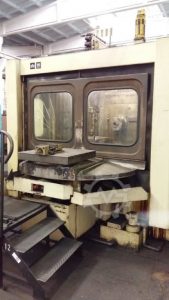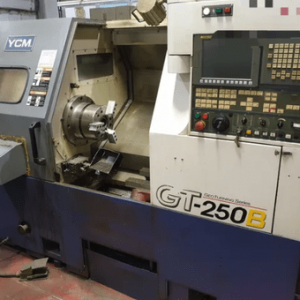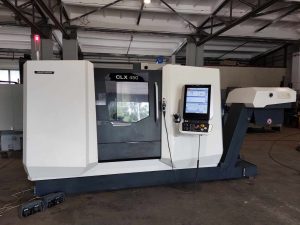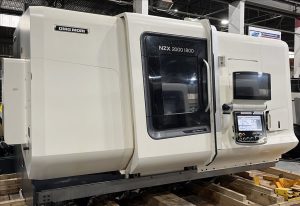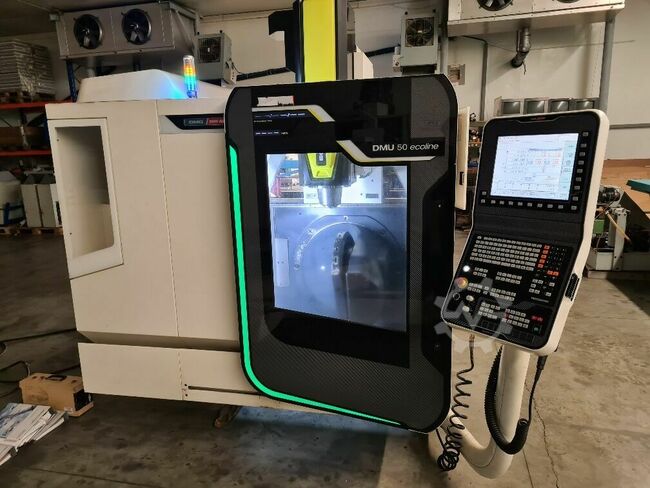
What Do Buyers Look for Before Investing in a Pre-Owned, Used, Secondhand, Surplus CNC Equipment Before Purchase DMG MORI DMU 50 Eco CNC 5-axis Machining Center made in Germany & Japan
If you are planning to evaluate a pre-owned / surplus DMG MORI DMU 50 (Eco / DMU 50 series / 5-axis machining center), here is a thorough due-diligence / inspection checklist and advice. This kind of machine is complex, and many subtle faults can degrade its performance or incur high repair costs if not detected in advance.
First, I’ll list some reference specs / features (so you know what you should expect), then walk through what you should look for in each subsystem, red flags, and suggestions for structuring your evaluation (and contract). If you like, I can also turn this into a printable inspection sheet you can bring onsite.
Reference Specs & Key Features (DMU 50 / DMU 50 Eco / 3rd Generation)
Before inspecting, you should gather the exact variant (Eco, 1st/2nd/3rd Gen, options) so you know the expected capabilities. Here are some typical / published specs for DMU 50 / DMU 50 ECO / DMU 50 3rd Gen machines:
| Parameter | Typical / Published Value |
|---|---|
| Travel (X × Y × Z) | ~ 650 × 520 × 475 mm (for newer 3rd Generation) |
| Table / Swivel Rotary Table | Ø 630 mm table, load up to ~300 kg |
| Spindle Speed / Options | Standard ~ 15,000 rpm; optional up to 20,000 rpm |
| Rapid Traverse Speed | ~ 42 m/min (X, Y, Z) |
| Tool Magazine | 30 pockets standard, optional up to 60 or 120 |
| Swivel Range (B axis) | –35° to +110° (typical) |
| Control / CNC Options | Siemens, Heidenhain, MAPPS, etc. |
Also note: the “Eco” line usually denotes a more cost-optimized version (with perhaps fewer options, less rigidity or fewer advanced features) compared to “premium” variants.
Use these reference values to check whether the machine you are inspecting is under-spec’d, overclaimed, or missing key features.
What Buyers Look for: Inspection & Evaluation Checklist
Here is a detailed breakdown of what to check or test for, organized by subsystem. Bring your own measuring tools (dial indicators, laser interferometer or length gauge, thermal gun, etc.) if possible, or have a trusted technical inspector.
1. Documentation, History & Configuration Verification
- Machine specification sheet / build sheet / factory options — get the serial number, option codes, list of features installed.
- Service / maintenance records — spindle rebuilds, alignment work, control upgrades, axis recalibration, component replacements.
- Usage profile — what materials were machined? High-heat alloys? Large volumes? Long cycles?
- Hours of use / spindle hours / axis hours (if logged)
- Photos / videos of machine under operation (axes moving, control, tool changes)
- Any modifications / retrofits (e.g. extra cooling, additional sensors, aftermarket electronics) — ask for documentation of these.
- Control software version, backups, licenses — confirm the control is intact and that parameter/program backups exist.
If the as-built spec deviates greatly from what is claimed (e.g. different travel, spindle rpm, missing options), that’s a red flag.
2. Structural & Machine Frame Integrity
- Machine base, column, bed casting — inspect for cracks, weld repairs, distortions.
- Monolithic vs welded sections — newer DMU 50 machines often have one-piece bed designs for rigidity.
- Flatness / level checks — over the entire travel, measure straightness / flatness of ways and surfaces with a precision straightedge / gauge.
- Access covers, guard panels, protective covers — ensure none are missing or severely damaged.
- Rigidity / flex — with light test loads or via dial indicator / deflection testing, check whether the structure shows creeping or flex under load.
Structural problems can degrade precision, magnify errors, and lead to quicker wear of components.
3. Spindle, Bearings & High-Speed Dynamics
- No-load runup — spin the spindle across its rpm range and listen for abnormal noise (rumble, growl, scraping).
- Runout / concentricity — use a test bar or precision indicator to measure radial and axial runout (taper and spindle nose).
- Play / looseness — gently push/pull the spindle nose to detect axial or radial play.
- Temperature / heating — after running for some time, measure spindle housing temperature to check for abnormal heating.
- Lubrication / sealing — check seals, lubrication lines, oil / grease supply, leakage around spindle or bearings.
- Spindle history — check whether bearings have been replaced, whether spindle has undergone repairs or upgrades.
- Performance under load — if possible, under light cutting load, observe spindle behavior, vibration, stability.
Given the high rpm and precision requirements in a 5-axis machine, spindle health is critical.
4. Axis Motion & Linear Systems (X, Y, Z, Rotary Swivel, Table Axes)
- Jog each axis (X, Y, Z, B, C) through full travel (forward and reverse), at multiple speeds—observe for stick/slip, uneven motion, jerkiness, dead zones.
- Backlash / hysteresis — use a dial indicator or test instrument to check backlash in each axis and in rotary axes.
- Repeatability / positioning accuracy — command a known offset, check actual position, repeat multiple times, and see consistency.
- Linear guides / ways / rails — inspect surfaces, slides, bearings for scoring, wear, rust, residue, or pitting.
- Ball screws / drive mechanisms — inspect screws, nuts, support bearings, and coupling areas for wear or damage.
- Lubrication / oiling / coolant through ways (if equipped) — ensure the lubrication system works, that oil is clean, and delivery is proper.
- Limit switches, homing, reference sensors — test that limit sensors or home returns reliably and repeatably.
- Rotary axes (B, C) — test swivel motion, indexing accuracy, backlash in angular axes, smoothness of rotation, and table bearings.
All these motion systems are core to positioning precision and must work cleanly for the 5-axis capability to be usable.
5. Tool Magazine, Tool Change Mechanism & Tool Holding
- Tool magazine cycling — cycle through all tool pockets, observe indexing speed, look for hesitation or errors.
- Gripper / tool change arms — inspect for wear, slop, misalignment, sensor integrity.
- Tool seating and retention — verify how tools are held (HSK, SK, etc.), check contact surfaces for wear or damage.
- Tool change time — measure chip-to-chip or tool-to-tool change times and compare to spec.
- Tool holder condition — inspect holders in the magazine for wear or damage.
- Capacity and spacing — confirm number of installed pockets and whether adjacent empty slots are needed for large tools.
A slow or unreliable tool exchange system dramatically lowers throughput and increases risk of crashes.
6. Control / CNC / Electronics & Wiring
- Power up the control — check interface, menus, parameter screens, overrides, axis commands.
- Error / alarm history logs — review the control’s fault history for recurring or serious errors.
- Electrical cabinet inspection — examine wiring harnesses, connectors, cable bundling, insulation, signs of overheating, dust, corrosion, or field splices.
- Servo drives, amplifiers, motor controllers, encoders — test or inspect their condition, wiring, cooling, fan integrity.
- Software / firmware versions — determine whether the control is up-to-date and if upgrades are available or needed.
- Backup / memory redundancy / data retention — ensure parameters, part programs, calibration data are backed up.
- Dry-motion test commands — command axis moves, tool changes, without load, and see if errors or misbehavior occur.
- Check interface connections (Ethernet, USB, I/O links, probing connectivity) if applicable.
Because of the complexity of 5-axis controls and interpolation, any fault or weakness in control modules is a high-risk point.
7. Cooling, Thermal Control & Environmental Stability
- Coolant / spindle cooling / chiller units (if present) — verify they operate, deliver proper temperature control, no leaks.
- Thermal compensation systems (if machine has built-in cooling of guides, axes or swivels) — test whether these are functional.
- Ambient temperature influence — see how the machine behaves as it warms up (drift, expansion).
- Heat management — ensure that the machine’s cooling systems and heat dissipation (oil coolers, fans) are intact and effective.
- Machine bed / table cooling (if present) — check whether temperature regulation for the table is present and functional.
In a high-precision 5-axis machine, thermal drift is a major source of error; good cooling and compensation are essential.
8. Safety, Guards & Interlocks
- Safety enclosures, doors, shields — ensure all mechanical guards or enclosures are intact and functional.
- Emergency stop (E-stop) — test from multiple operator positions; ensure all axes stop when E-stop is triggered.
- Interlock switches — doors, covers, access panels should have safety switches that disable motion if open.
- Bypass / override circuits — check that safety circuits haven’t been tampered with or bypassed.
- Grounding, electrical safety — inspect panels, wiring, insulation; ensure no exposed live parts.
- Compliance with local machine safety standards (CE, ISO, OSHA, etc.) — verify whether the machine meets or can be upgraded to meet legal safety requirements.
Safety is mandatory; a machine with disabled or missing safety interlocks is a liability and may be illegal to run.
9. Operational / Test Machining Trials
- Dry-motion tests — first, move axes, rotate tables, change tools, verify smooth behavior with no cutting.
- Sample machining — run test parts (including 5-axis cuts) with representative materials, geometries, and inspect for accuracy, surface quality, and repeatability.
- Long-run stability — run a sequence over extended time to look for drift in dimensions, tool offsets, or errors creeping in.
- Simultaneous multi-axis motion — test full 5-axis interpolation (B & C rotations) under load, including tool path corners, coaching transitions.
- Thermal stability check — after warm-up, run reference cuts and compare pre- and post-warm-up dimensions.
- Tool changes during machining — check whether tool change interrupts or disturbs motion or synchronization.
- Shock / vibration / resonance test — during heavier cuts, observe for chatter, mechanical vibration, or unwanted deflection.
- Repeatability tests — re-run identical tool paths multiple times and measure consistency.
These real-world tests often uncover integration, control or mechanical synergy issues that static checks miss.
10. Spare Parts, Support, Obsolescence & Upgradability
- Spare parts availability — check whether DMG MORI (or authorized dealers) still supply replacement spindles, drives, control modules, rotary table bearings, sensors, etc.
- Control module obsolescence — older control cards/modules may be obsolete; confirm whether equivalents or retrofit paths exist.
- Electronics / retrofit potential — if the machine is older, can it be upgraded to newer control, spindle, or sensor packages?
- Third-party / aftermarket support — see whether third-party circuits, drives, or parts exist as alternatives.
- Whether seller includes spare modules / spare parts — these can be very valuable when buying used.
- Software licensing — ensure the control software license is intact and can be retained or transferred.
Even a well-running machine becomes expensive if key components fail and spares are unavailable.
11. Logistics, Installation & Total Cost Estimation
- Machine footprint, weight, rigging / disassembly needs — confirm your facility can accommodate delivery and positioning.
- Floor, foundation, leveling, anchoring — ensure your shop floor can support vibration, load, and that proper leveling is possible.
- Power / utilities compatibility — verify your power supply (voltage, phase, current), cooling, compressed air, chips disposal, coolant system match machine requirements.
- Installation, alignment, calibration time & cost — account for alignment, squaring, compensation setup, verification.
- Refurbishment budget — even well-maintained machines often need seal replacements, cleaning, recalibration, filter replacement.
- Downtime / startup risk — plan for tuning, debugging, failures in early cycles.
- Insurance, shipping risk to critical parts (spindle, rotary table) — ensure proper packing and insurance for precision components.
Often “getting the machine running in your shop” is as big (or bigger) a cost than the purchase price.
12. Contractual Terms, Warranty, Acceptance & Risk Mitigation
- Conditional acceptance / trial period — arrange that after delivery you can test and reject if performance is unsatisfactory.
- Disclosure of known defects / repair history — require the seller to provide full history in writing.
- Warranty (if possible) — even a short warranty on spindle, control or drives is helpful.
- Responsibility for damage during transport / installation — clarify in contract who bears which risks.
- Payment terms tied to performance acceptance — withhold final payment until machine passes tests in your facility.
- Guarantee of spare parts or module supply for a period — ask for assurances about parts support.
- Rights to inspect under power prior to final purchase — insist on seeing machine run in seller’s facility if possible.
A strong purchase contract is critical when acquiring complex used 5-axis machinery.
Red Flags / Warning Signs to Watch Out For
While inspecting, certain items should raise immediate concern or cause you to walk away unless corrective action and discount are substantial:
- Spindle with noise, play, or signs of bearing failure
- Axis motion with uneven speed, jerkiness, “dead zones,” or binding
- Excessive backlash or inability to hold repeatability
- Poor or slow tool magazine / tool change performance
- Control or drive components missing, heavily modified, or component boards obsolete
- Wiring harnesses with splices, damaged insulation, signs of overheating
- Safety circuits bypassed, guards missing, interlocks disabled
- Significant structural damage (welds, cracks, distortions) or misalignment
- Unavailable spare parts for major systems
- Inability or refusal to perform full 5-axis test machining trials
- Performance much lower than claimed spec (slow spindle, bad accuracy, drift)
- Thermal drift or instability apparent even in “cold” runs
- Overly aggressive price differential justified by vague “weakened” condition
Any one of these is a serious risk; multiple such issues strongly suggest that repair costs may exceed the purchase savings.
Summary & Buyer Strategy
- Begin by confirming the exact variant / options (Eco, Gen number, control type, installed options) to know the “target” spec to expect.
- Use the published DMU 50 specs above as benchmarks to assess if what you are offered is realistic.
- Inspect systematically across structure, spindle, axes, lubrication, tool systems, control, cooling, safety, and test machining.
- Emphasize real-world 5-axis machining tests under load to verify accuracy, stability, repeatability, and motion integration.
- Confirm you have access to spare parts, support, and potential upgrade paths in your region.
- Demand contractual protections: trial period, warranty, disclosure, transport risk allocation, payment tied to acceptance.
- Budget for installation, alignment, calibration, refurbishment, and startup tuning — these costs are real and often substantial.