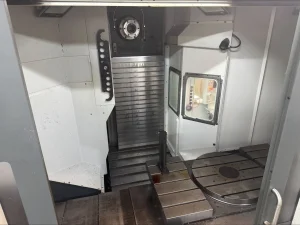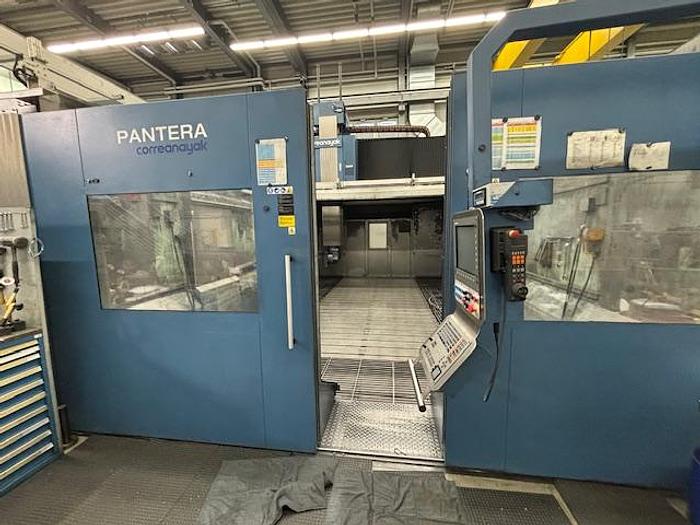
What Do Buyers Look for Before Investing in a Pre-Owned, Used, Secondhand, Surplus CNC Equipment Before Purchase Correanayak Pantera CNC 5-Axis Gantry Double Column Bridge Type Vertical Machining Center made in Spain
Here is a detailed due-diligence / inspection guide (“what to look for”) when evaluating a Correa-type / “Correanayak Pantera / Pantera / Correa Pantera” 5-axis gantry / double-column vertical machining center (gantry / portal style) as a used / surplus purchase. Because such machines are large, complex, and have many precision subsystems, the risk is high — but careful inspection can reduce surprises.
I’ll break this into:
- What typical / published specs you should benchmark (so you know what to expect)
- Subsystem checks & tests (mechanical, control, motion, spindle, etc.)
- Red flags & warning signs
- Strategic priorities & contracting suggestions
If you like, I can convert this into a checklist you can take on site.
1. Benchmark / Reference Specs (Correa / Pantera Style Gantry Machines)
Before visiting, you should gather what the seller claims for their “Pantera / Correanayak / Correa Pantera 5-axis gantry” machine. For example, in used listings:
- One listing for “Correanayak Pantera CNC 5‐Axis Gantry Type High Speed Milling Machine” claims:
• Spindle speed up to 24,000 rpm
• X travel ~ 6,800 mm, Y travel ~ 3,400 mm, Z ~ 2,000 mm
• Table ~ 6,000 × 2,500 mm, table capacity ~ 10 tons
• Use of Heidenhain TNC 530 control
• Tool changer ~ 80 positions, ISO SK-50 and HSK-63A tool holders - In a similar machine family (Correa Pantera), used ads show:
• Large traverses (X, Y, Z) and heavy table loads.
• Use of electrospindles, 5-axis heads (C/B swiveling heads)
Thus, when the seller gives you the spec (spindle rpm, travels, tool changers, head axes), you should compare against what is credible for gantry machines of this type. If they overpromise (e.g. extremely high rpm or enormous travel beyond structural plausibility), ask for proof (drawings, logs, test cut data).
A gantry / portal / double-column vertical machining center tends to have:
- Large spans (X, Y) and deep Z axis
- Massive table and heavy structural rigidity
- 5 axes: usually X, Y, Z plus B (tilt) and C (rotation) or combined head axes
- High dynamic demands: the rigidity, thermal stability, synchronization of axes, backlash control
- Large tool magazines / heavy tooling capacity
- Advanced control (Heidenhain, Siemens, etc.)
- Safety systems, collision protection, probe systems, scale feedback, etc.
With those expectations in mind, you can judge whether what you are offered is realistic.
2. Subsystem Checks & Tests
Here’s a comprehensive list of what to inspect, test, and verify.
A. Documentation & Machine Identity
- Obtain original build / factory spec / option sheet, serial number, list of installed options (head type, tool changer, scales, coolant, etc.).
- Request maintenance logs and repair history (spindle rebuilds, head repairs, axis rework, parts replaced).
- Ask about usage profile: what materials, cycle lengths, shifts, volume, workload.
- Ask for modifications or retrofits (e.g. upgraded electronics, new spindles, added sensors).
- Ask for photos or videos of the machine running (axes moving, tool changes, cut examples).
- Confirm the control software / firmware versions, backup / parameter retention, license status.
Knowing exactly what features should be there is essential; mislabelling or missing options are common in used machines.
B. Structure, Frame, Geometry, Alignment
- Inspect the bridge / gantry structure, columns, crossbeam, supports for cracks, welds, distortions, or signs of shock / impact.
- Use precision tools (granite plate, straightedge, laser alignment, autocollimators, etc.) to check flatness, straightness of guideways, alignment of axes.
- Inspect for frame twist or sag across the span.
- Check that bolted joints are tight, no looseness, no movement in connections.
- Inspect covers, guards, panels, mechanical protection; missing or damaged protection often indicates abuse.
- Check whether the machine frame has been reworked, realigned, or had past major repairs.
Structural integrity is fundamental: gantry machines inherently require rigidity over large spans, so any distortion is magnified across the travel.
C. Spindle / Electrospindle / Head (5-Axis Head) & Bearings
- Run the main spindle (and other spindle options) across rpm range without load; listen for unusual noises (bearing hum, rattling, scraping).
- Use a test bar or precision indicator to measure radial runout and axial runout at the spindle nose / taper.
- Check for axial play (push/pull) or lateral looseness.
- Examine seals, lubrication / bearing systems, cooling circuits (if the spindle is liquid-cooled).
- If there is a swiveling head (B/C axes), check that tilt / rotation axes are smooth, backlash-free, accurate, and without binding.
- Inspect the head drive motors, couplings, bearings of the head axes.
- Check any indexing mechanisms in the head (e.g. fork head, orthogonal head) for reliability.
The spindle and head are among the most critical and expensive parts; errors or wear here degrade all machining.
D. Axis Motion Systems (X, Y, Z, B, C)
- Jog each linear axis (X, Y, Z) through full travel in both directions and at various speeds. Observe for jerkiness, sticking spots, or fluctuations.
- Measure backlash, repeatability, and positioning accuracy using dial indicators / lasers over travel segments.
- Inspect ball screws (or drive screws), nuts, couplings, support bearings for play or wear.
- Inspect linear guides, rails, slides for scoring, wear, pitting, or contamination.
- Check the lubrication systems (automatic / manual) and whether lubrication reaches the critical elements.
- Test homing / limit switches / reference sensors for consistency and repeatability.
- For rotary / head axes (B, C): test for backlash, mis-indexing, smoothness of motion, repeatability of tilt / rotation.
- Check encoder or scale feedback systems if installed (linear scales or rotary scales), and ensure their calibration is intact.
Because multiple axes are interacting (especially in 5-axis interpolation), any weak link in axis accuracy or consistency becomes magnified.
E. Tool Magazine, Tool Change, Tool Holding
- Cycle the tool magazine / carousel / arm through all positions; watch indexing, speed, hesitations, misfeeds.
- Inspect gripper / change arms, sensors, pistons, rails, pockets for wear or looseness.
- Test tool change under “real / realistic” positions (not just ideal positions) to see if collisions or misalignments occur.
- Measure tool-change times (chip-to-chip or tool-to-tool) and compare against spec or expectations.
- Inspect tool holders for wear, surface damage, how they seat in the spindle / head.
- Confirm the machine’s tool capacity, configuration (HSK, ISO, etc.) and whether your tooling is compatible.
If tool change is slow, unreliable, or imprecise, the machine’s productivity suffers drastically.
F. Control / CNC / Electronics / Wiring
- Power on and test the control interface: menus, overrides, axis commands, user interface responsiveness.
- Review control / CNC error logs / alarm history to see recurring or serious errors.
- Inspect the electrical enclosures: wiring harnesses, connectors, cable routing, insulation condition, signs of heat damage or repairs.
- Examine servo drives, amplifiers, motor controllers, encoder / feedback lines.
- Confirm software / firmware versions, backup/restore capabilities, parameter reliability.
- Run dry-motion commands (axis moves, head tilts, tool changes) and monitor for any control anomalies.
- Check auxiliary control modules (collision protection, probe systems, scale feedback, safety interlocks).
- Inspect cooling / ventilation in electronics enclosures (fans, filters) to ensure they are functional.
In a 5-axis machine, the control system is central: failure or obsolescence is a major risk.
G. Coolant, Chip Management, Auxiliary Systems
- Inspect coolant tanks, pumps, filters, piping, nozzles; check for leaks, contamination, sludge.
- Run coolant flow, check coverage, pressure, absence of air ingestion or cavitation.
- Test chip conveyors, chip chutes, and ensure they remove chips effectively over large travels.
- Check lubrication or oil systems for axes, head, turret (if installed).
- Examine auxiliary systems (air, hydraulic, vacuum, filtration) for leaks or faults.
- Verify coolant / cutting fluid quality and whether filtration / recirculation systems work.
Poor coolant / chip handling accelerates wear, increases maintenance, and reduces machine life.
H. Thermal Behavior & Stability
- Run the machine in idle or light motion cycles for a period (e.g. 30–60 min) and monitor whether geometry shifts (axes drift, thermal expansion).
- After warm-up, re-run test cuts and compare to initial ones, checking for dimensional shifts.
- Check any thermal compensation or cooling circuits (if installed) to see if they function properly.
- Monitor spindle and motor temperatures under operation to see if overheating or thermal runaway occurs.
Since this is a large gantry machine with long spans, thermal stability is a key factor.
I. Operational / Test Machining
- First run dry / motion-only sequences: axis traverses, head tilts, tool changes, without load.
- Then run actual machining / cutting tests with representative materials, features, and tool paths (especially 5-axis sweeps, corners, contouring).
- Measure dimensional accuracy, repeatability, surface finish, and compare to expected tolerances.
- Run extended cycles under load to see whether error drifts, parts degrade over time, or axes lose synchronization.
- Test simultaneous multi-axis moves (B, C, X, Y, Z) under load to check path accuracy stability, blending, and smooth transitions.
- After warm-up, re-run test parts and compare results to cold parts to detect drift or error shift.
Real machining under load reveals subtle integration, control, or mechanical issues.
J. Safety, Guards & Compliance
- Verify that all guards, enclosures, interlocks (doors, covers) are present, functional, and not bypassed.
- Test emergency stop (E-stop) from multiple operator stations; confirm that all motion halts immediately.
- Confirm that safety sensors, interlocks, door switches are intact and functional.
- Ensure that the machine meets or can meet your local safety regulations (CE, ISO, OSHA, etc.).
- Inspect grounding, insulation, exposed wiring, and ensure electrical safety.
- Confirm collision protection or overtravel protection systems (if installed) are functional.
Safety is essential — a machine with compromised safety is a liability and may be illegal to operate.
3. Red Flags & Warning Signs
During inspection, encountering any of these should raise serious concern (or cause you to walk away unless the price and repair plan reflect the risk):
- Spindle or head noise, play, vibration, or bearing issues
- Axes with sticky zones, jerkiness, or inconsistent motion
- Excessive backlash, inability to hold repeatability
- Tool change failures, mis-indexing, gripper sloppiness
- Control electronics with missing modules, burn marks, patched wiring
- Wiring harnesses with splices, insulation damage, poor repairs
- Safety systems disabled, interlocks bypassed, missing guards
- Structural damage: cracks, welds, sagging, misalignment
- Poor coolant / chip handling, leaks, contamination
- Unable to perform cut tests, or test parts out of tolerance
- Thermal drift or instability over short cycles
- Lack of parts support, obsolete modules, missing spare parts
- Overpromised specs not backed by evidence
If multiple such issues appear, the machine may require too much refurbishment to justify purchase.
4. Strategy, Priorities & Contracting Suggestions
When evaluating a large gantry 5-axis machine, prioritize in this order:
- Structural & geometric integrity — if the frame is twisted or misaligned, no amount of tuning fully cures it.
- Spindle / head and bearing health — these are costly to repair.
- Axis accuracy & motion consistency — required for 5-axis interpolation.
- Control & electronics — must be serviceable, stable, and supported.
- Tool change & head synchronization systems — if these fail, throughput suffers or mechanical crashes happen.
- Test machining & performance under load — always insist on real test cuts.
- Parts support and serviceability in your region — a machine is useless if you can’t repair it.
- Contract protections — conditional acceptance, documented condition, warranties if possible, clear terms on transport, installation, and repair.
- Budget realistically for refurbishment & commissioning — for a machine of this size, alignment, calibration, replacing wear items, and tuning often adds substantially to cost.