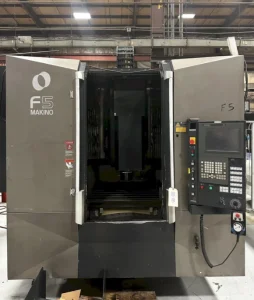
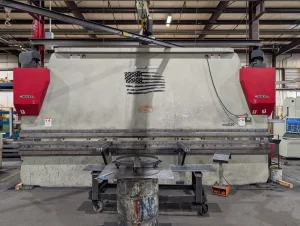
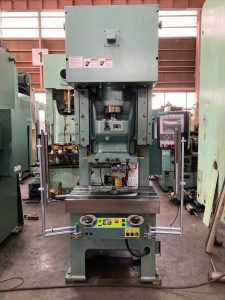
What Do Buyers Look for Before Investing in a Pre-Owned, Used, Secondhand, Surplus CNC Equipment Before Purchase Cincinnati 4SE20 Hydraulic Shear made in USA
When evaluating a pre-owned / secondhand / surplus hydraulic shear such as a Cincinnati 4SE20 (or its variants, e.g. 4SE20-FSU III) for purchase, buyers should focus on both mechanical condition and hydraulic / control systems, plus usability, safety, and future support. Below is a detailed checklist and walkthrough of what to examine, test, and negotiate, so you minimize risk and maximize the value of the purchase.
Basic Specs & Benchmark Data (for comparison)
Before inspection, gather published specs (for your variant) so you can compare them with what’s being offered. For the Cincinnati 4SE20, some typical values (for a ½” × 20′ model) are:
| Spec | Typical / Published Value |
|---|---|
| Material capacity (mild steel) | ½” × 20′ (i.e. cut 0.500″ thickness over 20′ length) |
| Stroke speeds | ~ 7 to 28 strokes per minute |
| Backgauge range | ~ 60″ (1,524 mm) |
| Number of hold-downs | 23 |
| Main motor | ~ 40 hp |
| Return / down speeds | “Return speed” and “full load down speed” per spec sheet (e.g. return ~ 360 IPM, down ~ 113 IPM) |
| Max rake | ~ 7⁄16″ per foot (i.e. adjustable rake) |
These specs form your baseline: if the machine offered deviates significantly (e.g. fewer hold-downs, slower stroke, motor mismatch), that’s a red flag or potential cost factor.
Inspection / Evaluation Checklist
Below is a detailed breakdown of subsystems and what to look or test. For each area, note how serious a defect or wear issue is, and whether it’s repairable or costly.
| Subsystem / Component | What to Inspect / Test / Measure | Why It Matters / Red Flags | Acceptable / Tolerable vs Deal Killers |
|---|---|---|---|
| Frame, Bed, Structure & Alignment | – Inspect the housings, frame, bed surfaces for cracks, weld repairs, distortions, misalignments – Use a straightedge or granite block to check flatness / twist across the bed – Check for sag, bending, deformation especially near knife area – Check alignment of the ram guides and bed ways | Structural damage or deformation will cause poor cuts, non-parallel knife behavior, and misalignment over the working length. | Minor wear or small deviations might be acceptable if repairable; large distortions or prior poor repairs (welds) are deal killers or should heavily discount value. |
| Ram / Ram Guides / Guide Bearings | – Move the ram (if possible in manual or jog mode) and feel for sticking, binding, uneven motion – Measure clearance / guide wear between ram and its guides – Check for scoring, wear marks, gouges on the guide surfaces – Inspect guide lubrication paths, bushings, wear strips | Poor or worn guides will degrade cut accuracy and increase maintenance costs. | Some wear is expected, but abrupt wear zones, deep gouges, or poorly maintained guides are serious issues. |
| Knives / Blades / Knife Clearance / Knife Adjustment Mechanisms | – Inspect both upper & lower knife edges: check for edge wear, nicks, chipping – Check the seating surfaces of knives for flatness – Using feeler gauges, measure knife clearance at both ends and center, compare to spec – Check the mechanism for adjusting knife clearance (shim adjustment or power adjustment) for functionality – Check rake adjustment system (ram tilt for rake adjustment) and whether it works smoothly | Knives are consumable, but poor knife condition will impact cut quality. If the adjustment mechanisms are damaged, the machine might not produce accurate shears. | Worn knives can often be reground or replaced; but damaged knife seats, broken clearance adjustment mechanisms, or stuck rake system are more serious. |
| Hold-Downs / Clamping System | – Check the hydraulic or mechanical hold-down pads: surfaces, flatness, integrity – Inspect hold-down cylinders, rods, seals for leakage – Operate the hold-downs under hydraulic pressure; see if they clamp uniformly – Observe response time and synchronized movement across all hold-downs | Proper hold-down force and uniform clamping is essential to avoid slippage or part distortion during cut. | A few hold-downs nonfunctional may be repairable; but systemic leakage, bent rods, or misaligned pads are high risk. |
| Hydraulic System & Control | – Inspect hydraulic fluid condition (color, clarity, contamination, water content) – Check filters, suction strainer, return filters – Test all hydraulic circuits under pressure: main ram drive, hold-downs, rake adjustment circuits – Look for leaks in hoses, fittings, seals, cylinders – Check pump performance, pressure stability, relief valves, accumulator system (if present) – Inspect the hydraulic reservoir, breather, magnetic plugs, cleanliness | Hydraulic systems are central to the shear. Worn pumps, contamination, leaks, or unstable pressure will degrade performance and reliability. | Slight contamination or filter issues may be cleanable; but worn pumps, damaged cylinders, or uncontrolled leaks are expensive. |
| Backgauge / Front Gauge / Squaring Arms / Gaging System | – Operate the backgauge across full travel; check for smooth motion, backlash, repeatability – Check the gage drive motors, ballscrews, encoders (if present) – Check front squaring arm (if fitted) for movement, rigidity, repeatability – Inspect gage guide ways, rails, their wear – Calibrate the gage position vs knife line and verify accuracy | The gaging system determines cut length accuracy and positioning; poor gage performance means off-size parts or scrap. | Moderate wear might be adjustable; but broken or nonfunctional gages (especially backgauge motors or positioning drives) are serious issues. |
| Control / Electronics / Sensors / Potentiometers | – Power up the control console and verify display, indicators, diagnostics – Check the linear potentiometers (on hydraulics) which monitor ram/bed position (used in rake / stroke control) – Test gage / gauge control electronics, position feedback – Inspect wiring, junctions, connectors, look for signs of overheating, rewiring hacks, brittle insulation – Check safety interlocks, limit switches, guards, emergency stops – Test the digital gage control, sequence programs (if equipped) – Check memory, parameter storage, battery / backup systems | In hydraulic shears like the SE series, precise electronic control of stroke, rake, and gage is required. Faulty electronics or sensors degrade consistency or make the machine unusable in automatic mode. | Minor sensor drift or calibration issues are fixable; missing control boards, damaged PCBs, or unrepairable wiring are deal killers. |
| Stroke / Speed / Cycle Performance | – Run the shear (if permitted) through full stroke cycles, observe speed differences (light load, full load) – Test the stroke adjustment / rake adjustment over its full range – Use a stopwatch or tachometer to measure actual strokes per minute – Monitor system response: lag, hesitation, “dead zones” in stroke – Observe stability of cycle timing over repeated cycles | The machine should deliver the advertised speed, consistent cycle behavior, and accurate stroke positioning. Poor performance suggests worn hydraulic or control systems. | Slight deviations from nominal may be acceptable; large deviations (> 10-20%) from spec are concerning and need root cause (pump wear, leaks, control lag, etc.). |
| Structure / Frame / Bed / Table Relative to Knives | – Check that the mating between table and bed is stable, no looseness or gaps – Check that the backgauge angle or side gage aligns properly with the knife line – Inspect table / front support rails and associated surfaces for wear or misalignment | Inconsistencies or gaps cause part distortion, inaccurate dimensions, or off-angle cuts. | Minor alignment corrections may be possible; but excessive mismatch may require frame work and re-alignment, which is labor intensive. |
| Safety / Guards / Interlocks | – Check that all point-of-operation guards, awareness barriers, and interlocks are present and functional (as required by the original machine and current safety standards) – Test emergency stops, safety circuits, interlocked doors or barriers – Inspect the condition and presence of light beam shearing gages or optical guards (common in SE series) | Safety compliance is essential, and missing or disabled guards may expose you to liability or regulatory risk. | Guards may be replaceable; but absent critical safety systems (e.g. E-stop, guard interlocks) must be remedied before operation. |
| Usage History / Maintenance / Wear Indicators | – Ask the seller for operating hours, duty cycles, or load history – Request maintenance logs: hydraulic oil changes, filter changes, seal replacements, repairs – Ask which major components have been replaced or rebuilt (pump, cylinders, gages, control boards) – Look for signs of abuse: untreated chips, coolant immersion, poor housekeeping, corrosion, etc. | History gives you insight into how well the machine was treated; heavy abuse accelerates wear. | Clean, well-maintained machines with full logs are more valuable; missing logs or signs of neglect should reduce your offer. |
| Parts / Consumables / Support / Documentation | – Confirm availability of spare parts: hydraulic pumps, cylinders, seals, knives, control boards, sensors – Ensure you receive manuals: operator manual, hydraulic schematics, wiring diagrams, parts catalogs – Check whether consumables (knives, backgauge racks, etc.) are still supported – If special options or features exist (e.g. digital gage control, squaring arms), check whether parts or support for those are still available | A machine without parts and documentation is high risk, especially older models. | If parts are available but expensive, that’s manageable; but if support is discontinued, that is a strong negative. |
| Foundation / Rigging / Installation & Infrastructure | – Confirm machine’s weight, footprint, and ensure your plant can handle it (floor load, crane, door access) – Check whether the machine is currently in a pit or requires pit; measure pit depth if needed – Check power requirements: voltage, phase, amperage, and whether your plant can supply it – Check hydraulic oil supply, filtration, cooling, and whether the shop environment is clean enough – Plan for leveling, alignment, anchoring – Ensure you can get the machine into its final position (clearances, rigging) | A machine might be excellent, but impossible to install affordably — that risk needs to be known. | Minor infrastructure upgrades are tolerable; but impossible rigging or incompatible power conditions should reduce value or break the deal. |
| Acceptance Testing / Contractual Safeguards | – Insist on an on-load acceptance test (cut real material, full cycle) before final purchase – Define performance specifications (tolerance on cut length, repeatability, cycle speed) in the contract – Negotiate a limited guarantee / warranty on key systems (hydraulics, control, sensors) if possible – Clarify responsibility for transport, rigging, installation, calibration, and any damage in transit – Document machine condition before shipping (photos, video) | This protects you from “as is” surprises. | A seller refusing test or guarantee is cause for deep caution. |
Example of “Red Flags” / Deal Killers
- Cracks, welds, or distortion in the frame or bed, especially around knife area
- Deep gouges or scoring on guide surfaces or ram guides
- Hydraulic leaks (especially in cylinders or pump) that are extensive or hard to trace
- Nonfunctional or missing knife clearance adjustment or rake adjustment systems
- Broken or nonfunctional gages (backgauge, front gauge, squaring arm)
- Control electronics that are dead, missing, or unrepairable (PCB damage, no parts)
- Strong deviations from promised stroke rate, inconsistent cycle timing
- Significant misalignment between table and knife line, or gage misalignment
- Lacking safety guards, interlocks, or E-stop functions
- No history / service records, signs of neglect, chip contamination, poor maintenance
- Inability to test machine under load or refusal to provide acceptance criteria
Practical Steps to Use This Checklist
- Pre-site preparation
- Acquire the machine’s spec sheet, serial number, variant, options.
- Prepare or bring inspection tools: straightedges, feeler gauges, dial indicators, pressure gauges, stopwatch, hydraulic test tools.
- Bring or hire a hydraulic / shear expert if possible.
- On-site assessment
- Walk through the checklist systematically.
- Take photos / videos of key components, potential problem areas.
- Record measured values, deviations, noises, anomalies.
- Test under power
- If seller allows, run cycles under no load and gradually with material.
- Measure stroke rate, gauge positioning accuracy, repeatability.
- Make sample cuts on real work material and inspect edges, burrs, accuracy.
- Estimate repair / refurbishment costs
- Based on observed wear or deficiencies, get quotes for parts, hydraulic repairs, control module replacements, gage replacement, alignment.
- Negotiate price / terms based on risk
- Use your findings to reduce price, ask for parts or spares, or require certain repairs before handover.
- Include contractual clauses for acceptance testing and conditional payment.
- Plan logistics & installation
- Confirm rigging, foundation, power, hydraulic supply, and all infrastructure before finalizing the purchase.