What Do Buyers Look for Before Investing in a Pre-Owned, Used, Secondhand, Surplus CNC Equipment Before Purchase Barberan PUR 33-L Profile Wrapping Machine
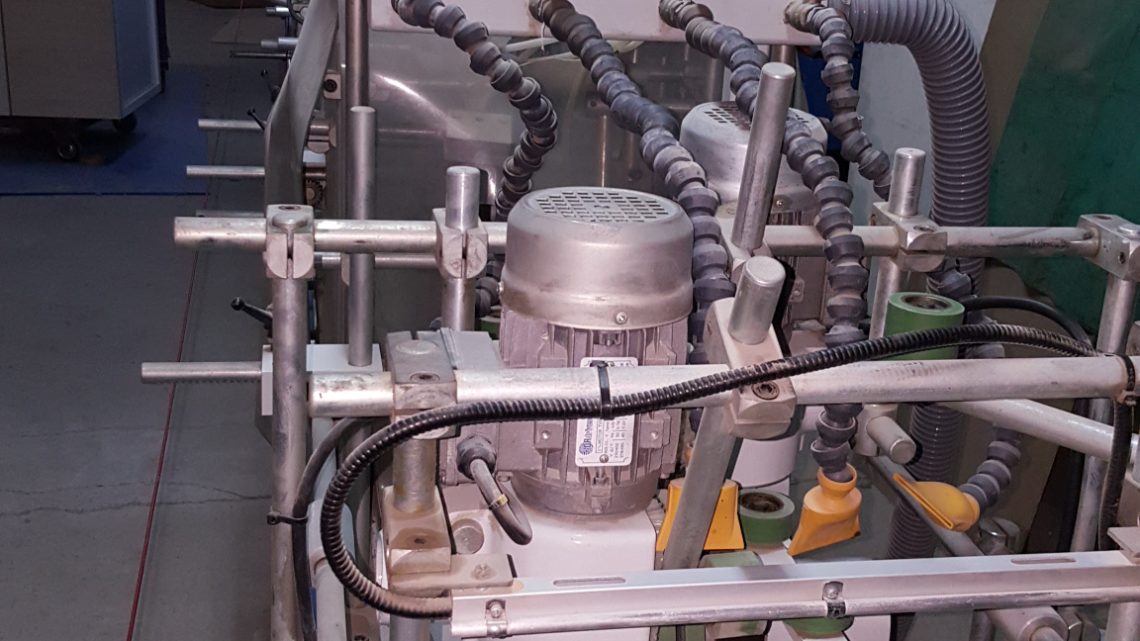
When evaluating a pre-owned / used / surplus Barberan PUR-33-L profile wrapping machine (or similar PUR series / profile wrapping / edge wrapping / foil wrapping equipment), you need a specialized inspection approach. These machines are not typical CNC mills or lathes — they are process / finishing equipment (wrapping, adhesive application, foil, paper, etc.) — so the points of failure and wear are somewhat different. Below is a comprehensive due-diligence guide: what a buyer should look for, test, and negotiate for.
Understanding the Machine & Its Key Functions
Before you inspect, you should understand what the machine does and how it works. This lets you know where the stress points lie, what parts are critical, and what tolerances are important.
Some things known about the Barberan PUR-33-L:
- It is a profile wrapping (foil / paper / thermoplastic film) machine using PUR hot-melt adhesive for bonding.
- It supports wrapping up to 330 mm width of foil.
- Versions may include an automatic quick tool change (ATC) for up to three different profile types, and double unwinder with automatic splicing for uninterrupted operation.
- The machine is used for profiles (such as PVC, wood, aluminium profiles) or panels, applying decorative foils / veneers / paper covering.
- The machine uses a slot nozzle adhesive applicator head, and has parameters for glue dosing / grammage control, heating elements, foil width adjustments, etc.
- Because of adhesive use, temperature control, clean flow, and sealing are critical.
- The manual is available for the PUR-33-L and describes internal parts, glue head maintenance, nozzle slot cleaning, adjustment, etc.
So, in summary: the machine’s principal functions are:
- Feed / unwind foil / paper substrates.
- Apply adhesive (PUR) precisely and uniformly through a slot nozzle.
- Guide and wrap the substrate around the profile surfaces.
- Control foil tension, wrapping mechanism, trimming, splicing, etc.
- Handle cleaning, maintenance, and adjustments (nozzle, glue lines, sensors, guides).
The key wear / trouble areas will be adhesive / glue systems, nozzles, motion systems for feeding / wrapping, foil handling, sensors, control system, and mechanical guiding.
What Buyers Should Inspect / Test — Checklist & Details
Below is a detailed checklist of what to check, test, and measure when inspecting a used Barberan PUR-33-L (or similar profile wrapping machine). Some are analogous to general CNC inspection, others specific to wrapping / adhesive / finishing machinery.
| Subsystem / Area | Inspection / Tests | What to Watch For / Importance |
|---|---|---|
| Machine History & Documentation | • Age / year of manufacture, model variant, and serial number • Maintenance logs: cleaning, adhesive nozzle servicing, heater replacements, spare parts used • Record of downtime, repairs, part replacements, crashes • Original configuration vs modifications • Operating speed, throughput, foil types used, adhesive types used | Good documentation helps you estimate remaining life of consumable parts (nozzles, heaters, belts) and identify any history of abuse. |
| Frame, Structure & Mechanical Stability | • Inspect frame, machine base, supports, mounting plates for cracks, repairs, corrosion • Check for alignment or shift in frames, guides, base • Ensure machine remains level and rigid • Inspect mechanical guide rails, bearings where foil / profile guides travel | If the frame has sagged or shifted, wrapping precision and consistency will degrade. |
| Foil / Paper / Substrate Unwind & Handling System | • Inspect unwinders, tension control systems, spools, splicing mechanisms • Test foil unwind / feed under slow and full speed • Check foil path guides, rollers, bearings for wear, dirt, misalignment • Splicing mechanism: does it function smoothly without misalignment or delay? • Check sensors / encoders that detect foil edges, breaks, tension | Poor foil handling leads to miswrap, wrinkles, tearing, waste. Splicing errors cost production. |
| Adhesive (PUR) System & Application Head / Nozzle | • Check the adhesive supply system: pumps, heaters, hoses, valves, filters • Inspect the slot nozzle head: slot wear, clogging, nozzle alignment, seal condition • Verify heating elements in nozzle, pre-melter unit, temperature sensors • Test glue flow control / dosing / grammage regulation (can it modulate flow precisely) • Inspect cleaning / purging pathways • Check leakage, glue deposits, residuals around head • Inspect any adhesive recirculation / return lines • Check for presence / condition of calibration or meter control sensors | The adhesive system is essentially the “heart” of the machine. If the nozzle is worn, clogged, or temperature control is off, yields and quality suffer. Replacement nozzles are often expensive. |
| Motion / Feed / Wrapping Mechanism | • Move the wrapping mechanisms, feed arms, wrapping rollers, guide plates, belts, drives • Check for smoothness, binding, backlash, wear in rollers, bearings • Verify that wrapping arms or modules are still aligned and operate synchronously • Inspect servo / stepper motors, encoders, drive belts, coupling condition • Test moves over full range, including speed changes • Check foil / wrap tension regulation during motion • Inspect trimming or cutting modules (if present) | Poor mechanical motion precision will degrade the wrap alignment, misregister the foil, and cause defects. |
| Sensors, Feedback / Control System | • Inspect sensors (edge sensors, foil break sensors, position sensors) for functioning • Check electrical wiring, connectors, cables, cable routing • Open control cabinet(s): check boards, connectors, overheating damage, dust, signs of past repair • Check the machine control / PLC / HMI: can you input parameters, see status, adjust settings • Check software version, spare modules, ability to replace / find parts • Check alarms / error logs, whether machine has built-in diagnostics • Test that control responds correctly to commands, stops, speed variation • Check for backup / memory retention, I/O modules, interface compatibility | Faulty sensors or electronics break the loop—wrapping will misalign or fail. Old or proprietary controls are a risk if spares are unavailable. |
| Thermal / Temperature Control & Stability | • Run the adhesive system long enough to reach operating temperature • Monitor temperature stability in nozzle and adhesive supply • Check whether temperature fluctuations cause variations in glue delivery • Test repeat runs after warm-up and check consistency • Check compensation / control loops that regulate adhesive temperature or flow | Inconsistent adhesive temperature leads to glue viscosity shifts, under- or over-application, and quality defects. |
| Wrap Quality / Trial Runs | • Run the machine with foil and profiles (or representative test pieces) • Inspect the wrapped profiles: check adhesion, coverage, alignment, defects (bubbles, peeling, misregistration) • Run at different speeds, adjust feed rates and check whether quality holds • Inspect seams, corners, edges, whether the foil follows profile geometry • Test start/stop / acceleration / deceleration behavior • Test under continuous run (several hours) to see if defects creep in | The proof is in the product. If wrap quality fails, the machine fails your requirement. |
| Auxiliary Systems: Cleaning, Purging, Cooling, Ventilation | • Check cleaning / purging circuits, whether glue lines are flushable, presence of purging ports • Inspect ventilation or exhaust in glue / adhesive zones • Inspect cooling systems for pumps, fans, temperature control • Cleanliness of the machine: residual glue, buildup, dirt, adhesive deposits • Guards, enclosures, safety interlocks in adhesive zones | Adhesive residue and contamination are major issues. Cleanability and maintenance access are critical. |
| Spare Parts / Consumables / Support | • Ask which consumables / wear parts (nozzles, seals, heaters, filters) were replaced and their age • Request part numbers and check availability of adhesive nozzles, heating units, pump modules, sensors • Check for spare modules or extra parts included (extra nozzles, belts, wiring, connectors) • Verify whether control boards or PLC modules are still supported or have replacements • Check whether Barberan or third-party service / parts support exist for your region | Because finishing machines often have proprietary parts, lack of spares can kill uptime. |
| Electrical / Wiring / Power Systems | • Inspect power panels, wiring, control cabinets, fuses, relays • Check for signs of overheating, burnt wiring insulation, repairs • Verify power compatibility (voltage, phases, frequency) and grounding • Check cable routing; adhesive / glue zones often require special shielding and insulation | Electrical faults can compromise safety and performance. |
| Safety & Compliance | • Inspect guards, covers, interlocks (especially around moving parts and adhesive zones) • Emergency stops, safety switches, door interlocks • Check compliance with relevant standards (electrical, safety) • Assess dust / fume handling (adhesive fumes) | Finishing machines carry risks of burns, fumes, sticky exposures, so safety must be ensured. |
| Logistics / Installation / Commissioning | • Disassembly, shipping, packing, handling of glue-laden parts • Facility readiness: ventilation (for adhesive fumes), power, grounding, exhaust, floor layout • On-site calibration, alignment, adjustment, warm-up, test runs • Time and cost for initial cleaning, purging, commissioning • Safety / environment (adhesive, fumes) infrastructure | Underestimating these costs often erodes the value of the deal |
Red Flags & Deal-Breakers
When inspecting a used Barberan PUR-33-L (or similar machine), some warning signs should cause you to walk away or demand heavy discounts:
- A slot nozzle (glue applicator) that is heavily worn, permanently clogged, or damaged, beyond repair.
- Heating elements or temperature control systems lost or nonfunctional (you can’t bring glue up to stable temperature).
- Adhesive pump, hoses, or valves damaged, leaking, or unusable.
- Foil unwinding / handling or splicing modules not working, misaligned, or unreliable.
- Control / electronics that are obsolete, proprietary, or with missing or damaged modules.
- Sensors or encoders faulty, or large error rates / misreporting.
- Motion systems (feed / wrapping arms / rollers) that bind, have backlash, or irregular movement.
- Excess adhesive residue / contamination build-up that suggests neglect or misuse.
- Safety or guard systems missing or compromised.
- Lack of spare parts availability (especially for nozzles, pumps, control parts).
- The seller refuses to allow test runs with real profiles / foil, or to open up and inspect internal systems.
- Poor documentation history, or discrepancy between the machine’s claimed condition and what you observe.