Top 10 Benefits of Using a Laser Cleaning Machine
Laser cleaning technology has rapidly emerged as one of the most advanced surface treatment methods in modern manufacturing. Compared with traditional cleaning techniques such as sandblasting, chemical cleaning, and manual grinding, laser cleaning offers a more efficient, precise, and environmentally friendly solution.
A laser cleaning machine uses high-energy laser beams to remove rust, paint, oil, oxide layers, and other surface contaminants without damaging the base material. This non-contact process has made it increasingly popular across industries such as automotive manufacturing, aerospace, shipbuilding, mold maintenance, and heavy machinery production.
As companies continue to focus on productivity, sustainability, and cost reduction, laser cleaning technology is becoming a key upgrade for modern industrial operations. Below are the top 10 benefits of using a laser cleaning machine.
1. Non-Contact Cleaning Process
One of the most important advantages of laser cleaning is its non-contact operation. Unlike mechanical cleaning methods that rely on friction or abrasive materials, laser cleaning uses focused light energy to remove surface contaminants.
This means there is no physical contact between the machine and the workpiece. As a result, the base material remains completely undamaged while only unwanted layers are removed. This is especially important for precision components and high-value materials where surface integrity must be preserved.
2. High Precision and Controlled Cleaning
Laser cleaning allows operators to control the cleaning depth and intensity with high accuracy. This makes it possible to remove only specific layers such as rust, paint, or oxide without affecting the underlying material.
This level of precision is difficult to achieve with traditional cleaning methods. It ensures consistent results and makes the technology suitable for applications that require strict surface quality standards, such as aerospace components and mold restoration.
3. Environmentally Friendly Technology
Environmental protection is becoming a major concern in industrial production. Laser cleaning offers a clean and sustainable solution because it does not require chemical solvents, abrasive materials, or water-based cleaning agents.
There is no secondary pollution generated during the cleaning process. Most residues are converted into harmless dust or gas that can be collected through standard filtration systems. This makes laser cleaning a greener alternative that supports sustainable manufacturing practices.
4. Reduced Operating Costs
Although the initial investment in a laser cleaning machine may be higher than traditional equipment, long-term operating costs are significantly lower.
There are no consumables such as sand, chemicals, or grinding tools required. Maintenance costs are also reduced because the system has fewer mechanical wear parts. Over time, this leads to substantial savings in production environments where cleaning is performed frequently.
5. No Damage to Base Material
Traditional cleaning methods often cause surface damage, scratches, or deformation, especially when working with delicate or high-precision parts. Laser cleaning eliminates this risk by using controlled energy that targets only surface contaminants.
The base material remains intact, maintaining its original properties and structural strength. This is particularly valuable in industries such as aerospace, automotive restoration, and precision mold cleaning.
6. High Efficiency and Fast Processing Speed
Laser cleaning machines are capable of operating at high speeds, making them highly efficient for industrial applications. Large surface areas can be cleaned in a short amount of time without the need for repeated manual labor.
The process can also be automated, further improving productivity and reducing human intervention. This makes laser cleaning ideal for production lines where speed and consistency are critical.
7. Flexible Operation and Easy Handling
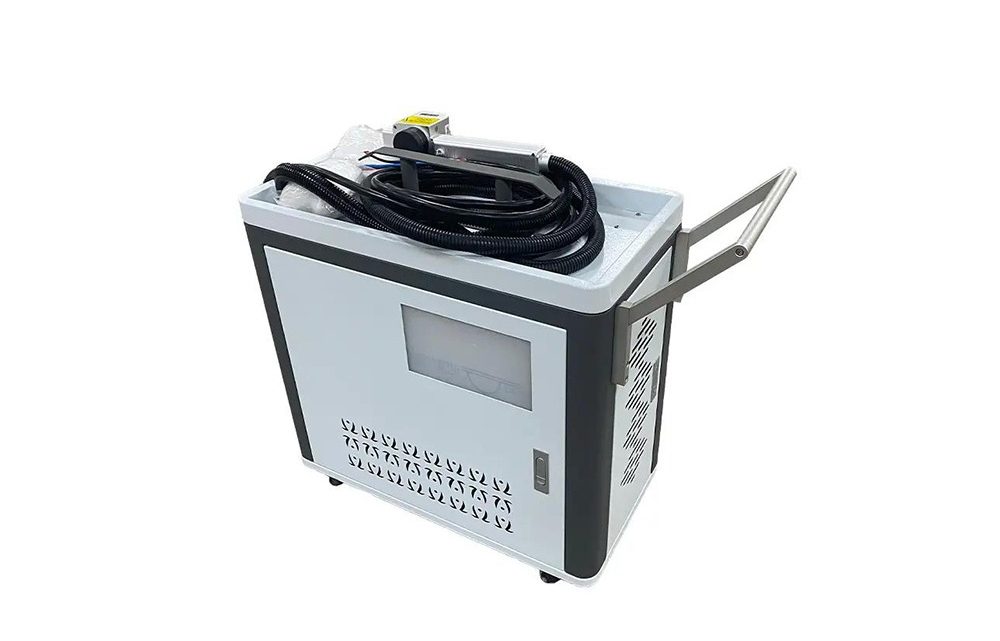
Handheld laser cleaning machines are designed for flexible and portable operation, making them suitable for a wide range of industrial cleaning tasks. Unlike large automated systems, the handheld design allows operators to move freely and clean complex or hard-to-reach surfaces with ease.
The lightweight cleaning head and user-friendly control system make operation simple and efficient. Operators can quickly adjust cleaning parameters based on different materials and contamination levels, ensuring stable and consistent results.
This flexibility makes handheld laser cleaning machines ideal for on-site maintenance, repair work, and small-to-medium production environments where mobility and adaptability are more important than full automation.
8. Wide Range of Applications
Laser cleaning machines are highly versatile and can be used across multiple industries. They are effective for removing rust from steel structures, stripping paint from automotive parts, cleaning molds in manufacturing, and preparing surfaces for welding or coating.
This wide range of applications makes laser cleaning a flexible solution for businesses that handle different types of materials and production requirements. It reduces the need for multiple cleaning systems, simplifying workflow management.
9. Improved Workplace Safety
Traditional cleaning methods often involve hazardous chemicals, dust, or airborne particles that can pose risks to workers. Laser cleaning significantly improves workplace safety by eliminating the need for toxic substances and reducing exposure to harmful materials.
With proper protective equipment and controlled operation, laser cleaning systems provide a safer working environment. This helps companies meet stricter occupational safety standards and improve overall workplace conditions.
10. Long-Term Equipment Stability and Low Maintenance
Laser cleaning machines are designed with durable components and solid-state laser technology, which ensures long-term operational stability. Compared to mechanical systems, fewer moving parts require maintenance or replacement.
Regular maintenance is simple and mainly involves keeping optical components clean and ensuring proper system calibration. This results in high reliability and long service life, making it a cost-effective investment for industrial users.
Conclusion
Laser cleaning technology represents a major advancement in modern surface treatment solutions. Its combination of precision, efficiency, environmental protection, and cost savings makes it an ideal choice for a wide range of industrial applications.
From non-contact cleaning and high accuracy to automation compatibility and improved safety, the benefits of laser cleaning machines are transforming how industries approach surface preparation and maintenance.
Wintek is committed to providing advanced laser cleaning solutions that help manufacturers improve productivity, reduce operational costs, and achieve sustainable production goals. With reliable performance and professional technical support, Wintek laser cleaning machines offer a powerful upgrade for modern industrial cleaning applications.
Address:
No. 2303, Building 4, United Fortune Plaza, No. 2177, Tianchen Road, High-tech Zone, Jinan City, China
Phone: 86-18769786070
Email: admin@winteklaser.com
Website: https://winteklaser.com/