Technical Evaluation Guide: How to Identify a Quality Used, Secondhand, Pre-Owned, Surplus Reduction Engineering Ultra Pulverizer made in USA
Background & Reference Info (What You Should Know Upfront)
Before you inspect, it helps to have reference benchmarks for what a healthy “Ultra” pulverizer should look like. Some relevant factual points:
- The Reduction / REDUCTION (“Ultra”) brand is part of MAAG’s portfolio of pulverizers / size-reduction systems.
- The “Ultra” models are high throughput, high performance pulverizers (often dual-disc or multi-disc configurations) intended for fine grinding, polymer recycling, compounding feedstocks, etc.
- You can find example used units such as a 2007 Ultra pulverizer with dual motors (75 hp etc.)
- Also a 2018 Ultra appears in listings, with (2) × 75 hp motors on 480/3/60 supply.
- Physical configuration: feed hopper / feeder, grinding / pulverizing chamber(s) (discs, rotors, stators), classifier or separation stage, blower/airlock(s), dust / filtration, motor drives, and control system.
From such examples, one sees that a well-maintained “Ultra” is a heavy, rugged piece of equipment with high power density and fine tolerances in the grinding / separation regions.
Thus your evaluation must especially focus on the grinding internals (discs, bearings, rotor/stator clearances), air handling (blower, airlocks, seals), mechanical integrity, balance, and control systems.
Key Inspection Areas & Tests
Below is a structured breakdown of what to inspect, how to test, and what to watch out for, tailored for a pulverizer like the Ultra.
| System / Subsystem | What to Inspect / Test | What Good / Acceptable Looks Like | Warning Signs / Red Flags | Impact if Defective |
|---|---|---|---|---|
| General Visual / Structural Condition | • Examine frame, supports, housing welds, panels for cracks, distortions, bending • Check alignment of feed hopper, inlet chute, discharge ports • Inspect access covers, doors, seals, hinges, locking hardware • Look for corrosion, wear, repair patches, misaligned flanges • Check mounting base / foundations for leveling and previous modifications | Straight frames, tight joints, alignment of ports, well preserved surfaces (minor wear acceptable) | Distorted housing, cracked welds, misalignment between inlet/discharge, bent flanges | Any structural misalignment will degrade performance, may cause leaks or stresses, reduce longevity |
| Grinding / Pulverizing Chamber Internals | • Open the chamber and inspect the rotor / disc, stator / grinding ring, and beaters / pins for wear, chipping, scoring, cracks • Measure radial clearances / gap between rotor and stator • Check for runout or wobble in the rotating disc • Check bearings that support rotor / disc — bearing housings, seals, lubrication lines • Inspect coupling between motor(s) and rotor (flex couplings, belts, direct drive) • Inspect fasteners, retention bolts, keyways • Check for foreign object damage (FOD) — dents, embedded metal fragments | The rotor should spin free without contact, with minimal axial or radial runout. Wear should be uniform (no deep gouges). Bearings should show little play, seals intact, good greasing, no evidence of overheating or metal debris | Excessive wear or imbalance will lead to vibration, lower throughput, increased fatigue on bearings and structure, and increased maintenance cost | |
| Classifier / Separation / Grading Section (if applicable) | • Inspect classifier blades / impeller, vanes, rotor assembly • Check hub and shaft alignment, binding, play, and balancing • Test the mechanisms (e.g. adjustable vanes, speed control) for full travel • Inspect return paths (where oversize material returns to chamber) for wear • Check airlock coupling to classifier (if used) and sealing | Smooth operation, no binding, stable hub, uniform wear | Bent vanes, misalignment, seized motion, cracked casting | A poorly functioning classifier will degrade particle size distribution, reduce yields, cause recirculation or overgrinding |
| Blower / Airlock / Pneumatic Components | • Inspect blower fan / impeller for wear, bend, erosion, imbalance • Check bearings, shaft alignment, clearance • Inspect airlock valves (rotary airlocks) — check seal surfaces, rotor vs housing clearance, leakage • Check ducting, joints, flanges, gaskets, wear in elbows and transitions • Inspect dust collection / filter systems, pulse blowers, filter media • Check for pressure differentials, leak detection during a run | Good sealing, consistent pressure, no excessive leakage, blower running smooth, minimal vibration | Leaks, worn airlocks, fan imbalance, clogged filters, duct leakage | Poor pneumatic flow, loss of throughput, poor classification, dust escape, operational inefficiency |
| Drive Motors, Gearboxes, Couplings, Mechanical Power Transmission | • Inspect motors (rotor, stator condition, housing, ventilation) • Check motor currents during startup / idle / under partial load • If gearboxes or speed reducers are used, inspect gear teeth, backlash, oil condition, seals • Inspect couplings (flex couplings, cardan, belts): alignment, play, wear • Check vibration levels on motor, gearbox, rotor train • Thermal imaging (if available) on bearings, gearboxes, motors during run | Motors run within rated current, minimal vibration, coupling alignment good, gearboxes quiet with acceptable backlash, no dramatic heating of components | Motor overheating, gear chatter, misaligned couplings, loose belts, unusual vibration | Faults here may limit power delivery, cause failures, reduce efficiency, or cause unplanned downtime |
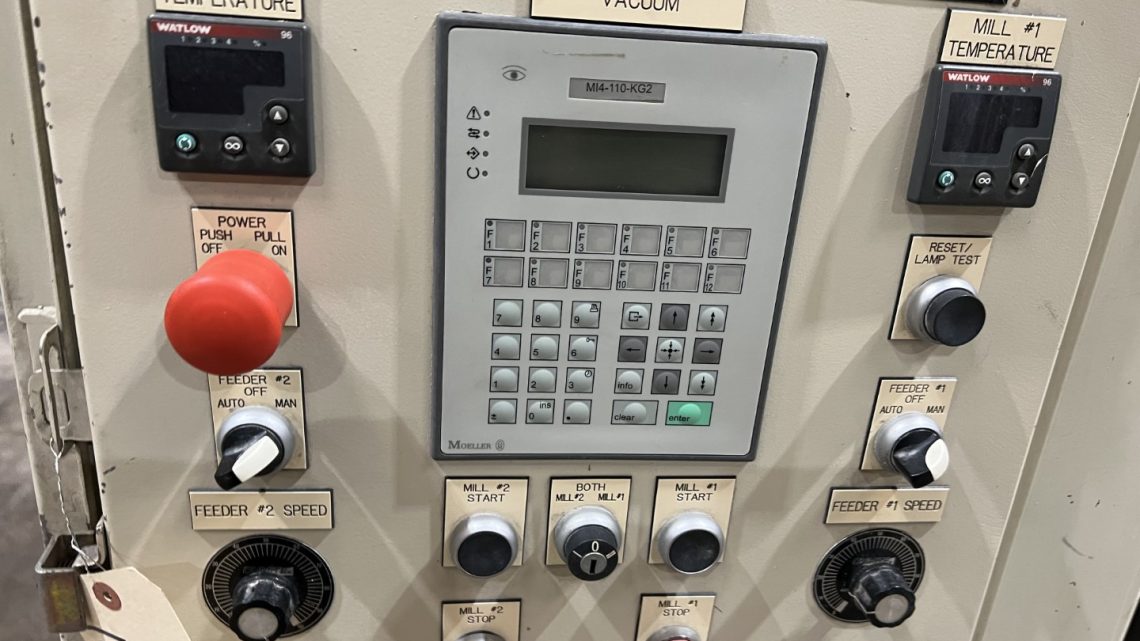
| Control / Instrumentation / Electrical Systems | • Power up control system, check for faults / alarms • Check motor starters, VFDs / inverters (if present), control panels, wiring integrity • Test start-up sequences (blower, airlocks, classifier, rotor) per operational logic • Inspect sensors (speed, temp, vibration, current) and their wiring • Check interlocks, safety circuits, emergency stop, overcurrent protections • Test variable speed / feed rate control (inverter, speed control of feeder, etc.) | Clean signal readings, no error codes, smooth control transitions, redundancy in safety, well-labelled wiring | Missing sensors, wiring in poor condition, control faults, missing protection elements | Faulty control can make the machine unsafe or unusable until repaired or rewired |
| Mechanical / Structural Balances & Vibration Tests | • Run the grinder at various speeds (no load initially) and monitor vibration using accelerometers or vibration meter • Listen for abnormal noises, hums, whines • Use a dial indicator or runout gauge at rotor periphery to check eccentricity • Check bearing vibration signatures • Thermal imaging on bearings, drive train during run | Vibration within acceptable industrial limits; no sudden increases over speed; consistent with age and design | High vibration, resonance, imbalance, bearing deterioration | Excessive vibration will accelerate wear, cause structural fatigue, reduce precision, increase maintenance |
| Test / Trial Run with Material | • Run a controlled test with a known feed material under partial load • Monitor throughput, power draw, motor loading, temperature trends • Measure the product particle size distribution and uniformity • Observe any clogging, surging, looseness in feed or discharge • Check dust leakage, noise, stability during continuous run • Run for extended period (hours) to see thermal drift or wear-in behavior | The machine should sustain throughput without tripping, achieve target particle size, maintain stable motor loads, minimal vibration drift | Frequent surges, tripping, clogging, drift in currents, excessive temperature rise, dust leakage | A machine that fails under load is not reliable; performance under real conditions is the true test |
| Wear / Consumable Life Assessment | • Inspect degree of wear on rotor, stator, discs, liners, vanes • Check whether spare disc sets, spare liners, spare vanes are available • Ask for records of prior refurbishments, times of spare parts replacement • Estimate remaining useful life of high-wear parts • Check whether the machine design allows easy replacement / regrinding of wear parts | Moderate uniform wear is expected; but you should see margin left for one or more refurbishing cycles | Wear so advanced that parts are near scrap; missing spare parts or nonstandard designs | If wear parts need full replacement immediately, the cost must be factored into your price |
| Documentation, History & Maintenance Records | • Ask for full maintenance logs: lubrication, downtime, repairs, parts changes • Ask for refurbishment or overhaul records • Ask for calibration / alignment records, balancing history • Request wiring diagrams, exploded parts drawings, service manuals • Ask for original factory specifications, tolerances, and setpoints • Inquire whether the unit had unusual events (flooding, foreign object damage, over-speed) | Complete, consistent, professional records, original manuals, service awareness | No records, unknown modifications, undocumented repairs, mismatched parts | Without proper records your risk is much higher; unknown history hides hidden damage |
| Spare Parts & Supportability | • Check availability of spare parts: discs, liners, bearings, classifier parts, seals, drives • Check if MAAG / Reduction / local agents support service and parts in your region • Evaluate whether electronic parts / control modules are still available or obsolete • Ask whether upgrade kits or remanufactured parts exist | Good parts availability, global support, possibility of aftermarket or rebuilds | Hard to find parts, obsolete modules, long lead times | If a critical part fails and cannot be replaced, the machine becomes idle — a major risk |
| Safety, Access, Maintenance Access & Cleanability | • Inspect accessibility of internal parts (rotor, stator, liner) for maintenance • Check safety guards, interlocks, access platforms, doors, cover integrity • Ensure safe lock-out / tag-out provisions • Check dust containment, cleaning pathways, serviceability of filters • Evaluate whether bearings, motors, couplings are readily accessible | Good access, safety interlocks, robust guarding, safe maintenance paths | Hard-to-access internals, missing safety covers, unsafe access, poor dust sealing | Difficult maintenance or increased downtime, safety hazards, incomplete servicing |
Practical Field Inspection Sequence
When you visit the site (or the machine’s current location), here is a recommended order / checklist you can follow to ensure no critical element is missed.
- Initial Walkaround & Survey
- Photograph all views, note labeling, model number, nameplate data (voltages, serial numbers)
- Check for obvious damage, modifications, missing covers, weld repairs
- Power-Up, Control & Baseline Checks (No Load / Idle Run)
- Power on control panels, check for alarms or fault codes
- Run blower / fan + airlock circuits (if interlocks allow)
- Run rotor at low speed, listen, watch vibration, temperature
- Operate on/off of classifier, adjust vanes if possible
- Open & Inspect Internals (Rotor / Stator / Grinding Chamber)
- With power off and locked out, open the grinding chamber
- Inspect the rotor, disc, stators, vanes, bearings for wear, cracks, scoring
- Turn rotor by hand (if permitted) to check for binding, contact, clearance
- Check bearing play, check seals, check coupling alignment
- Reassemble & Verify Clearances / Balance
- Replace covers, run rotor, measure vibration, runout
- Use dial indicator or proximity sensor to verify rotor runout / eccentricity
- Blower / Airlock / Pneumatic Checks
- Start blower (with rotor off if required), monitor airflow, pressure, vibration
- Run airlock rotation, see if they seal, check leakage or binding
- Check ductwork integrity, joints, gasket sealing
- Drive & Transmission Evaluation
- Monitor motor current, examine coupling alignment, check belts or gearboxes
- Use vibration meter to detect unusual harmonics or resonance
- Test Run with Material (If Allowed)
- Run a sample feed, measure throughput, particle size, motor loads
- Observe stability over minutes to hours
- Check dust leakage, noise, temperature rise
- Thermal & Vibration Monitoring
- Use thermal imaging (if available) to spot hot bearings, couplings, gearboxes
- Use vibration instrumentation to map across the rotor, motor, bearings
- Wear / Consumable Check & Spare Parts Assessment
- Estimate remaining life of rotor, liners, vanes
- Ask seller for existing spare discs or parts
- Compare model design vs typical consumables in the market
- Documentation / History Review
- Review maintenance logs, repair history, refurbishments
- Check serial number, build date, engineering change notices
- Collect wiring diagrams, service manuals, parts list
- Negotiation & Risk Assessment
- Based on observed deficiencies, factor in the cost of refurbishing, spare parts, downtime
- Consider including acceptance criteria in the purchase contract (e.g. must meet certain throughput, balance, vibration levels)
- Leave a contingency budget for unforeseen repairs, rebalancing, alignment
Red Flags / Deal Killers You Should Not Ignore
- Rotor or disc with deep gouges, cracks, missing segments, or unrepairable damage
- Excessive rotor / stator wear such that minimal clearance margin remains
- Bearing play or bearing damage (noise, heat, metal debris) in rotor or blower bearings
- Imbalance / high vibration even in “no load” runs
- Broken or missing coupling components, gearboxes with slop or backlash
- Worn or damaged classifier / vanes that cannot be realigned or replaced
- Leaking or failed airlock seals, duct leaks, poor blower performance
- Control or sensor faults, missing instrumentation
- Frequent alarms / prior repair history with repeated failures
- No documentation, unknown service history, missing spare parts
- Obsolete control / electrical modules that are not supported
- Poor accessibility or unsafe maintenance access
- Evidence of foreign object damage (metal, stones, false feed) inside chamber
- Overheating parts or excessive thermal drift in test runs
- Dust leakage, poor sealing during operation
If several of these are present, they significantly reduce the value and raise risk.
Final Advice & Risk Mitigation
- Bring a measurement & inspection kit: dial indicators, vibration meter, thermal camera (if possible), micrometers, runout gauges.
- Request a full test run with a material similar to what you’ll process.
- Include performance guarantees in purchase terms (e.g. throughput, particle size, vibration limits) or “final acceptance” testing.
- Budget for refurbishment: even a well-used machine may need new wear parts, rebalancing, calibration.
- Check spare parts lead times especially for rotors, bearings, airlock seals, classifier vanes.
- If possible, involve a subject-matter expert in polymer pulverizing / size reduction, especially for balancing and flow behavior.