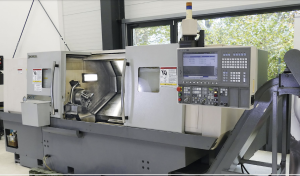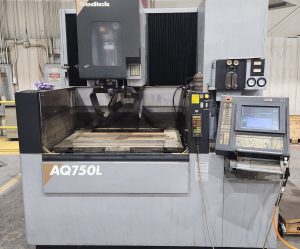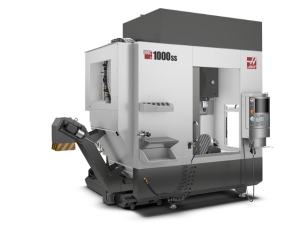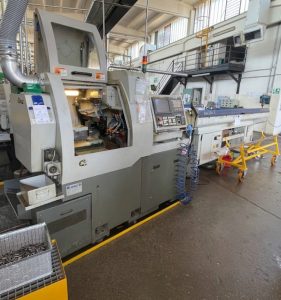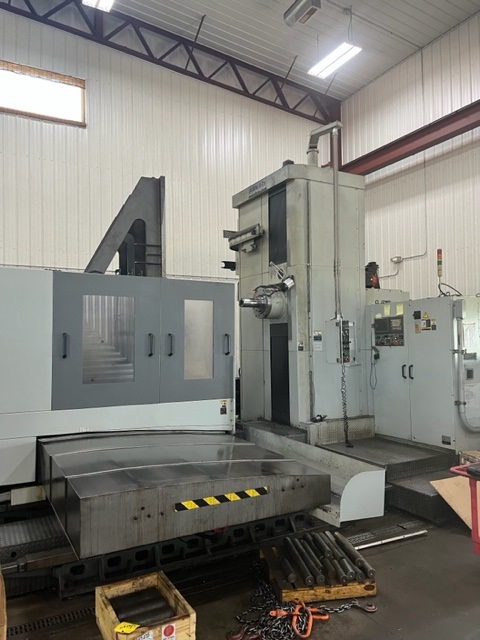
Technical Evaluation Guide: How to Identify a Quality Used, Secondhand, Pre-Owned, Surplus Hyundai Kia KBN-135 CNC Horizontal Boring Mill 3 Meters made in South Korea
Background / Reference Specs & Design Context
Before inspection, it helps to know what the machine should be. Some reference details for the KBN-135 series:
- Hyundai-WIA’s published spec: spindle speed up to 2,000 rpm, three-step gear drive spindle, max X/Y/Z travels around 3,000 / 2,000 / 1,600 mm (~118.1″ / 78.7″ / 63″)
- Spindle taper: typically NT #50 or BT-50 class (depending on version)
- Table size & capacity: e.g. a used listing: 78.74″ × 70.87″ rotary table, load capacity ~22,045 lb (≈10,000 kg)
- Quill (“W-axis”) travel around 27.56″ (~700 mm)
- One-piece bed construction (for standard KBN-135), with movable column variant “KBN-135C” for heavier duty work
These help define your expectations for what to test, and what tolerances or deviations might be acceptable (or red flags).
Major Areas to Inspect / Test
When evaluating a used machine of this size and complexity, you should systematically cover the following major categories. For each, I’ll list key checkpoints, how to test them, and what problems or warning signs to watch out for.
| Area | Key Checks / Tests | What to Watch & Acceptable Criteria | Risk / Consequence if Defective |
|---|---|---|---|
| Visual & Structural Condition | • Overall appearance: look for corrosion, cracks, repairs, misalignments • Welds, castings, frames: check for cracks, distortions, repairs • Bed, column, base: check flatness, warpage, twist • Way covers, guards, chip channels, covers present & functional • All covers, doors, panels properly aligned | Minor surface wear or touch-ups acceptable; but major cracks, distortions, or structural repairs are serious. Bent or warped structures may destroy alignment. | If the frame is compromised, all precision is lost; repair is extremely costly or impossible. |
| Spindle & Quill (W-axis) | • Check spindle nose, taper, keyways for wear, scratch, galling • Spin the spindle (with no load): listen for noise, roughness, run-out • Use a dial indicator to check radial & axial run-out at nose • Measure spindle bearing play (axial, radial) • Check spindle housing for signs of oil leaks or contamination • Monitor temperature while running • Test quill travel in/out (W-axis) for smoothness, backlash, binding • Inspect internal cooling / lubrication lines | Acceptable run-out is often in the low microns (depends on model). Any significant axial or radial play beyond factory spec is suspect. Noise, vibration, heat are warning signs. | Worn spindle bearings or excessive run-out will degrade surface finish, accuracy, shorten tool life, and cause scrap. Repair / replacement is expensive. |
| Guideways, Ways, Linear Motion Systems | • Examine the X, Y, Z and other axes’ ways/guides for scratches, wear, galling • Use lapping films or feeler gauges to test for gaps or contact irregularities • Move axes manually (jog) and feel for binding, stick/slip • Measure backlash in each axis • Check for consistent lubrication (look for oil-filled ways, grease, or automatic lubrication) • Inspect wipers, scrapers, seals for wear • For linear scales / encoders (if fitted), confirm scale integrity, mounting, cleanliness | Moderate wear is expected, but deep scoring, chipped ways, excessive backlash, or inconsistent movement are red flags. Lack of lubrication or dried-out systems is a worry. | If ways are badly worn, precision will be lost across full travels; repair (regrinding, hand scraping, reconditioning) is expensive. |
| Ballscrews / Lead Screws / Feed Drives | • Check for end-play or backlash on screws • Jog axes and reverse direction; feel for backlash or slop • Inspect nut housings for play or wear • Check coupling alignment, connection of drive motors • Measure pitch error over travel if possible • Evaluate feed drive motors and amplifiers for signs of overheating or repair | Excessive backlash, worn nut or screw threads, or misalignment are warning signs. A bit of backlash is expected, but should be within spec. | Faulty feed screws / drive systems degrade positioning accuracy, repeatability, and perfectly machined parts will suffer. |
| Rotary Table / B-axis / Indexing Table | • Check that the rotary table rotates smoothly, index accuracy, alignment • Test full rotation, partial indexing, reversed direction • Check encoder or feedback system on the table • Check whether brake systems / clamps engage properly • Inspect table face for wear, flatness, cracks | Inaccuracy or backlash in the rotary table will affect multi-axis machining quality. | Mis-index or rotation errors cause misfits, alignment issues on multi-face operations. |
| Control / CNC System & Drives | • Power up the CNC controller, HMI, display screens, keyboard • Go through diagnostic menus, axis homing, error logs • Check firmware/software versions, and compatibility with your CAM/planning • Test all input/output signals, limit switches, safety interlocks • Jog each axis, command manual movements, check smoothness, acceleration, deceleration • Test all override controls (feed override, rapid override) • Simulate a program-run in dry mode • Review error logs, alarms, prior fault codes | Any control faults, missing modules, or firmware mismatches are costly to fix. A control failure may render the machine unusable without major repair. | Hard to repair or replace controller, drives, or feedback modules (especially older or custom ones). |
| Electrical / Wiring / Power Systems | • Inspect all wiring, cable trays, cable carriers (e.g. cable chains) • Look for burned insulation, signs of overheating, repairs • Check connectors, terminal blocks, grounding, shielding • Power up drives, servo motors, spindle drive, observe startup in all axes • Check voltage stability, spindle motor draw current, servo current trends • Check for unbalanced phases, harmonic distortions | Poor wiring, loose terminals, overheated wiring are red flags. Electrical leakage or grounding issues are safety hazards. | Electrical faults can cause intermittent failures, downtime, and even damage costly components. |
| Hydraulics / Pneumatics / Coolant / Lubrication Systems | • Inspect coolant pump, tubing, filters, hoses, nozzles • Check whether the machine has “through-spindle coolant” or CoolJet system, and test its pressure and integrity • Inspect chip conveyors, chip pans, control of coolant flow • Check lube / oiling system: whether automatic central lubrication works, inspect the pump, lines, valves • Check hydraulic systems (if used for clamps, vices, fixtures) • Check for leaks, clogged lines, degraded hoses | A failed coolant system or lubrication system will shorten the life of machine components (spindle, ways, screws). | Without cooling or lubrication, wear accelerates; may lead to catastrophic failure under load. |
| Alignment / Geometric Accuracy Tests | • Use test artifacts (e.g. precision squares, granite surface plates, test bars) to check squareness, flatness, and parallelism across axes • Perform a “grid test” or “box test” (move in X, Y, Z through a square/rectangular pattern, measure deviations) • Measure straightness and flatness across full travel • Check positional accuracy at extremes of travel • Re-run the same point from opposite direction (bidirectional backlash compensation test) • If the machine has a calibration certificate, check how far out of spec it is | Deviation tolerances depend on intended use: fine machining demands tighter tolerances. If the machine fails geometry checks beyond tolerances, its usefulness is compromised. | If geometric errors are large, the machine may not produce acceptable parts, or require re-scraping / alignment / rework. |
| Test Cut / Machining Trial | • Run a simple test program on a metal block (e.g. milled holes, bores, pocket) • Measure part dimensions, repeatability, surface finish • Assess chatter, vibration, tool deflection, speed/feeds under load • Check accuracy at different points (center, edges) • Monitor spindle temperature, drive currents during machining | If the part is within acceptable tolerances and finish is good, that’s a strong sign of health. If the machine falters under load, that’s trouble. | If the machine cannot perform under real load, much of its value is lost. |
| Documentation & History / Maintenance Records | • Ask for complete service and maintenance logs (lubrication schedules, repairs, part replacements) • Ask for spindle rebuild history, bearing replacements, major repairs • Ask for calibration / alignment certificates or logs • Request as-built technical drawings, wiring diagrams, manuals, spare parts list • Check if original CNC control & modules were upgraded / modified • Get operator feedback or testimonial if possible | Clean, continuous records are a positive indicator of maintenance culture. Gaps or missing history raise risk. | Unknown past makes failure risk higher; may hide serious past damage. |
| Spare Parts & Supportability | • Check availability of spare parts (bearings, electrical modules, spindle parts) in your region • Check support from Hyundai / WIA, or third-party support in Türkiye / region • Assess whether the control system (Fanuc, Siemens, etc.) is commonly supported • Consider whether the machine has custom or obsolete modules | If parts are rare or support is weak, maintenance costs and downtime can escalate. | High downtime, impossible repairs, high cost for rare parts. |
| Overall Operational Reliability & Remaining Life Estimation | • Estimate total hours of operation, cycles, load cycles • Watch for signs of maintenance fatigue (multiple small repairs, patched wiring, replaced covers) • Check whether the machine has been under heavy continuous duty or occasional use • Try to gauge “wear on wear items” (bearings, guideways, screws) from inspection results | A machine with moderate use and good maintenance may still have life; a heavily used, poorly maintained machine is risky. | Overpay for a machine that fails prematurely, or miss out on negotiating leverage if hidden problems exist. |
Specific Considerations / Pitfalls for a Large CNC Boring Mill (like KBN-135)
Because the KBN-135 is a large, heavy-duty horizontal boring mill, there are a few special areas you should pay extra attention to:
- Spindle torque at low rpm
The KBN-135 uses a 3-step gear drive spindle to provide high torque at low speeds. Inspect the gear drive section for wear in gears, backlash, or tooth damage. Also check that the lubrication in the gear train is intact. - Quill (W-axis) movement & stiffness under load
Because the quill extends and retracts under cutting loads, its accuracy under load is critical—any binding, backlash, or deflection will hurt deep boring operations. - Large travel lengths amplify error
Over the full ~3 m travel, small angular misalignments or geometric errors become magnified. So your geometric tests must span the full travel. - Weight & structural deflections
A machine of this size is susceptible to deflection under heavy loads. Even if the structure looks fine, test under load (machining test) is crucial. - Thermal stability & drift
Large machines are vulnerable to thermal expansion/contraction. The machine should have consistent performance after warming up. Test repeatability over time. - Rigidity / structural stiffness
Given its purpose (boring, heavy cuts), rigidity is key. Any looseness, loosened bolts, or worn joints will show up under heavy cuts. Pay close attention to joint interfaces, column guides, screw housings. - Interconnection of axes & indexing (multi-axis interactions)
The interactions of rotary table (B axis), the linear axes, and quill all must maintain alignment. Mis-match among axes magnifies errors. - Crane / transport damage
Because of the size and weight of the machine, improper moving/installation can cause hidden structural damage (twisting, frame stress). Look for unusual distortions or frame misalignment.
Step-by-Step Suggested Inspection Sequence (Field Checklist)
Here is a practical order to perform your inspection when you visit the machine in person:
- Initial Visual / Exterior Walkaround
- Photograph all sides, frame, base, covers, electrical cabinets
- Look for obvious damage, signs of repairs, misalignment
- Power On & Basic Control Check (No Loading, Dry Run)
- Power up control, check for boot errors, alarms
- Jog axes, watch for stutters, binding, abnormal noises
- Move each axis slowly, check limit switches and travel endpoints
- Spindle & Quill Examination
- Run spindle at low and moderate speeds, listen & feel
- Use dial indicator to check run-out at nose
- Extend/retract quill, observe smoothness & play
- Axis Motion & Backlash Tests
- Jog each axis across partial travel, then reverse, measure backlash
- At multiple positions, check smooth travel in both directions
- Attempt small step movements, check repeatability
- Rotary Table / B-axis Check
- Rotate table through full travel, index, reverse, check encoder feedback
- Clamp/unclamp, check stability
- Test Cut / Machining Trial
- Use a medium-size workpiece to perform cuts; measure resulting part
- Monitor vibration, drive currents, thermal changes
- Repeat cuts in multiple regions of travel
- Geometric & Alignment Tests
- Use test bars, squares, dial indicators, or laser metrology (if possible)
- Execute grid tests, bidirectional tests, measure deviations
- Inspect Mechanical Components Internally
- Open covers, inspect guideways, screws, couplings, lubrication lines
- Check cables, cable carriers, internal wiring
- Electrical / Drives / Wiring Inspection
- Visually inspect wiring, connectors, terminal blocks
- Check servo drives, spindle drive modules, cooling of electronics
- Measure currents and observe behavior under small moves
- Hydraulic / Coolant / Lubrication Systems
- Activate coolant, inspect flow, pressure, no leaks
- Test central lube or grease systems
- Activate hydraulics if present
- Review Documentation & History
- Examine maintenance logs, service records, calibration data
- Cross-check any reported repairs or parts replacements
- Ask for spare parts list, wiring diagrams, manuals
- Estimate Remaining Life & Negotiate
- Based on all test results, judge which major parts may need near-future replacement (e.g. spindle bearings, ways, screws)
- Use observed deficiencies as negotiation leverage
Red Flags / Deal Killers
Here are some issues that should make you seriously reconsider or demand steep discounts:
- Large or inconsistent runout on spindle (axial or radial)
- Significant bearing noise, vibration, or heat
- Deep scoring, chipping or damage on guideways / ways
- Excessive backlash or play on screws or feed drives
- Malfunctioning CNC control, broken modules, or unsupported controller
- Significant frame cracks, distortions, or past structural repairs
- Worn rotary encoder or damaged table indexing
- Poor or missing maintenance records
- Unavailability of key spare parts (especially spindle bearings, control modules)
- Evidence of flood damage, corrosion, or misused coolant / chemicals
- Excessive electrical repairs, patched wiring, overheated components
- Poor behavior under real load (machining trial fails to meet tolerances)
If any of these appear, you should reduce your offer accordingly or avoid purchase unless you have a clear remediation path.
Estimating Value / Depreciation & Lifespan
While each used machine is unique, your inspection should help you approximate:
- Remaining usable life of wear components: e.g. spindle bearings may have a known service life; measure consumed life.
- Required future major expenses: e.g. refurbishing slideways, replacing screws, CNC retrofit.
- Downtime risk: older machines or machines with missing documentation are riskier.
- Price benchmarking: compare to recent sales of similar KBN-135 units (e.g. a 2006 listing)
Use your inspection results to discount the asking price for “deferred maintenance” or “risk reserve.”
Final Advice & Preparations
- Bring a metrology kit (dial indicators, test bars, micrometers, straightedges, etc.) or even a portable laser alignment system.
- If possible, bring or hire a machine tool inspector / specialist who has experience in large boring mills.
- Ask the seller for a “trial under load day”—run your program or their sample parts.
- Insist on contractual clauses for acceptance (e.g. part accuracy, vibration, thermal stability) before finalizing.
- Reserve budget for recommissioning, alignment, calibration, and parts replacement even if the machine seems good.