Technical Evaluation Guide: How to Identify a Quality Used, Secondhand, Pre-Owned, Surplus Okuma Twin Star LT300-M CNC Turning Center made in Japan?
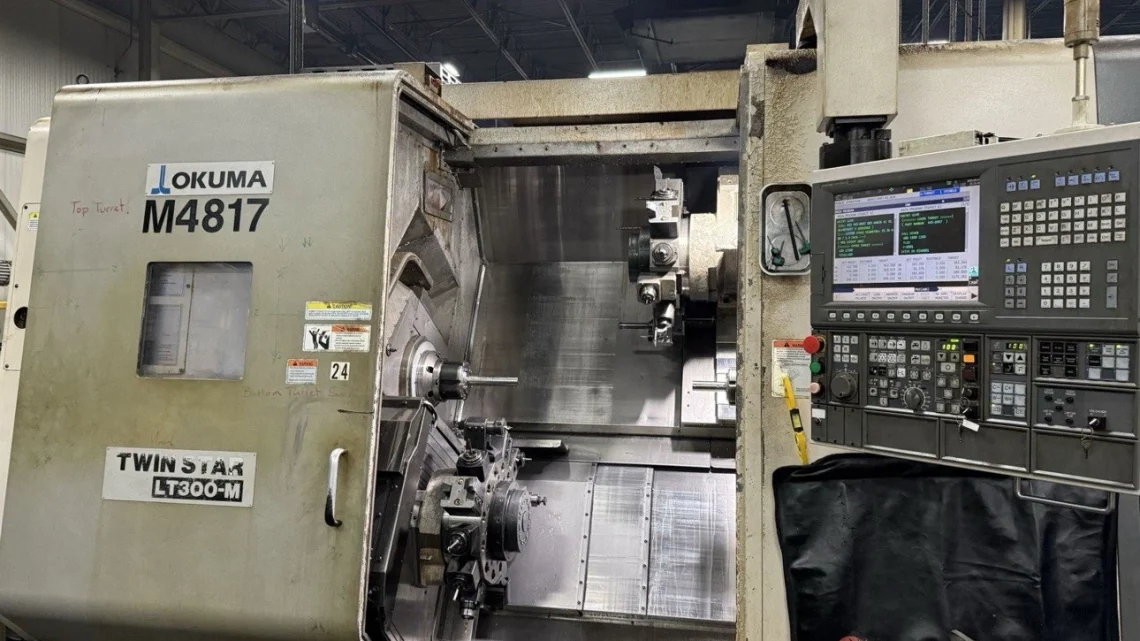
Below is a professional technical evaluation guide to help you identify a high-quality used Okuma Twin Star LT300-M CNC Turning Center (made in Japan), including detailed technical specifications and key inspection checkpoints before purchase. This is especially useful if you work with used machines for industrial applications like precision turning and multitasking operations.
1. Overview — Okuma Twin Star LT300-M
The Okuma Twin Star LT300-M is a Japanese-made twin spindle CNC turning center designed for high-precision multitasking parts production. It features dual spindles, dual turrets, live tooling (milling), and twin chip evacuation systems—making it suitable for complex turning and milling in a single setup.
2. Key Technical Specifications
General Machine Specs
- Model: Okuma Twin Star LT300-M (Twin Spindle CNC Turning Center)
- Origin: Japan (manufactured by Okuma)
- Control System: Okuma OSP-E100L / OSP-P200L (varies by year)
- Axes: Typically 7-axis on MY versions (with Y and C axis capabilities)
- Machine Weight: ~12,000 kg (may vary with options)
Spindles & Turrets
- Twin Spindles: Left and Right spindles with motorized spindles for simultaneous machining.
- Spindle Speed: Approx. 380–5,000 RPM for both spindles.
- Chuck Size: ~8″ on both spindles.
- Turrets: Dual V12 turrets (upper & lower), 12 tool positions each.
- Live Tooling (C-Axis): Available for milling and drilling operations.
Work Envelope & Capacity
- Maximum Swing (over bed): ~550 mm (≈21.65″)
- Max Turning Diameter: ~350 mm (≈13.78″)
- Distance Between Noses: Typical ~1,000–1,200 mm depending on version.
- Bar Capacity: ~2″ (≈50.8 mm) through spindle on standard versions.
Travel & Axis Details (as found in LT300MY variants)
(For reference where Y/C axis options exist)
- X-Axis (XA/XB): ~270 / 230 mm
- Z-Axes (ZA/ZB): ~930 mm on both sides
- W-Axis: ~940 mm
- Y-Axis (optional upper turret): ~160 mm
- C-Axis: 360° with fine 0.001° indexing in some versions.
Motor Details
(As documented on some used models)
- Spindle Motors: ~22 kW per spindle (varies with version)
- Live Tool Motor: ~7 kW
- Axis Motors: ~4 kW for Z/X axes
- Hydraulic Unit: ~2.2 kW
3. What Makes This Machine High-Quality?
✅ Built-In Japan Quality & Precision
- Okuma machines are known for rigidity, thermal stability, and long-term accuracy.
- Twin spindle design reduces handling time and boosts throughput.
✅ Multitasking Capability
- Twin turret + live tooling enables turning and milling in one setup, reducing cycle times and setups.
✅ Twin Spindle Synchronization
- Enables simultaneous machining on both spindles for complex parts.
✅ Robust Construction
- Heavy base and bed casting support vibration damping and consistent accuracy.
4. Used Machine Inspection Checklist
Before buying, thoroughly inspect the following:
Mechanical & Structural
- Way wear: Check bed, turret slides, and spindle bearings for play or scoring.
- Spindle condition: Test run both spindles through full RPM range.
- Turret indexing: Verify precision and noise—any delay or vibration shows wear.
- Ball screw backlash: Measure backlash in X/Z (and Y if present).
Control & Electronics
- CNC control: Confirm OSP system version and restore factory parameters.
- Encoder readings: Confirm encoder feedback match commanded moves.
- Servo drives: Run diagnostics for current draw, temperature, and errors.
- Wiring & panels: Check for corrosion, loose terminals, or modifications.
Auxiliary Systems
- Coolant & chip conveyor: Must function reliably—check pumps and belts.
- Hydraulics (if present): Inspect pressure and leakage.
- Tool presetter (ATS) & fixturing: If fitted, test for repeatability.
Part Accuracy & Test Cut
- Perform a test part to check roundness, surface finish, and positional repeatability.
- Check tool offsets and part accuracy after multiple tool changes.
5. Common Red Flags in Used Units
🚫 Excessive play in spindles or turrets
🚫 High servo error alarms or frequent servo fault history
🚫 Replaced axis ballscrews without calibration records
🚫 Control hacks or aftermarket modifications without documentation
6. Summary — Why This Machine Is Valuable
| Feature | Benefit |
|---|---|
| Twin Spindles | Double throughput / simultaneous machining |
| Twin Turrets + Live Tooling | Reduces setups; enables milling & drilling |
| Precision Japanese Build | Long life, high repeatability |
| Heavy Duty Construction | Suitable for production work |
Tip for Buyers
Always verify specifications directly with the seller and inspect under power whenever possible before purchasing. Dimensions and axis travels can vary based on specific sub-models and optional equipment.