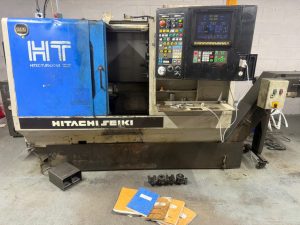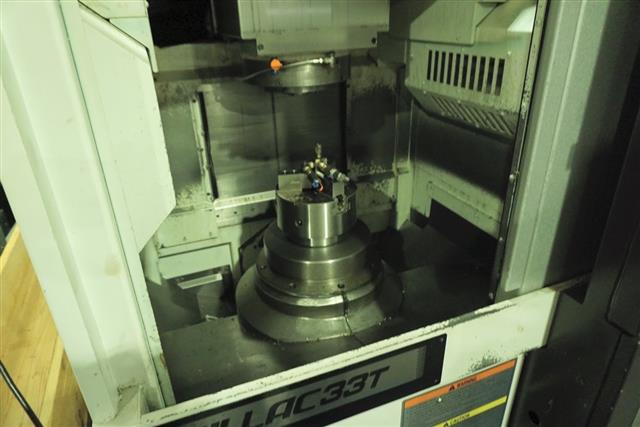
Ultimate Buyer’s Guide: Expert Insights Before Investing in a Pre-Owned, Used, Surplus, Secondhand Okuma Millac 33T CNC Vertical Turret Lathe made in Japan
Here’s your Ultimate Buyer’s Guide with expert insights and clear technical details for a Pre-Owned / Used / Surplus Okuma Millac 33T CNC Vertical Turret Lathe (Made in Japan) — written and focused on what matters before investing in one of these machines.
1. What Is the Okuma Millac 33T?
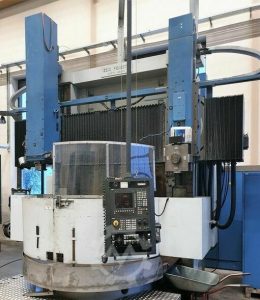
The Okuma Millac 33T is a CNC Vertical Turret Lathe / Multitasking Vertical Machining Center originally engineered in Japan. It combines turning, milling, and heavy-duty operations in one setup — ideal for shops with varied machining needs and limited floor space.
2. Key Technical Specifications (Typical / Verified Examples)
Core Machine Data
- Type: Vertical Turret Lathe / Machining Center (3-axis)
- Swing Over Table: ~18.11 in (460 mm)
- Max Turning Diameter: ~9.84 in (250 mm)
- Max Turning Length: ~8.66 in (220 mm)
- Table Load Capacity: ~440 lb (200 kg)
- Max Workpiece Weight: ~440 lb (200 kg)
- Machine Weight: ~13,500 lb (6,100 kg)
Spindle & Power
- Turning Spindle Speed: Up to ~6,000 RPM
- Turning Spindle Power: ~20 HP (14.9 kW)
- Upper Milling Spindle Speed: Up to ~12,000 RPM
- Spindle Taper: CT-40 or BT40 (varies per configuration)
Axis Travels & Tooling
- X-Axis Travel: ~13.4 in (340 mm)
- Y-Axis Travel: ~11.8 in (300 mm)
- Z-Axis Travel: ~14 in (355 mm)
- Automatic Tool Changer: Typically 30 positions (tool life & dynamic management)
- Turbo / Coolant Through Spindle: Often MP Systems (1,000 PSI) available
Control System
- CNC Control: Widely uses FANUC 31iA5 or similar OSP CNC — known for reliability worldwide (control versions vary by unit)
Auxiliary Features
- Chip conveyor
- Spindle chiller
- Box-way construction for rigidity
- Tool life management and background editing functions
3. Why People Buy Used Okuma Machines
Used Okuma lathes — including vertical turret and multitasking machines — remain highly sought after for several reasons:
✔ Durability & Accuracy: Okuma Japanese-built machines are known for robust frames and precision over extended life.
✔ Cost Advantage: Substantial savings compared with new machines while still accessing advanced capabilities.
✔ Advanced Controls: Used machines often feature sophisticated CNC controls (e.g., FANUC) that are widely supported and understood.
✔ Versatility: Capable of handling both milling and turning — which reduces the need for separate machines.
4. Pre-Purchase Checklist (Before Buying Used)
A. Machine History & Documentation
- Verified running hours and maintenance logs.
- Manuals (electrical, mechanical, CNC), and parts lists included.
- Any crash or major repair history.
B. Physical & Mechanical Inspection
- Check bed wear, spindle bearings, servos, and linear guides.
- Examine ball screws/backlash.
- Ensure coolant system and chip conveyor function correctly.
C. CNC & Electronics Check
- Power ON under load test when possible.
- Inspect CNC panel, all axis drives, and feedback systems.
- Confirm backup batteries and firmware status.
D. Functional Test Cuts
- Bring a sample part for testing under real program to evaluate accuracy.
- Inspect surface finish and repeatability.
E. Support & Spares Availability
- Confirm local technician availability for FANUC/Okuma support.
- Availability and lead time for critical spare parts.
5. Pros & Cons of Buying a Used Okuma Millac 33T
Pros
✅ Lower acquisition cost than new machines.
✅ Proven reliability in industrial operations.
✅ Combined turning and milling saves time & floorspace.
✅ Widely supported CNC (FANUC) with global parts supply.
Cons
❌ Older machines may lack newer automation options (robotics/probing).
❌ CNC controls may be dated (keypad wear, slow displays).
❌ Shipping, rigging, and installation costs can add up.
6. Typical Use Cases & Industries
Aerospace components
Automotive parts
Heavy equipment manufacturing
Precision engineering shops
Job shops with diverse part mixes
The vertical format is particularly beneficial for large or heavy workpieces that are awkward on horizontal lathes.
7. Final Advice: Smart Investment Tips
Verify under power before purchase — don’t rely solely on photos.
Budget for spares & setup if machine has been idle.
Factor in transportation, installation, and commissioning costs.
Negotiate based on condition, control version, and accessories.