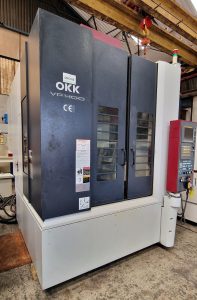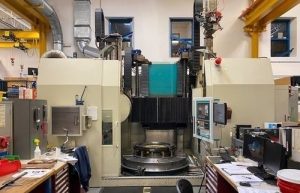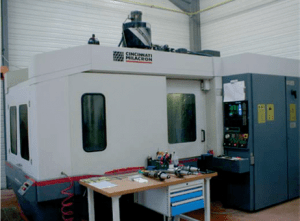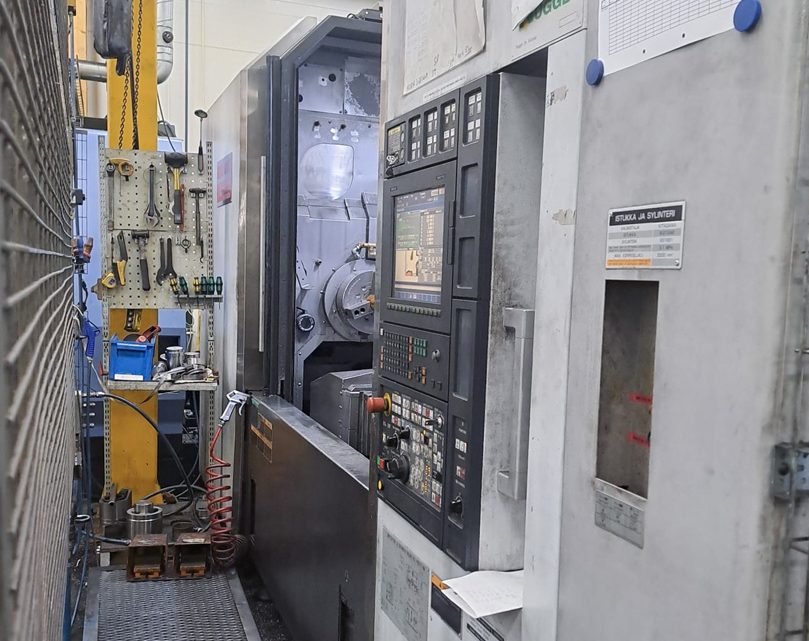
Technical Evaluation Guide: How to Identify a Quality Used, Secondhand, Pre-Owned, Surplus MORI SEIKI NT4250 / 1500SZ CNC MultiTasking Turn-Mill Machine made in Japan
1) Machine Overview
The MORI SEIKI NT4250 / 1500SZ is a multi-tasking turn-mill center engineered for simultaneous 5-axis machining, turning, and milling in a single setup.
Made in Japan, this model combines the high rigidity of a turning center with the accuracy of a vertical machining center, delivering unmatched flexibility for aerospace, mold, and precision component production.
The NT series represents MORI SEIKI’s integrated mill-turn architecture, featuring twin spindles, B-axis milling head, Y-axis on the lower turret, and intelligent thermal compensation, achieving micron-level repeatability.
2) Key Technical Highlights
| Component | Specification | What to Inspect |
|---|---|---|
| Main Spindle (Left) | Up to 4000 rpm, 30/37 kW, A2-8 | Check bearing noise, runout ≤ 0.003 mm |
| Sub Spindle (Right) | 4000 rpm, 22/26 kW | Verify synchronization and chuck clamping accuracy |
| B-Axis Milling Spindle | 12,000 rpm (HSK-A63 / CAPTO C6) | Test indexing repeatability ±0.001° |
| Tool Magazine | 80–120 tools | Run ATC cycle test; inspect grippers and tool-change arm |
| Travel (X/Y/Z) | 730 / ±150 / 1585 mm | Move full stroke; confirm axis reversal and servo response |
| C-Axis Control | 0.0001° | Check for chatter or encoder lag |
| Turret (Lower) | 12-station driven turret | Confirm live tool rpm, indexing repeatability |
| CNC Control | MAPPS IV / FANUC 31i | Verify screen, alarms, and data backup integrity |
3) Structural Integrity & Construction
The NT4250’s cast iron monoblock base and twin-spindle gantry architecture deliver extreme rigidity. Evaluate the following:
- Base Casting & Column: No cracks, impact damage, or excessive thermal distortion.
- Linear Guideways: Inspect all axis rails for scoring, abnormal lube film, or seal wear.
- Ballscrews: Check for axial play, servo following error, and backlash < ±0.005 mm.
- Spindle Chiller System: Confirm active cooling; clogged filters reduce thermal accuracy.
- Way Covers & Bellows: Must be intact — coolant ingress here often damages linear encoders.
4) Spindle & B-Axis Head Evaluation
| Test | Method | Acceptable Result |
|---|---|---|
| B-Axis Index Accuracy | Rotate 0°–180°–0°; measure deviation | ≤ ±0.001° |
| Main/Counter Spindle Runout | Indicator on test bar | ≤ 0.003 mm |
| Milling Spindle Vibration | Accelerometer spectrum | No spikes at bearing bands |
| Drawbar Force (HSK/CAPTO) | Pull-force gauge | ≥ 70 % of OEM spec |
| Thermal Drift (after 1 hr @ 6,000 rpm) | Laser interferometer | ≤ 5 µm |
| Tool Change Cycle | ATC continuous run | No mis-index or tool clamp errors |
5) Axis Accuracy & Motion Verification
Perform the following ISO 230 and ballbar-based tests:
| Axis Test | Method | Target |
|---|---|---|
| Positioning Accuracy | Laser interferometer | ≤ ±0.005 mm / 300 mm |
| Repeatability | 10× test | ≤ ±0.002 mm |
| Squareness (X–Z, Y–Z) | Granite square or ballbar | ≤ 0.01 mm over full stroke |
| Circularity (ballbar test) | 150 mm radius | ≤ 0.015 mm |
| Servo Synchronization (spindles) | Dual spindle cut test | No phase delay; equal torque trace |
6) Control System & Electronics
- CNC Power-Up: MAPPS IV should boot without PLC or NC parameter errors.
- Screen & I/O Panels: Test touchscreen, soft keys, and pendant E-stop.
- Alarm History: Export and review; look for recurring “Servo Overload,” “Encoder Fault,” or “Spindle Chiller” alarms.
- Data Backup: Verify machine parameters, offsets, and ladder logic files are present.
- Servo Drive & Cooling Fans: Ensure stable temperatures during high-speed motion.
7) Hydraulic, Pneumatic & Lubrication Systems
| System | Checkpoint | Inspection Notes |
|---|---|---|
| Hydraulics | Clamp/unclamp time | Smooth operation; pressure stable (no pulsation) |
| Lubrication System | Flow divider blocks | All lines must distribute oil evenly; check for leaks |
| Air Supply | Tool clamping / chucking | Maintain 6–8 bar dry air; drain condensate traps |
| Coolant System | Pumps, filters, chip auger | No foaming or metallic sludge; clear return lines |
| Spindle Chiller Unit | Fluid level and temp sensor | Maintain ±1 °C temperature consistency |
8) On-Site Inspection Procedure
A. Static Inspection
- Examine foundation for vibration cracks or misalignment.
- Inspect spindle taper visually for corrosion or scoring.
- Check coolant tank, chip conveyors, and guarding for leaks or contamination.
B. Power-On Test
- Home all axes — verify consistent zero return positions.
- Run the main and sub spindle up to full rpm.
- Engage synchronous spindle cutting mode.
- Test tool change 20× sequentially.
- Index B-axis ±90° repeatedly — check servo torque trace.
- Measure backlash compensation table values in control — excessive numbers indicate mechanical wear.
C. Cutting Test
- Machine a test part involving turn + mill + drilling operations.
- Check roundness, surface finish, and concentricity between spindles.
- Record thermal stability by re-measuring critical dimensions after 1 hour.
9) Common Wear or Failure Indicators
- Spindle Bearing Noise: Whining or vibration above 0.002 g RMS.
- B-Axis Play: Head deflection during tool contact — caused by worn harmonic drive.
- ATC Arm Jamming: Due to encoder misalignment or pneumatic leak.
- Y-Axis Drift: Often from worn ball screw or servo tuning deviation.
- Chiller Alarm: Indicates clogged filters or faulty thermistor.
- Tool Retention Loss: Low drawbar force leading to chatter or finish defects.
10) Critical Documentation to Request
| Document | Purpose |
|---|---|
| Factory build sheet | Confirms configuration (HSK-A63, subspindle, turret type) |
| Latest ballbar or laser test report | Validates geometric accuracy |
| Spindle rebuild certificate | Verifies bearing replacement |
| Electrical/hydraulic schematics | Essential for maintenance |
| MAPPS parameter + ladder backup | Required for reinstallation |
| Preventive maintenance log | Indicates care and service quality |
11) Acceptance Criteria Summary
| Parameter | Target | Comment |
|---|---|---|
| Positioning Accuracy | ≤ ±0.005 mm / 300 mm | Verified by laser |
| Repeatability | ≤ ±0.002 mm | Bidirectional |
| B-Axis Repeatability | ≤ ±0.001° | High-precision head |
| Spindle Runout | ≤ 0.003 mm | Test bar @ taper |
| Thermal Drift | ≤ 5 µm | After 1 hour |
| Ballbar Circularity | ≤ 0.015 mm | 150 mm test radius |
| Tool Change Cycle | ≤ 3.5 s | Continuous 20× run |
| Surface Finish (Ra) | ≤ 0.4 µm | Face-milled sample |
| Synchron Turning Accuracy | ≤ 0.01 mm | Spindle-to-spindle cut test |
12) High-Value Features That Add Worth
- Active Thermal Control & Cooling Systems operational
- HSK-A63 or CAPTO C6 spindle tooling (preferred over BT)
- Installed Renishaw probing and tool break detection
- Verified B-axis harmonic drive replacement within last 3 years
- Optional Y-axis lower turret for true simultaneous machining
- Automatic part catcher / bar feeder interface operational
13) Red Flags — Walk Away If
- Alarms show frequent spindle orientation or B-axis servo error
- Tool magazine mis-indexing or arm misalignment during ATC cycle
- Sub spindle fails to synchronize with main spindle during transfer
- Thermal compensation disabled or no chiller control available
- Excessive backlash compensation in X/Y/Z tables (>0.015 mm)
- Encoder alarms (e.g., “APC Battery Low” repeatedly)
- Untraceable software lockout or missing MAPPS system key
14) Buyer’s Quick Checklist
✅ Verify serial number & year (plate on base casting)
✅ Confirm B-axis and spindle chillers operational
✅ Check both spindles at full rpm for 15 min each
✅ Ensure ATC magazine cycles error-free (≥ 20×)
✅ Confirm live-tool rpm with tachometer
✅ Inspect probe calibration (if available)
✅ Review laser or ballbar data before purchase
✅ Obtain all manuals, backups, and tool holders
Pro Tip
A premium used MORI SEIKI NT4250 / 1500SZ will show stable spindle temperatures, smooth B-axis motion, and a clean alarm history.
Machines previously used in aerospace or die/mold environments are often in the best condition — due to light material loads, stable temperature, and professional maintenance. Always prefer machines with documented geometry tests and verified MAPPS backups.