03/11/2025
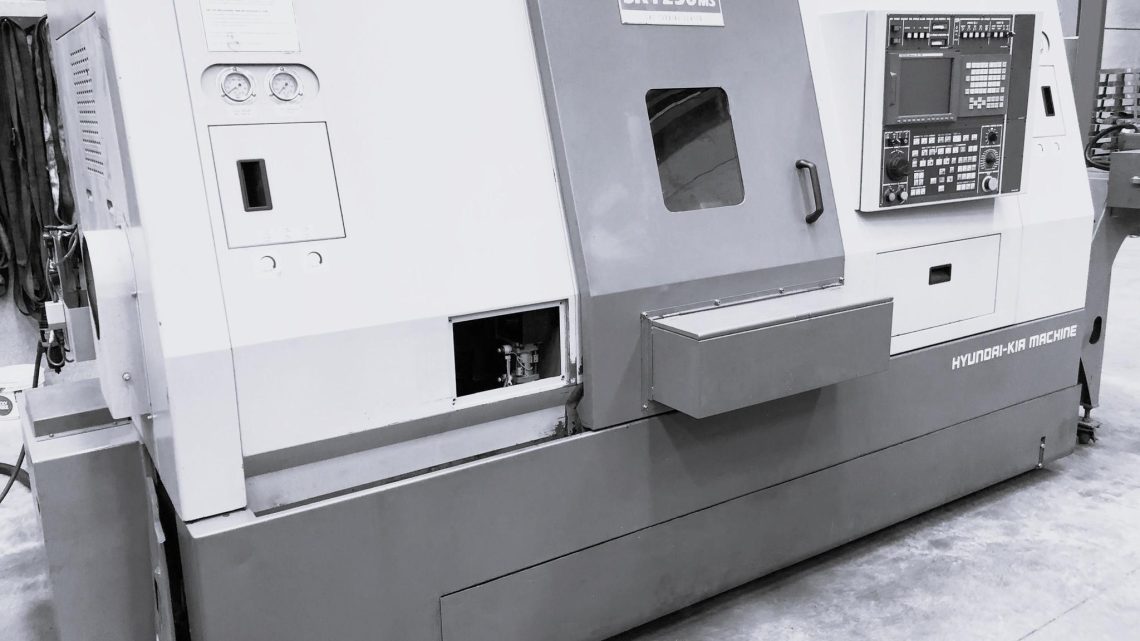
Technical Evaluation Guide: How to Identify a Quality Used, Secondhand, Pre-Owned, Surplus Hyundai SKT 250MS CNC Turning Center made in South Korea
1. Model & Specification Verification
Before proceeding to condition inspection, verify the machine truly is the SKT 250MS and meets your required specs.
- The SKT 250MS is produced by Hyundai‑Kia (South Korea).
- Typical published specs:
- Max turning length ≈ 700 mm.
- Max turning diameter: ≈ 410-480 mm depending resource.
- Swing over bed ≈ 620 mm; swing over cross slide ≈ 400 mm.
- Spindle speed roughly 3,500 rpm for main spindle; sub-spindle ~4,000 rpm in some specs.
- Spindle power around 18.5/22 kW.
- Turret station count: typical 12-station.
- Confirm with the seller the exact variant: “MS” might imply sub-spindle and multi-turret or multitasking capabilities.
- Obtain spec plate or serial number sheet to confirm year of manufacture, variant, optional features (e.g., C-axis, B-axis extension, bar loader, probe, automation).
- Ensure the control system (commonly a FANUC 18i-TB or similar) is as declared and compatible with your setup.
Why: Buying a machine which is not the correct variant or missing key features means lower value, harder tooling, unexpected costs. Verifying specs ensures you know exactly what you’re bidding for.
2. Documentation & History
A machine’s track record matters a lot.
- Ask for service/maintenance logs: hours run, major repairs, spindle rebuilds, motor replacements.
- Year of manufacturing: e.g., listings show years 2005, 2007 for this model.
- Ask if there have been upgrades: control replacement, coolant system overhauled, bar feeder added.
- Check if the machine was used for heavy duty or light duty (aluminium vs heavy steel) — this affects wear. Example: one machine used for 16-20 mm diameter parts in food industry.
- Confirm availability of spare parts for the model in your region : spindle bearings, turret parts, control board (FANUC or other).
- Ask for original manuals, drawings, maintenance sheets.
Why: A well-documented machine reduces risk of hidden faults or big maintenance costs down the line.
3. Visual & Mechanical Condition
During physical inspection (preferably on-site) run a thorough check.
3.1 Exterior & General Condition
- Machine bed, base: look for cracks, visible deformation, damage to welds.
- Covers, guards, panels: missing parts, rust-spots, repainting may indicate earlier damage.
- Way beds and slide surfaces: look for heavy wear, scoring, missing lubrication pads.
- Check for signs of oil leaks around spindle heads, turrets, hydraulic lines.
- Inspect chip conveyor, coolant system, bar feeder (if present) — condition and cleanliness matter.
3.2 Spindle & Sub-Spindle (if equipped)
- Run main spindle at full speed: listen for unusual noise, bearing hum, vibration.
- Check spindle run-out using dial indicator: API standard or manufacturer spec for alignment.
- Confirm sub-spindle functions (if the “MS” model) — check its nose, clamping mechanism, change-over mechanism.
- Check spindles’ temperatures during operation: overheating may signal worn bearings.
- Inspect spindle taper, chuck mounting condition: any damage, misalignment, worn threads.
3.3 Turret, Tooling & Axes
- Inspect turret indexing: Does it switch stations smoothly without loud clicks? Check indexing accuracy.
- Count how many stations are present vs what spec says (12 station typical). Confirm tooling size/type.
- Check tool holders: wear, missing covers, damage.
- Move axes (X-axis, Z-axis, B/C axes if present) manually: check for backlash, binding, smoothness. Example specs show X travel ~290 mm, Z travel ~750 mm.
- Check lubrication: way lubrication, ball screws condition, oil mist system (if any).
- Check for any unwanted play in axes, unusual noises during manual jogging.
3.4 Control Panel, Electrical & CNC System
- Power up machine: check control screen for display issues, errors in logs.
- Inspect wiring inside electrical cabinet: look for signs of overheating, burnt cables, missing covers.
- Ensure axes drive motors, servo amps work correctly; check for error alarms.
- Check software version, any custom macros, availability of backup: critical for future maintenance.
- Check emergency stop buttons, interlocks, safety guards.
3.5 Operational / Cutting Test
- Perform a test cut if possible: check surface finish, dimensional accuracy, repeatability.
- Use a standard workpiece material (steel or aluminium) and run typical cycle time.
- Observe machine behaviour under load: check for vibration, thermal drift, coolant flow issues.
- Check spindle under load: does speed drop, noise increase?
- If bar feeder present: test its feeding function.
- Verify chip removal & coolant discharge are functioning (chip conveyor, coolant pump).
- If there is C-axis/B-axis capability: test those functions and verify accuracy of indexing or angular axis.
4. Model-Specific Checks for SKT 250MS
Since this is a specific model with multi-spindle, multitasking potential, use these extra checks.
- Confirm presence and correct operation of sub-spindle, if the machine has it. If it’s lacking, the “MS” designation may still be present but value drops. Listings show many SKT 250MS with sub-spindle.
- If C-axis/B-axis capabilities are claimed (for example for milling/spinning on lathe), verify they work: axis movement, C-axis indexing resolution (example: 0.001° resolution).
- Verify actual turret station count and configuration (12-station typical) and ensure the turret size matches your tooling needs. Some listings: 12 station, BMT65 type turret.
- Check bar-diameter capacity: one spec lists bar diameter 82 mm (main spindle) and 65 mm (sub-spindle).
- If machine has automation interfaces (e.g., loader, robot, parts catcher), check those are installed, functioning and included. One listing mentions tool-setting probe, swarf conveyor.
5. Infrastructure, Installation & Hidden Costs
Even a good machine can become costly if installation/infrastructure isn’t ready.
- Check floor loading: listed weight ~5,800-6,500 kg for this model.
- Confirm power requirements: typical machine power consumption around 35 kVA.
- Check facility power – three-phase voltage, grounding, environment (temperature, dust, humidity).
- Confirm coolant system, filtration, hydraulic systems are in working order (especially for sub-spindle).
- Transport & rigging: moving such a machine from previous location involves high cost (lifting, rigging, re-leveling, foundation).
- Alignment & calibration cost: after installation you may need to realign bed, turrets, spindles to factory tolerances.
- Spare parts availability in your country: Korean machines may have parts slower to source, so check accessibility and cost for turret, spindle bearings, control boards.
- Downtime risk: Ensure the machine can be integrated into your workflow quickly; evaluate transition cost (tooling, programming, set-up).
6. Final Decision & Negotiation Points
- Use any defects or missing features (e.g., missing sub-spindle, worn bearings, missing automation) as negotiation points to reduce price.
- Ask if any warranty or support is provided by seller (even 30- or 60-day support).
- Evaluate total cost of ownership: purchase price + transport + installation + refurbishment + tooling + spare parts risk.
- Specify in contract who is responsible for dismantling, shipping, installation, leveling, and training (if applicable).
- Consider budgeting for preventive maintenance early (e.g., spindle rebuild, ball screw replacement) if machine is older or has high hours.
7. Summary
In summary, a quality used SKT 250MS should:
- Match confirmed specifications (turning diameter/length, turret stations, sub-spindle, axes)
- Have good documentation/history and minimal hidden surprises
- Show good mechanical/electrical condition: spindles, turrets, axes, control all working smoothly
- Be installed into a facility that can support it (floor, power, infrastructure)
- Have transparent cost-calculations including rental or downtime, spares, tooling