03/11/2025
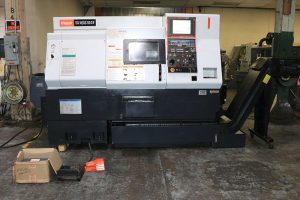
Technical Evaluation Guide: How to Identify a Quality Used, Secondhand, Pre-Owned, Surplus Takisawa TS-2000YS CNC Turning Center made in Japan
1. Model‐&‐Specification Verification
Before diving into condition, verify the machine really is a TS-2000YS and that its specs match what you need.
- The manufacturer Takisawa lists the TS-2000YS as a 2-spindle / 1 turret (or 2 turrets depending option) model: e.g., chuck size 6″+6″, max turning diameter φ370 mm, turning length approx 565 mm.
- Check the specific item’s spec plate or documentation: spindle speeds (6000 rpm left, 6000 rpm right), rotary tool speed 6000 rpm.
- Check physical footprint: e.g., machine height ~2300 mm, floor space ~2800×2140 mm.
- Confirm any optional features: bar feeder, chip conveyor, Y-axis, twin spindles, turrets 10/12/15/20 stations.
Why it matters: If the machine’s specification doesn’t match the declared model (for example missing the right spindle, wrong turret size, or Y-axis options), then its value, tooling needs and compatibility may differ.
2. Documentation & History
It’s essential to get full history so you know what you’re buying.
- Ask for the original operator’s/maintenance manual and any service logs.
- Find out: year of manufacture, hours of operation or cycles (if available).
- Ask whether major components have been replaced (spindle bearings, turrets, control upgrades).
- Check that the control system (e.g., FANUC, Mitsubishi) is as declared and compatible with your shop. In one listing TS-2000YS was equipped with a FANUC 32i-B.
- Confirm spare-parts availability for this model in your region and whether tooling/accessories are included.
Why: A well-documented machine significantly reduces risk of hidden faults or surprise repairs.
3. Visual & Mechanical Condition
Time for hands-on inspection. Use a detailed checklist.
3.1 Exterior / Visual Inspection
- Inspect body, covers and guards: look for signs of damage, excessive corrosion, repairs or repaint.
- Look for oil leaks around spindle headstocks, turrets, slideways.
- Check bed, ways and machine base for straightness, cracks or wear.
- Inspect turrets for missing station covers, broken holders, rust.
- Check spindle nose/chuck: condition of threads, hydraulic/pneumatic lines.
3.2 Spindle, Bearings & Turrets
- Run both main spindles (left & right) at speed: listen for abnormal noises, vibration, heat.
- Check for spindle play: axis X/Y/Z/A should run smoothly, minimal backlash.
- Inspect turret indexing: does station change smoothly, no chattering or mis-indexing.
- Check tool holders (all-holder type turret) for condition – recall TS-2000YS uses “all-holder type” turret.
3.3 Slideways, Ball Screws, Guides
- Operate axes manually: X, Z, Y (if Y-axis present) – check for smooth motion, no binding or jumpy movement.
- Check lubrication: Are oilers used? Are ways/pads well maintained?
- For Y-axis and sub-spindle (if present), ensure linear guide condition is good.
3.4 Control Panel, Electrical & CNC System
- Power on the machine: check screen display, buttons/switches, emergency stops.
- Review wiring harnesses, cables: look for frayed wires, missing covers, evidence of overheating.
- Confirm CNC version and compatibility with your tooling/CAM system.
- Ask: are there error logs, has the control been upgraded, are licences valid?
3.5 Operational Test / Cutting Test
- Ideally perform a test cut: use a sample workpiece, measure tolerance, surface finish, check repeatability.
- Check bar feeder (if included) and chip conveyor – are they working properly?
- Observe machine under load: does temperature rise abnormally, any smoke/odd smell?
4. Critical Model-Specific Checks for TS-2000YS
Since this is a twin-spindle, Y-axis capable turning centre from Takisawa, consider these extra points:
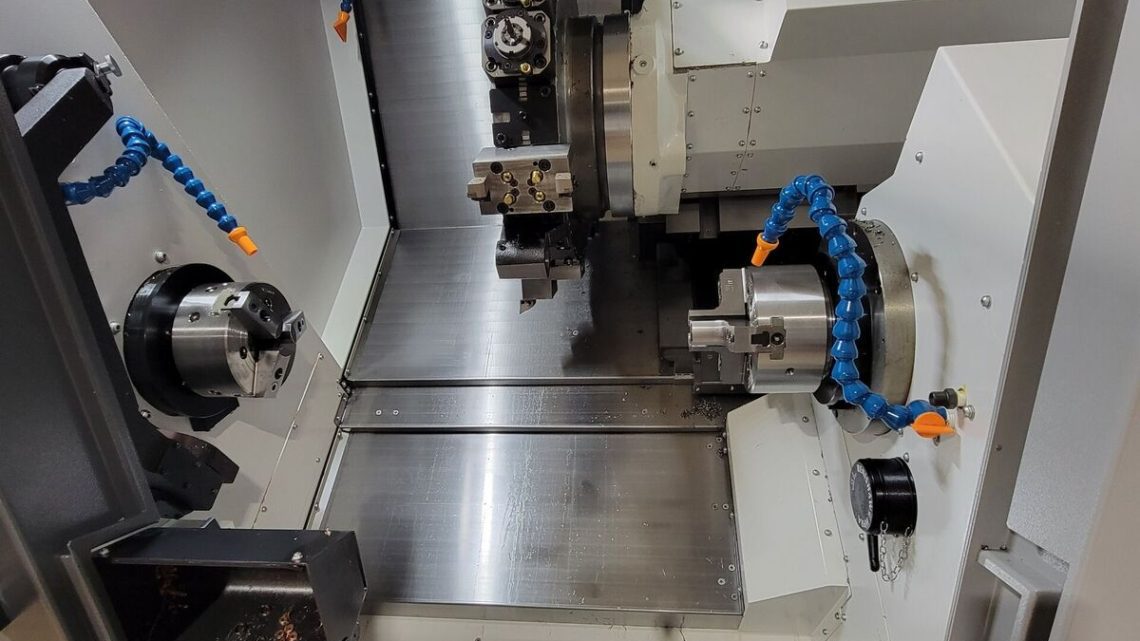
- Ensure the second spindle (right spindle) is present and functional. Many cheaper used machines may have had it removed or bypassed.
- Check both spindles’ chucks: the spec lists 6″+6″ (inch) chucks standard. Confirm chuck size and condition.
- Confirm turret station count and holder type (10/12/15/20 station all-holder type options) because tooling cost depends on it.
- Verify Y-axis travel and condition if Y-axis option is present (since Y‐axis is a higher value option).
- Because this machine is capable of “process integration” (front + rear machining) per Takisawa’s marketing, look at parts catcher, automation interfaces (robot/loader) if included.
5. Infrastructure, Installation & Hidden Costs
Even a great machine may become problematic if infrastructure isn’t ready.
- Check floor load capacity: the unit weight ~6200 kg for the standard TS-2000YS.
- Confirm power requirements: three-phase power, check voltage, phase, grounding.
- Ensure facility has proper coolant system, chip conveyor connection, and ventilation.
- Consider transport, rigging, installation, alignment and calibration costs. These are often overlooked.
- Check how old the coolant is, condition of chip conveyor (if included), and whether bar feeder interface needs upgrade.
- Availability of spare parts and service support locally in your country — for Japanese machines this is very important.
6. Final Decision & Negotiation Points
- Use findings to negotiate price: any identified issues (spindle wear, turret damage, missing records) should reduce price accordingly.
- Ask for warranty or guarantee period (if seller offers).
- Calculate total cost of ownership: purchase price + transport + installation + any needed refurbishment/upgrade + spare parts risk.
- Ensure contract states who is responsible for dismantling, shipping, installation.