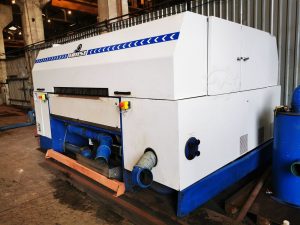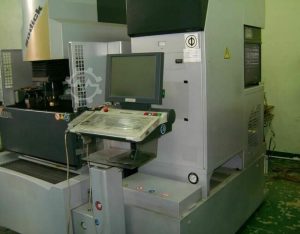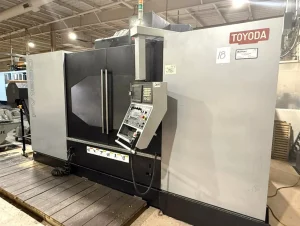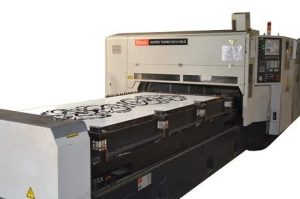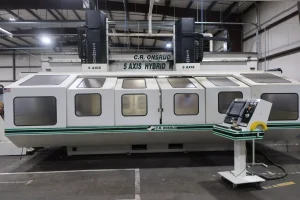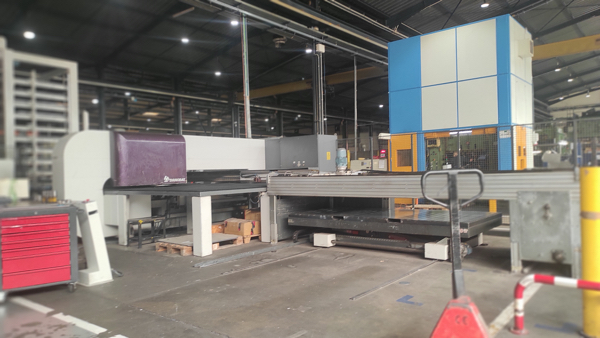
Technical Evaluation Guide: How to Identify a Quality Used, Secondhand, Pre-Owned, Surplus DANOBAT P1631 Automatic Punching Line made in Spain
Below is a technical evaluation guide / checklist you (or your inspector) can use to assess the condition and value of a used / surplus DANOBAT P1631 automatic punching / turret punch line (Spain). DANOBAT is a Spanish machine tool maker and the P1631 is among their turret punch / punching line models.
This guide covers structural, mechanical, electrical, control, tooling, and support aspects so you can distinguish a reliable machine from one that may require costly repairs.
A. Understand the Baseline / Design Features
Before inspection, you should establish what features and capacities the P1631 is supposed to have (or did have), so you can benchmark performance and wear. Some known points:
- The P1631 is listed under Danobat’s discontinued turret / punching models.
- It’s part of Danobat’s punch / turret line (i.e. multiple stations, automatic tool change, sheet feeding, possibly loading/unloading & storage automation).
- In one listing, a 2009 P1631 CNC Punch was offered with tooling.
- Danobat machines often use robust turret blocks, multiple stations, CNC indexing, sheet handling automation, and tool/die systems.
You should try to obtain original spec sheets, datasheets, or user manuals (if available) for your particular P1631 (year, variant) so that you know the nominal turret capacity, indexing speed, payload, travel axes, sheet size, feed mechanisms, press / punch force, cycle rates, etc.
B. Pre-Inspection & Documentation Review
Before touching hardware, collect as much documentation and background as possible.
| Documentation / Info | Why It Matters / What to Look For |
|---|---|
| Nameplate, serial number, model variant, build year | To verify exactly which P1631 you have, and to cross-reference parts, drawings, and upgrades. |
| Original factory drawings, schematics, maintenance manuals, parts lists | These are essential for part replacement, repair, calibration, and correct operation. |
| Service / maintenance history | Frequent preventive maintenance (lubrication, turret indexing check, sheet feed checks) is a strong positive. |
| Repair / refurbishment records | If punch turrets, drives, tool changers, sheet handling systems, or electrical / control modules were replaced, this may affect performance or alignment. |
| Operating history: hours, cycle count, types of material processed | Heavy use on thick, abrasive metals or high volume cycles shortens component life. |
| Tooling and die inventory included | If many tool stations, punches, dies, replacement punches/dies are included, that adds to value. |
| Warranty / guarantee / return or acceptance period | Buying a used machine with even a short acceptance window lowers risk. |
If the seller cannot provide reasonable documentation or is evasive, treat that as a red flag.
C. Visual & Structural Inspection (Machine Cold / Offline)
With the machine powered off, do a thorough walkaround inspection before powering anything.
Frame, Base, Foundations & Structural Integrity
- Examine the main frame, base, columns, and structural supports for cracks, weld repairs, deformations, bending or distortions. Any structural repair must be carefully inspected.
- Check whether the machine has been shimmed or leveled excessively; large shims or irregular supports may indicate past misalignment.
- Inspect the turret housing, mounting flanges, and support surfaces — any flex or looseness is dangerous.
- Check mounting bolts, anchor points, and base plates for tightness and integrity.
Turret & Tool Indexing Mechanism
- Inspect the turret block: check for wear, galling, damage on tool pockets, dents, burrs.
- Examine the indexing mechanism (gears, drive pinions, indexing cams, drive motors, couplings) for play, wear, or damage.
- Check that turret locks / clamps are present and appear firm; test manually if possible for looseness.
- Inspect tool holders, punches, dies in turret pockets: any missing, bent, or worn tooling is a concern.
Sheet Handling, Feed / Transfer Mechanisms & Automation
- Check the sheet loading / unloading system, conveyors, positioning arms, grippers, stackers, storage magazines, etc., if present. Ensure all mechanical parts are intact.
- Inspect feeds, guides, rails, rollers, belts, and transfer arms for wear, misalignment, damaged rails, bent guide rollers or chains.
- Verify that the sheet alignment / squaring devices, stops, clamps, and sensors are in place and functional (no broken or missing parts).
- Look for signs of collisions, bent arms, impact repairs, or structural misalignment.
Axis Drive / Linear Guides / Rails
- Inspect linear guides, ways, rails, and sliding surfaces for scoring, pitting, corrosion, indentations, or wear.
- Check lubrication / oiling systems feeding the guideways: lines, wicks, oil ports — see whether they are intact or have been bypassed.
- For ball screw / feed screw drives, inspect for wear, loose couplings, axial play or backlash in joints.
- Check all bearings, pillow blocks, and support brackets for looseness, wear marks, or damage.
Punch / Tooling Interface, Ram / Slide (if applicable)
- If the model uses a plunging ram or slide, inspect the ram / slide surfaces, guides, bearings, for scoring or wear.
- Examine punch / die seating surfaces and interface faces: they should be flat, undamaged, and free of burrs.
- Inspect any ejector or stripper mechanisms: rods, springs, plungers should be straight, free, and not bent or fatigued.
Hydraulic / Pneumatic Systems (if used)
- Inspect all hoses, fittings, valves, cylinders (if the line uses hydraulics for certain functions) for leaks, corrosion, damage, or looseness.
- Check pump / compressor units (if pneumatic assist is used) for wear, proper mounting, and signs of stress or leaks.
- Inspect oil reservoirs, filters, cooling systems, piping, and cleanliness (check for sludge, contamination, rust inside).
Electrical / Control Enclosure & Wiring
- Open the control / electrical cabinets (if permitted) and inspect wiring, terminal blocks, relays, PCBs, drives, power electronics. Look for burn marks, discolored insulation, corrosion, dust, moisture ingress, insect nests.
- Check cable carriers, drag chains, flexible wiring harnesses, and whether wires are chafed or rubbing edges.
- Verify that wiring is neatly arranged, labeled, not ad hoc spliced/cobbled.
- Examine control panels, buttons, indicator lights, displays and ensure they are intact, not cracked or faded.
Cleanliness, Condition & Signs of Abuse
- A well-maintained machine tends to be cleaner; heavy accumulation of metal chips, lubricants, or dirt is a warning.
- Look under covers, in hidden crevices, and electrical cabinets for signs of neglect, corrosion, or rodent/insect damage.
- Take note of any areas with fresh paint, patches, or modifications — they deserve extra scrutiny.
- Photograph all parts, wear zones, and suspicious areas for later review.
D. Powering Up & Motion / Functional Testing
With permission and safety precautions in place, power the machine and run basic motion & functional tests.
Machine Startup, Control & Initialization
- Power on control, monitors, drives. Observe start-up behavior, boot sequence, alarms or warnings.
- Check that drives / axes initialize cleanly without error codes or warnings.
- Monitor supply voltages, drive currents, and whether they are steady or fluctuate.
Turret Indexing / Tool Changes
- Command turret indexing through all stations (ideally several cycles). Observe for sluggishness, hesitation, stuttering, mis-indexing, vibration, or audible abnormal noise.
- Inspect locking / clamping mechanism under indexing: does the turret clamp securely without wobble?
- If there is automatic tool change or handling, test tool pick / place cycles (no load) and watch for collisions, misalignment or failures.
Sheet Feeding / Transfer / Handling Motion
- Run feed / transfer sequences (sheet loading, sheet advancing, moving to punch station, unloading). Observe motion smoothness, alignment, hesitation, or drift.
- Reverse directions and check for backlash or play in feed axes or transfer arms.
- Test clamps, stops, grippers: open/close, alignment, actuation smoothness.
Punching / Operation Simulation (if possible, safe / no-load)
- If safe, run a “dry run” or simulation of punch cycles without material or very light sheet. Observe how all motions (index, feeds, transfers, turret actuations) behave.
- Listen for misalignments, collision warnings, drive noise, or drive overloads.
- Monitor parameters (if visible): drive currents, axis loads, error counts, position feedback vs commanded.
Homing, Reference, Limit Switches & Safety Interlocks
- Command a full homing / zeroing sequence and observe whether axes and turret return to known positions repeatably.
- Jog axes to limit positions and verify that limit switches, safety stops or soft limits engage correctly and reliably (no crashes).
- Test emergency stop (E-stop) and safety interlocks: stop motion mid-cycle and verify safe behavior.
Test Punch / Light Material Run (if allowed and safe)
- If possible, run a small punch on a thin metal sheet (e.g. aluminum or light steel) to test coordination of feeding, indexing, turret punch, and unloading.
- Inspect output sheet quality: hole accuracy, positioning, burrs, punch alignment.
- Run a few cycles and observe stability: whether motion becomes inconsistent over repeated cycles.
E. Accuracy, Repeatability, and Measurement Tests
To evaluate how precise the machine remains, perform measurement / calibration tests.
- Turret Position Accuracy / Repeatability: index, reverse, and return to a tool station; measure deviation (e.g. via dial indicator or test plate).
- Feed / Transfer Axis Accuracy & Backlash: command known moves back and forth, measure deviation and backlash.
- Punch Hole Positional Accuracy: punch a known pattern and measure actual vs programmed hole positions.
- Flatness & Registration: check whether parts come out flat and correctly aligned across repeated runs.
- Thermal Drift: run the machine for some time, let it warm, then re-test a known coordinate to see how much drift has occurred.
- Tool / Die Seating Repeatability: remove and re-insert or change tooling, then punch again; measure deviation.
- Parallelism / Squareness: across the sheet in multiple directions, measure whether axes remain orthogonal or whether drift/tilt appears.
F. Wear, Component Life & Risk Estimation
Even a machine that passes initial tests may have parts that are nearing end-of-life. Assess the key components:
- Turret / Tool Pockets & Clamping / Locking mechanism: wear in pockets or locking surfaces causes looseness and fast wear.
- Indexing drive gear wear, pinions, bearings: high-stress repetitive motion leads to fatigue.
- Feed / transfer guideway wear, rails, roller bearings: scoring, excessive wear or misalignment degrades accuracy.
- Actuators / cylinders / pneumatic / hydraulics (if used): seal wear, leak paths, reduced pressure.
- Motors / Drives / Encoders / Feedback Devices: aging drives or encoders may drift or fail.
- Couplings, belts, pulleys, drive shafts: looseness, backlash, wear.
- Lubrication / Oil systems: check filter condition, cleanliness, possible water contamination or metal particles.
- Control electronics, boards, wiring, connectors: older electronics or boards may become obsolete or fail.
- Sensors, switches, limit circuits: wear and drift in sensors can impair precision.
- Spare parts availability & support: how easy is it to get turret components, tool holders, chips handling, sensors, etc. for Danobat P1631 in your region?
G. Red Flags & Deal-Breaker Conditions
Be alert for these warning signs. The more of these you see, the more risky the purchase.
- Structural cracks, welded repairs, frame distortions, or severe damage.
- Turret indexed loosely, misalignment, or serious wear in pockets.
- Sluggish, noisy, or irregular turret indexing or tool changes.
- Feed / transfer axes that are jerky, misaligned, or have excessive backlash.
- Sheet handling / loading systems with missing or bent parts, misalignment, or broken grippers.
- Punching / tooling interface surfaces damaged, chipped, or misaligned.
- Persistent leakage from hydraulics / pneumatic systems or oil contamination.
- Drives (motors, encoders, wiring) that show overheating, burnt signs, or corrosion.
- Electrical control cabinet with burnt wires, ad hoc repairs, corrosion, or missing panels.
- Safety guards or interlocks missing, broken or disabled.
- Control errors, alarms, inability to homing, mis-refences.
- Poor general cleanliness, deep chip accumulation, rust, or neglected maintenance.
- Non-OEM modifications or patched sections (especially structural) without documentation.
- Seller refusing live tests, motion tests, punch trials, or only permitting “cold inspection.”
- Obsolete or missing spare parts or support from the manufacturer or local sources.
H. Practical / Commercial Considerations
Besides pure technical checks, consider these “real world” factors before finalizing a purchase.
- Transport, rigging, and installation costs: punching lines are large, heavy, and often require precision alignment.
- Commissioning, calibration, and operator training: plan for setup time, alignment, and training staff on the Danobat control.
- Spare parts & logistics: turret components, tool holders, sensors, motors, controllers—check whether they are available locally or require import.
- Control software / licensing / upgrades: ensure the control system is intact, licenseable, or not obsoleted.
- Return / acceptance trial period: try to negotiate a period for test runs and acceptance conditions.
- Resale or fallback value: assess whether this model is in demand locally, and whether after refurbishment it retains value.
- Utility & infrastructure compatibility: power, grounding, control voltage, sheet handling integration with your facility.