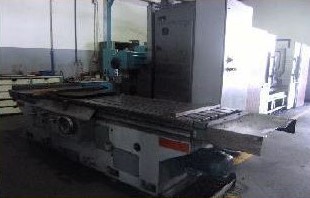
Technical Buyer’s Handbook: Assessing Pre-Owned , Used , Secondhand, Surplus CNC Machines Before Purchase Zayer 2500 BF CNC Bed Type Milling made in Spain
Below is a Technical Buyer’s Handbook / Due-Diligence Checklist for evaluating a pre-owned / used / surplus Zayer 2500 BF (bed-type CNC milling machine, made in Spain). Use this as a structured guide; adjust tolerances, subsystems, and weighting to your specific production needs.
I also include some known spec benchmarks (from used-machine listings) for the 2500 BF model so you know what to “aim for.”
A. Reference / Benchmark Specifications (Zayer 2500 BF)
Before inspection, you should collect or confirm the spec sheet for the particular serial / configuration. Below are some published numbers for Zayer 2500 BF machines you can use as reference:
| Parameter | Example / Typical Value |
|---|---|
| X-axis (longitudinal) travel | 2,500 mm |
| Y-axis travel | 1,050 mm |
| Z-axis (vertical) travel | 950 mm |
| Table size | 3,430 × 1,000 mm |
| Maximum workpiece weight on table | ~ 3,000 kg |
| Spindle speed range | 24 – 1,685 rpm |
| Maximum / nominal spindle speed | 2,800 rpm (in some documents) |
| Installed spindle power | ~ 55.6 HP (≈ 41.4 kW) |
| Approx. machine dimensions / weight | ~ 8,000 mm × 1,900 mm × 2,700 mm; weight ~8,000 kg (listing) |
These numbers form the “target window” against which you can measure deviations. If your candidate machine deviates significantly, you must understand why (wear, modifications, limits) and factor that into negotiations.
B. Pre-Inspection / Remote Preparation
Before going on site, gather as much documentation, photos, and data as possible:
- Request documentation
- Mechanical, electrical, hydraulic / coolant / lubrication manuals
- Wiring diagrams, control schematics, I/O maps
- CNC parameter backups, axis tuning files, compensation tables
- Maintenance / repair logs (e.g. spindle rebuilds, guide replacement, major failures)
- Calibration / alignment / geometric inspection certificates
- Modification / retrofit history (e.g. upgraded spindle, added automation)
- Spare parts list / BOM
- Ask for photos & videos
- Exterior (whole machine)
- Table, guideways, slides, bed
- Spindle head, spindle nose, tool-change area
- Electrical cabinets (inside), wiring, drives
- Motion videos (axis jogging, spindle running, tool changes) if still functional
- Key questions to ask
- Year of manufacture, serial number
- How many operating hours or duty cycles
- Reason for sale / decommission
- Is the machine currently running / powered?
- Known defects, collision history
- Which major components have been replaced / overhauled
- Are spare parts, tooling, fixtures included
- What control / CNC system is installed
- Bring inspection & measurement instruments
- Dial indicators, micrometers, straight edges, test bars
- Laser alignment devices (if available)
- Vibration sensor / accelerometer
- Thermography or IR detection tools
- Tools to open covers, inspect inside
- Check site / logistics conditions
- Crane / hoisting access, rigging plan
- Floor strength, foundation conditions
- Power supply, coolant / hydraulic / air utilities
- Space clearances
C. Visual & Structural Inspection (Cold / Power-Off)
Do a thorough walk-around before powering anything.
1. Machine Frame, Bed & Structure
- Inspect the main bed / base casting for cracks, weld repairs, distortion, sagging
- Check for previous rework / leveling adjustments / shim changes
- Observe surfaces for corrosion, pitting, especially in coolant / splash zones
- Inspect guarding, covers, way covers, bellows, seals for damage or missing parts
- Examine mounting points / anchors, check for signs of loosening or movement
2. Linear Axes, Guideways, Slides, Carriages
- Examine guide rails / sliding surfaces for scoring, wear, roughness
- Check for pitting, chips, corrosion on ways
- Inspect carriages / sliding blocks for play or looseness
- Examine drive elements (ball screws, nuts, drive motors) for wear or backlash
- Check lubrication / grease / oil lines, fittings, blocked passages
3. Spindle / Head / Tool Interface
- Inspect spindle nose, taper, threads, clamping surfaces for wear, damage
- Check spindle head housing, bearings, cooling / lubrication paths, seals
- If possible, mount test bar (non-rotated) to check static run-out
- Look for signs of overheating, discoloration, leakage
4. Tool Changer / Magazine / Arms (if applicable)
- Inspect tool changer arms, grippers, slides, index mechanisms
- Check sensors, pneumatics / hydraulics, actuation hardware
- Inspect magazine pockets and their indexing mechanism
- Examine cable routing to tool changer motors / sensors
5. Electrical Cabinets, Wiring & Drives
- Open cabinets (if allowed) and inspect wiring, connectors, terminal blocks
- Look for signs of heat damage (discolored insulation, melting)
- Check drive modules, control boards, I/O modules for damage
- Inspect cooling fans, filters, dust accumulation
- Inspect cable routing, strain reliefs, cable carriers on moving axes
6. Safety / Guards / Interlocks
- Check that E-stop buttons exist, are functional, and mechanically sound
- Inspect guard covers, interlock switches, safety doors
- Confirm no bypassing of safety systems
- Check limit / home switches, sensors
D. Power-Up & Functional Testing (Under Supervised Conditions)
Once structural checks are acceptable and safety is assured, power the machine (with caution) and perform functional / dynamic tests.
1. Control & Diagnostic Check
- Power on the CNC / control system; observe boot sequence, alarms, errors
- Verify parameter memory and backup integrity
- Check I/O status: limit switches, home switches, safety inputs
- Jog axes slowly and verify smoothness, correct direction, no spasms
2. Homing / Reference Cycle
- Execute homing / referencing for X, Y, Z axes
- Repeat multiple times; monitor consistency of home positions
- Test soft and hard limit behavior
3. Axis Motion Tests
- Move axes through full safe travel at moderate speeds; observe for jerk, binding, vibration
- Command known moves (e.g. 100 mm) and measure actual displacement with gauge
- Reverse direction to detect backlash / dead zones
- If available, use geometric test tools to monitor straightness, linearity
4. Spindle / Head Operation
- Run spindle at low rpm, gradually increase, listening for noise or vibration
- Monitor motor current, any abnormal heating
- If possible, mount instrumented test workpiece and check run-out / concentricity
- Confirm coolant / lubrication flow under operation
5. Tool Change / Magazine Operation
- Execute tool changes; monitor speed, sensor feedback, alignment
- Cycle multiple times to test reliability
- Check for collisions, misfeeds, incorrect indexing
6. Test Cutting / Machining Simulation
- If allowed, run a light cut on a test material
- Measure final part geometry vs program, check surface finish
- Run for some time to detect thermal drift
- Monitor vibration, power draw
7. Safety / Fault Behavior Tests
- Press E-stop under motion or spindle operation: ensure immediate safe stop
- Trigger limit switches / home switches: axes must respond safely
- Simulate sensor / input faults (if safe) and check error recovery
- Ensure guard / interlock behavior functions under motion
8. Long-duration / Stability Test
- Run motion or idle cycles for extended period (30–60 min) to allow thermal stabilization
- After warm-up, re-check positioning accuracy, backlash, repeatability
- Monitor temperature of motors, drives, cabinets
- Use thermal or vibration analysis to detect anomalies
E. Accuracy, Calibration & Precision Validation
Once the machine is stable, conduct precision checks:
- Repeatability test: move to the same coordinate, retract, return, measure deviation
- Grid / mapping test: command a mesh of X–Y positions and measure deviations across the workspace
- Test squareness or orthogonality by moving in two axes and comparing cross-axis deviations
- If possible, use high-precision tools (laser interferometer, straight-edge)
- Under load / offset conditions (i.e. heavy workpiece off-center) measure deflection or deviation
- Compare measured deviations to acceptable tolerances (ideally those from the original spec sheet)
F. Documentation & Service / Repair History Review
After all tests, thoroughly review all documentation and history:
- Maintenance / service / repair logs (major overhauls, spindle rebuilds, guide replacement)
- Calibration / geometry inspection certificates
- Modification / upgrade records
- CNC / control software / firmware history and backups
- Spare parts inventory included
- Tooling, fixtures, accessories included
G. Risk Assessment, Life-Remaining Estimate & Cost Forecasting
Based on what you’ve discovered, build a risk model and cost forecast:
- Wear-prone subsystems: guideways, screws, bearings, spindle, tool changer
- Availability & cost of spare parts (Zayer Spain parts, distributors)
- Calibration / realignment cost after transport / installation
- Transport / handling risk (bed type, heavy slides)
- Commissioning downtime and ramp-up to acceptable accuracy
- Control / electronics obsolescence
- Fallback / salvage value of structural / non-wear components
Consider using a weighted scoring table (structure, axes, spindle, control, tooling) to quantify condition and determine how much margin you need for refurbishing.
H. Contractual Safeguards & Negotiation Terms
Use your inspection results to include protective clauses in the purchase agreement:
- Acceptance / test-out clause: sale contingent on passing key functional & precision tests after installation
- Price adjustment clause: allow for deduction if performance is below agreed thresholds
- Warranty / hidden-defect clause: e.g. 3–6 months for undisclosed defects
- Spare parts package: require inclusion of critical wear parts (bearings, seals, slides)
- Documentation guarantee: manual, wiring diagrams, alignment data, backup files
- Transport / insurance clause: define liability for damage in transit
- Installation / commissioning support: seller or qualified technician helps alignment & setup
I. Post-Purchase / Installation & Commissioning Checklist
Once delivered and installed:
- Foundation, leveling, anchoring, vibration isolation
- Clean, flush lubrication / coolant systems, replace filters / fluids
- Reinstall covers, guards, safety interlocks
- Power-up and re-run the acceptance / functional test suite
- Perform geometry alignment, error compensation, calibration
- Run actual production test parts, verify tolerances
- Capture baseline metrics (backlash, drift, repeatability)
- Train operators / maintenance staff
- Establish preventive maintenance schedule
- Monitor performance in early weeks for drift, deviations, error trends