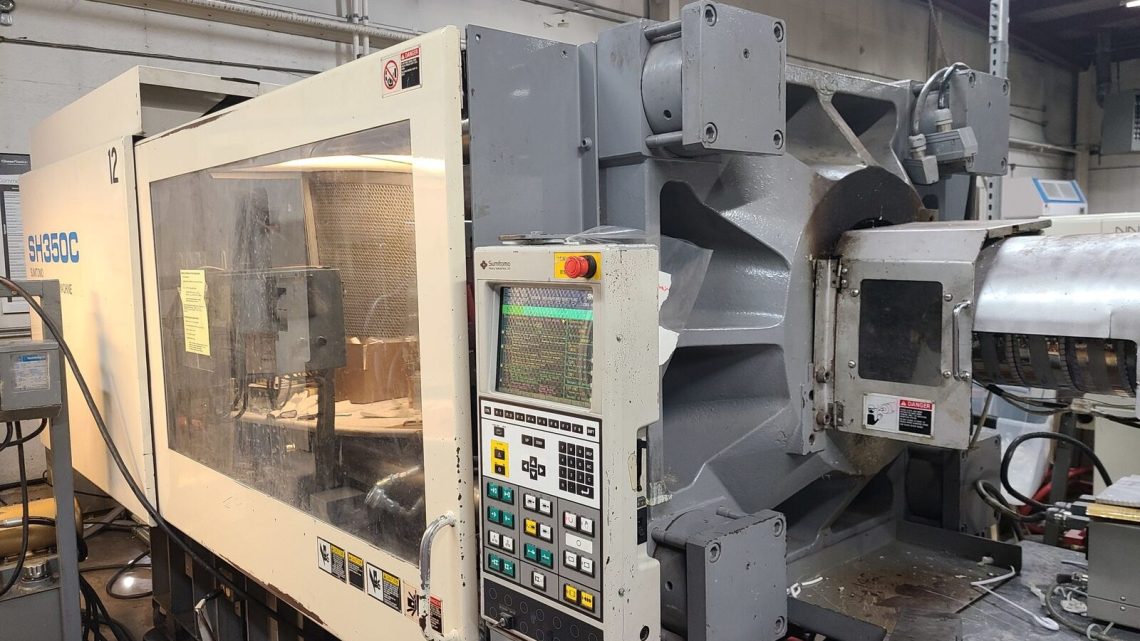
Technical Buyer’s Handbook: Assessing Pre-Owned , Used , Secondhand, Surplus CNC Machines Before Purchase Sumitomo SH350C Injection Molding Machine Tonnage 350 Ton made in Japan
Here is a Technical Buyer’s Handbook / Due-Diligence Checklist for evaluating a pre-owned / used / surplus Sumitomo SH350C 350-ton injection molding machine (made in Japan). Because injection molding machines have both mechanical, hydraulic, and control systems, your inspection must cover multiple domains (clamping, injection, hydraulics, controls, etc.). Use this as a structured guide and adapt tolerances / weightings to your mold sizes, production goals, and risk tolerance.
I’ll begin with baseline reference data (from used listings), then walk through inspection phases (pre-site, visual, dynamic tests, calibration, risk assessment, contracting, commissioning).
0. Reference / Benchmark Specifications (Sumitomo SH350C)
Before you go to the site, collect the exact spec sheet for that machine (serial number / variant) so you know your “target window” for acceptable deviations. Here are some example specs for the SH350C from used-machine listings:
- Tonnage / clamp force: 350 ton (some listings show 385 ton for variants)
- Plastics shot / screw diameter: 71 mm in one listing
- Platen size: 1,070 × 1,020 mm in one listing
- Tie bar spacing: 760 × 710 mm
- Injection pressure: ~ 187 MPa (as per that listing)
- Daylight / mold opening range, ejection stroke etc. likely depending on configuration
These data points help you calibrate expectations and detect excessive drift or mismatch.
I. Pre-Inspection / Remote Preparation
Do as much groundwork as possible before arriving on site:
- Request machine documentation: mechanical, hydraulic, electrical, control (PLC / control panel) manuals, wiring diagrams, circuit schematics
- Obtain maintenance / service logs: major repairs (tie-bar replacement, platen refurbishment, injection unit rebuilds, hydraulic system replacements)
- Get calibration / alignment reports: platen parallelism, tie-bar alignment, injection unit alignment
- Ask for photos & videos: platen surfaces, tie bars, injection unit, barrel / screw, hydraulic power unit, valve bank, control panel, wiring, day-light position, mold mounting area
- Ask key questions:
• Year of manufacture, serial number
• Total shot count or cumulative machine hours
• Usage patterns (type of resins, temperature, mold types)
• Reason for selling / decommission
• Known faults, repairs, collisions
• Whether machine is currently in operational state
• What spare parts or tooling (nozzles, screws, barrels, mold plates) are included - Plan what inspection / measurement tools to bring:
Dial gauges, straight edges, surface plates, feeler gauges, thermal / IR camera, pressure gauges, flow meters, torque wrenches, alignment tools - Check facility & logistics:
Weight / rigging plan, foundation stability, overhead crane access, power supply voltage / phase, cooling / oil supply, hydraulic lines, floor flatness
II. Visual / Structural Inspection (Power-Off / Cold)
Upon arrival, before powering, inspect all mechanical, structural, and hydraulic subsystems.
2.1 Frame, Platen & Tie Bars
- Inspect fixed platen and moving platen surfaces: flatness, scratches, abrasion, and wear
- Check for cracks, weld repairs, distortion of platen faces
- Inspect tie bars (all four) for straightness, corrosion, wear at bearings or sleeves
- Inspect tie-bar end bearings, bushings, and mounting conditions
- Check platen parallelism with a straight edge or feeler gauge at multiple points
2.2 Mold Mounting / Daylight / Opening Mechanisms
- Check mold mounting surfaces (T-slots, bolt holes, locating ring surface) for wear or deformation
- Cycle mold opening mechanisms (if mechanical) to see if movement is smooth and free
- Inspect safety blocks, mold support plates, ejector plate supports
2.3 Injection Unit, Barrel & Screw
- Examine the injection barrel and screw (if present) for wear lines, scuffs, scoring
- Check barrel heater bands, their condition, and insulation
- Inspect nozzle, check for leakage or cracking
- Check the reciprocating injection ram mechanism, check for play, binding
- Look at injection unit alignment: the barrel relative to clamp platen and injection axis
2.4 Hydraulic System (Pumps, Valves, Hoses, Accumulators)
- Inspect the hydraulic power unit: pump(s), motors, filters, reservoirs
- Check oil condition (clarity, contamination, level)
- Inspect hoses, pipes, fittings for leaks, corrosion, rubbing / abrasion
- Check valves, proportional valve banks, manifolds for visible wear, damage
- Inspect accumulators / pressure vessels if present
- Inspect cooling / oil cooling systems (heat exchangers, radiators, fans)
2.5 Electrical / Control Panels & Wiring
- Open control panels and inspect wiring harnesses, terminal blocks, connectors
- Look for signs of heat damage (discolored insulation, melted connectors)
- Check for cleanliness (dust, oil mist, grime) that can degrade insulation
- Inspect servo drives, PLC modules, control boards, power supplies
- Verify grounding, cable shielding, routing in moving sections
2.6 Safety Systems, Sensors & Interlocks
- Check that emergency stops (E-stop) are present and structurally solid
- Inspect door / guard interlocks, safety gate switches
- Verify limit switches on mold open / close, injection unit travel, ejector travel
- Check sensors (proximity, position feedback) for condition
III. Power-Up & Functional / Dynamic Testing
With safety measures in place and assurance that hydraulic / electrical systems are not obviously damaged, proceed to power up and perform functional tests.
3.1 Initial System Power-Up & Diagnostics
- Power the machine; observe startup sequence, error / alarm logs
- Check for faults in control, PLC, I/O status
- Verify hydraulic systems pressurize properly, no immediate leaks
3.2 Axis Movement / Clamping / Mold Opening
- Command clamp and unclamp operations; observe speed, smoothness, consistency
- Test mold opening / closing strokes; ensure travel is full, no binding
- Test with no load first, then with an inserted dummy mold (if safe)
3.3 Injection Unit Tests
- Traverse injection ram (if programmable) to test travel, smoothness, consistency
- Run injection unit in no-load / low pressure mode to test response, pressure build-up
- Verify barrel heating and temperature control circuits
- If possible, simulate a small injection to test response (if mold or dummy support exists)
3.4 Hydraulic / Pressure / Flow Tests
- Monitor pressures in clamping hydraulics, injection hydraulics, servo hydraulics
- Test valve switching, proportional valve response
- Check flow stability, pressure drops, transient behavior
- Inspect for unusual noise, cavitation, vibration in hydraulic pumps
3.5 Safety / Fault / Interruption Tests
- Activate emergency stop during clamping or injection motion — machine must stop safely
- Trigger limit switches and ensure axes or motion stops / back off
- Simulate sensor failure or loss of input to see how the machine handles errors
- Test safety interlocks: open guards or doors during motion, see if machine disables motion
3.6 Extended / Cycling / Stability Test
- Run repeated cycles (clamp / injection / opening) for significant duration to warm up hydraulic / mechanical systems
- After warm-up, retest key positions and movements to detect drift, slop or repeatability loss
- Monitor hydraulic oil temperature, pump casing temperature, motor temperatures
- Use IR / thermography to spot hot spots or abnormal heating
IV. Accuracy, Repeatability & Calibration Checks
Due to high tolerances often required in molding setups, calibration is critical.
- Use dial gauges or displacement sensors to test platen parallelism and repeat movement
- Check mold opening accuracy, closing precision, alignment of clamp platen
- Command repeat motions and measure deviations (repeatability test)
- If injection unit is servo-controlled, test shot consistency (if machine supports)
- Monitor ejection stroke repeatability
- Check whether motion / force behavior remains stable across temperature cycles
V. Documentation & Service / Repair History Review
Once tests are done, review the available history:
- Service / maintenance logs: pump replacement, valve rebuilds, platen resurfacing, tie-bar replacement
- Records of major repairs or rebuilds
- Calibration / alignment / inspection reports
- Control / hydraulic configuration history, software version changes
- Spare parts inventory included (seals, valve spools, pumps, retainer plates)
- Mold tooling, nozzles, barrels, screws included
VI. Risk Assessment, Life-Remaining Estimate & Cost Forecasting
Using your observations and test data, project risks and costs:
- High-wear subsystems: tie-bars, platen faces, injection screw & barrel, hydraulic seals, valves, pumps
- Spare parts / vendor support risk: Sumitomo parts availability, distributor lead times
- Hydraulic oil contamination / degradation cost: you may need full oil flush or replacement
- Calibration & realignment cost: after move and install, you’ll need to re-level, align platen, adjust tie-bars, test plasticizing alignment
- Transport / installation risk: heavy weight, precision alignment, risk of damage to hydraulic / electrical units
- Downtime & commissioning cost: time to bring to production
- Obsolescence / control risk: control system, PLC / hydraulics electronics aging
- Fallback / salvage value: structural frame, castings, non-wear components
You can create a scoring / weighting matrix across subsystems (clamping, injection, hydraulics, control, mechanical alignment) to quantify condition and adjust price accordingly.
VII. Contractual Safeguards & Negotiation Provisions
Your inspection findings give you leverage; include protective clauses:
- Acceptance / performance test clause: consider making payment contingent on passing your functional & calibration tests after installation
- Price adjustment clause: allow deductions for deviations beyond agreed tolerances or repair costs
- Warranty / latent defect coverage: e.g. 3–6 months on hidden defects like hydraulic leaks, pump failure, control faults
- Spare parts package: require key wear parts (tie-bar bushings, seals, valve spools, injector barrel / screw) included
- Documentation handover clause: manuals, wiring diagrams, control programs, hydraulic schematics must be delivered
- Transport & insurance clause: clearly define who is responsible for damage during shipping / handling
- Installation / commissioning support clause: seller or qualified technician support during first setup, alignment, testing
VIII. Post-Purchase / Installation & Commissioning Checklist
Once the machine is delivered to your facility, execute a methodical commissioning plan:
- Level, anchor, and align the machine base / foundation
- Clean / flush hydraulic circuits, replace filters and oil (if needed)
- Reconnect hydraulic lines, check for leaks, vent lines
- Ensure injection unit components are re-installed, no damage from transport
- Initialize the machine, run diagnostic checks, verify no alarms
- Execute your acceptance test suite again (clamp / injection / movement tests)
- Calibrate platen alignment, tie-bar parallelism, mold referencing
- Run test shots with sample mold or dummy parts; validate first molded geometry
- Capture baseline metrics (repeatability, drift, cycle stability)
- Train your operators / maintenance personnel
- Establish preventive maintenance schedule (hydraulic oil monitoring, seal checks, alignment checks, sensor calibration)
- Monitor performance over first production week(s) to watch for variation, drift, anomalies