26/09/2025
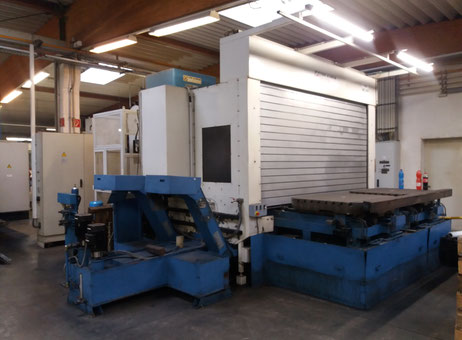
Technical Buyer’s Handbook: Assessing Pre-Owned , Used , Secondhand, Surplus CNC Machines Before Purchase TOS FSQ100 OR/EI CNC Horizontal Machining Center made in Czechia
Here is a Technical Buyer’s Handbook / Due-Diligence Checklist for evaluating a pre-owned / used / surplus TOS FSQ100 OR/EI CNC Horizontal Machining Center (made in Czechia). You can adapt this to your tolerance requirements, part sizes, and budget.
1. Preparation & Reference Data
Before inspection, collect as much information as possible:
- Original technical documentation: mechanical, electrical, control, hydraulic/pneumatic manuals
- Spare parts list / BOM
- Maintenance & service logs: replaced parts, failures, downtime history
- Calibration / alignment certificates
- Modification / retrofit history
- Control system backups: parameters, PLC programs, ladder logic, offsets
- Catalog / datasheet for FSQ100 OR/EI (travel ranges, spindle specs, table load)
- Photos & videos: full body, work area, spindle nose, table surface, guideways, electrical cabinet
2. Visual & Structural Inspection (Power-Off)
2.1 Machine Base & Frame
- Inspect castings, column, bed for cracks, weld repairs, distortion
- Check leveling pads, anchor points, evidence of rework
- Inspect way covers, bellows, guards for damage or missing parts
2.2 Axis Systems
- Linear axes (X, Y, Z): inspect guideways, ball screws, lubrication lines
- Check for scoring, rust, grease leaks, wear patterns
- Manually test backlash or play if possible
2.3 Spindle Unit
- Inspect spindle taper, nose, tool clamping interface for wear or damage
- Look for discoloration, oil leaks (signs of overheating or bearing failure)
- Static run-out check with a test bar if allowed
2.4 Table & Rotary System
- Inspect table surface, T-slots, clamping points
- For the “OR/EI” rotary design: check indexing drive, locking, gearboxes, encoders
- Inspect bearings, seals, lubrication condition
2.5 Tool Changer
- Inspect arm, grippers, tool magazine pockets for wear
- Check pneumatic/hydraulic actuators, sensors, alignment
2.6 Electrical Cabinets
- Inspect wiring, terminals, connectors for overheating, corrosion, loose contacts
- Check drives, amplifiers, power supplies, DC bus capacitors
- Inspect cooling fans, filters, cabinet cleanliness
2.7 Safety Systems
- Verify E-stop buttons, door interlocks, limit switches
- Confirm guards and covers are intact and not bypassed
3. Power-Up & Functional Testing
3.1 Control & Diagnostics
- Power up CNC control, check boot, alarms, diagnostics
- Verify parameters and backups are intact
3.2 Axis Movements
- Jog X, Y, Z axes across full travel: listen for abnormal noises, check smoothness
- Measure backlash and commanded vs actual positioning
- Run homing cycles multiple times to check repeatability
3.3 Spindle Testing
- Start spindle at low RPM, ramp to max rating (e.g. 4,000–6,000 rpm depending on spec)
- Monitor vibration, noise, temperature rise
- Measure spindle run-out dynamically
3.4 Rotary / Table Testing
- Index table in small and large increments; measure angular accuracy
- Check clamping and holding stability under load
3.5 Tool Changer
- Execute multiple tool change cycles; check timing, accuracy, reliability
- Monitor sensors, grippers, pocket alignment
3.6 Test Cut (if allowed)
- Perform light cutting test; measure part accuracy, surface finish, chatter
- Run for 30–60 minutes to assess stability and thermal drift
4. Precision & Accuracy Validation
- Perform repeatability test: return to same point repeatedly, measure deviation
- Conduct grid motion test for linear and angular axes
- Use ball-bar / laser interferometer if available to assess volumetric accuracy
- Test 4th-axis rotary repeatability and drift
- Compare results to TOS FSQ100 factory tolerances (typically ±0.005 mm positioning, ±0.003 mm repeatability for this class)
5. Documentation & History Review
- Maintenance logs, spindle rebuild records, ball screw replacements
- Calibration reports
- Software / control upgrades, retrofits
- Spare parts included with sale
- Tooling and fixtures included
6. Risk & Cost Forecasting
- Critical wear elements: spindle bearings, ball screws, rotary bearings, tool changer
- Parts availability: check TOS Kuřim service network in Czechia, Europe
- Calibration cost: expect realignment after relocation
- Transport risk: 12–15 ton weight, disassembly complexity
- Downtime & commissioning: 2–4 weeks depending on site
- Residual value: what remains if the machine is not viable
7. Negotiation & Safeguards
- Acceptance test clause at your facility
- Price adjustment for detected deviations
- Warranty on spindle / control (3–6 months if possible)
- Spare parts package included
- Full documentation and backups must be delivered
- Clear definition of transport insurance and risk
8. Post-Purchase Checklist
- Foundation and leveling check
- Flush and replace coolant & lubrication systems
- Power-up and repeat all acceptance tests
- Calibrate geometry and kinematics
- Run trial production parts and compare to tolerance
- Establish baseline data (backlash, drift, accuracy)
- Train operators and maintenance staff
- Implement preventive maintenance schedule