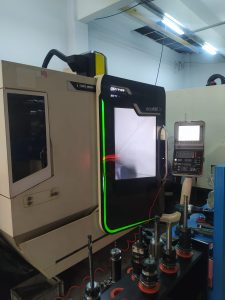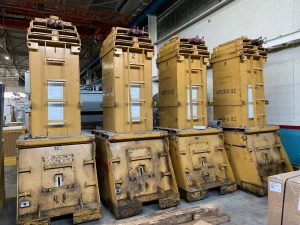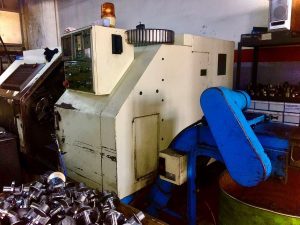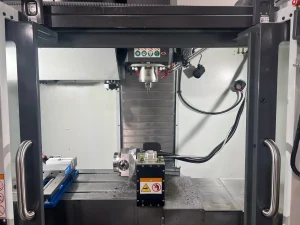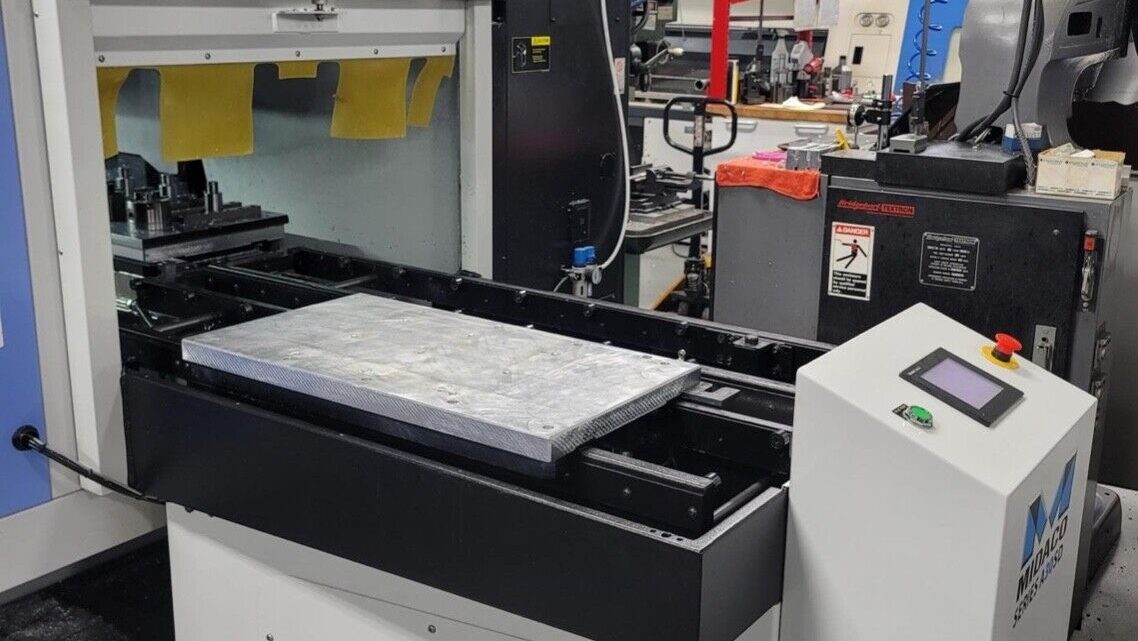
Technical Buyer’s Handbook: Assessing Pre-Owned , Used , Secondhand, Surplus CNC Machines Before Purchase Midaco A30SD Automatic Pallet Changer made in USA
Below is a Technical Buyer’s Handbook / Due-Diligence Checklist for evaluating a pre-owned / used / surplus Midaco A30SD (or A30 Series / “30SD”) Automatic Pallet Changer (made in the USA) before purchase. You can adapt this to your specific machine, pallet configurations, tolerances, and integration with your CNC cell.
I also pull in some relevant spec data from Midaco for reference.
I. Background & Reference Specifications (to Use as Benchmark)
Before on-site inspection, gather the nominal / as-new specs of the model you are considering. Here are some reference numbers and notes for the Midaco 30SD / A30 series pallet changers:
- The 30SD Series supports pallet sizes from 30″ × 15.5″ up to 30″ × 19″ (762 mm × 394 mm to 762 mm × 483 mm).
- Standard receiver (the interface to machine) capacity is 1,000 lb (454 kg) (with evenly distributed load).
- An optional upgrade for 2,000 lb (≈ 908 kg) receiver capacity is offered by Midaco.
- Pallet plate thickness is about 1.5″ (≈ 38.1 mm) in many models.
- Typical clamping force / hydraulic or pneumatic clamp strength is listed in the Midaco spec sheets.
- The “Model Guide for Haas / A30SD” document explicitly states “Made in USA” for the Midaco pallet systems.
Use these as benchmarks; deviations in your candidate unit must be explained or allowed by wear / retrofits.
II. Pre-Inspection / Remote Phase
Before traveling, gather as much information as possible:
- Documentation Request
- Original manuals: mechanical, hydraulic / pneumatic, electrical, control integration
- Wiring diagrams, schematics, actuator / valve datasheets
- Pallet changer parameter / configuration files (if programmable)
- Maintenance / service logs: what parts replaced, when, failure history
- Modification / retrofit records (e.g. backwards compatibility, upgraded motors)
- Specification sheet for the specific serial number / variant
- Photos & Videos
Ask the seller to provide high-resolution images or video of:- The chassis / frame, base, supports
- Pallet plates (top surfaces, underside, locking faces)
- Actuators, cylinders, valves, sensors (pneumatic, hydraulic)
- Receiver docking face (the interface to the machine)
- Shuttle / transfer mechanisms, rails or guides
- Cable routing, connectors, solenoids, piping
- Motion video (indexing, clamp/unclamp, pallet transfer)
- Key Questions to Ask
- Year of manufacture and total cycles (or operating hours)
- Reason for sale / removal (cell upgrade, machine retirement, damage)
- Is the pallet changer still operational? Any known faults or intermittent failures?
- Which major components have been replaced (guide rails, actuators, cylinders, motors)?
- Are spare parts, valves or spares included?
- What is the control / interface type (signal logic, pneumatic, machine I/O)
- Any field modifications or non-standard features
- Plan Your Measurement / Test Instrumentation
Bring (or prepare to have) the following:- Dial indicators, micrometers, gauges
- Straight edges, precision square
- Force gauge / load cell (for clamp force testing)
- Air pressure gauge, pneumatic test setup
- Flow meters, pressure sensors (for hydraulic / pneumatic)
- Laser / displacement sensors (if available)
- Multimeter, current sensors (for electric motors)
- Hand tools to open covers, inspect inside
- Logistics & Fitment Planning
- Check the footprint, clearance, base dimensions, mounting / support method
- Weight estimate and rigging / hoisting plan
- Power / air / hydraulic connections required
- Conditions at your facility (floor strength, anchoring, alignment constraints)
III. Visual & Structural Inspection (Power-Off / Cold)
On site, before powering anything, do a careful visual structural check.
3.1 Chassis, Frame & Base
- Inspect the frame, support structure, base plates for cracks, weld repairs, deformation or bending.
- Check that mounting surfaces are flat, not twisted, not warped.
- Inspect for corrosion, pitting especially in base or sliding surfaces.
- Check for any evidence of previously re-machined or resurfacing work.
- Inspect rails, guide surfaces, carrier tracks (if any) for wear, grooves, spalling.
- Verify that covers, guards, panels are intact, not loose, not missing.
3.2 Pallet Plates & Clamping Surfaces
- Inspect the top faces and underside of pallet plates for wear, scratches, chips, corrosion.
- Check clamping faces (where the pallet mates with the receiver) for wear, nicks, burrs.
- Inspect locking pins / clamps, and their seating holes for wear or deformation.
- Check that fastener holes are not elongated or over-worn.
3.3 Receiver / Docking / Interface Face
- Inspect the docking face (machined interface) of the receiver that mates with the pallet changer.
- Check alignment surface, guide rails, locating pins, and mating surfaces for damage.
- Look for signs of repeated misindexing, wear on the dock faces.
3.4 Transfer / Shuttle Mechanisms
- If the system has shuttle or transfer arms / slides, inspect rails, bearings, guide surfaces for wear, play, chips.
- Inspect linear guides, rollers, bushings along the shuttle path.
- Check the smoothness manually (if possible) by pushing lightly and feeling for stick/slip.
- Inspect the mechanical linkages (cams, levers, belts, chains) for wear, slack, damage.
3.5 Actuators / Cylinders / Valves / Sensors
- Inspect pneumatic / hydraulic cylinders for seal leakage, rod scratches, corrosion.
- Inspect valves, solenoids, piping / tubing for leaks, loose fittings, abrasion, damaged hoses.
- Check sensors and proximity switches (limit switches, home sensors) for alignment, damage, wiring.
- Inspect pressure regulators, flow restrictors, filters for clogging, wear.
3.6 Electrical / Control Enclosures & Wiring
- Open the control cabinet (if permitted) and inspect drives, controllers, terminal blocks.
- Look for signs of overheating: discolored wires, melted insulation, burnt marks.
- Inspect cable routing, connectors, strain reliefs, shielded cable integrity.
- Check for dust, debris, moisture ingress in enclosure.
- Inspect power supply modules, relays, PLC, I/O modules.
- Inspect grounding and bonding connections.
3.7 Safety / Guards / Interlocks
- Check emergency stop (E-stop) buttons, mechanical linkage, and wiring.
- Verify door interlocks or guarding on moving parts, ensure they are not bypassed.
- Inspect limit switches, travel stops, safety sensors.
- Confirm guard panels and covers over moving parts are present and properly secured.
IV. Power-Up, Functional & Motion Testing
Once structural checks are acceptable (or while concurrently supervised by seller), proceed with dynamic tests. Note: only proceed if safety and wiring conditions permit.
4.1 Initial Power-Up & Diagnostics
- Power up the controller / drive system carefully.
- Observe boot sequence, error / alarm logs.
- Ensure power supply voltages, control logic are stable.
- Check I/O status, limit/home signals, sensor feedback.
- Verify that no warning or interlock is active that prevents movement.
4.2 Homing / Reference Cycle
- Execute the homing / reference cycle for the pallet changer (if applicable).
- Repeat homing multiple times and check for consistency of reference position.
- Check whether sensors, switches, home positions activate reliably.
4.3 Pallet Indexing / Transfer Motion
- Command pallet index / transfer motions (pallet load/unload).
- Measure travel times, smoothness, any hesitation or sticking.
- Cycle several index motions in sequence to test for consistency and repeatability.
- Monitor for abnormal noise, abrupt motions, vibration.
4.4 Clamping & Locking / Unclamp Test
- Command clamping / locking of the pallet (clamp/unclamp).
- Measure or assess the clamping force (if you have a force gauge).
- Ensure locking devices (pins, clamps) engage fully and re-withdraw correctly.
- Cycle clamp/unclamp repeatedly to test longevity and consistency.
4.5 Load / Weight Test (Simulated Load)
- If possible, place a dummy load on the pallet (within allowable weight) and cycle indexing/clamping.
- Observe behavior under loaded conditions: any additional deflection, slippage, misalignment.
- Monitor actuator behavior (pressure, current draw, response) under load.
4.6 Safety & Interlock Tests
- Test emergency stop (E-stop) during motion to ensure safe and immediate stop.
- Trigger limit / home switches to verify safe motion stops or retractions.
- Cause sensor failures (if possible) or remove a sensor temporarily (simulate fault) — check how system handles error states.
- Verify guard / interlock behavior (e.g. if a cover is open, motion should not operate).
4.7 Stability / Endurance / Drift Testing
- Run multiple cycles over an extended period (say 30–60 min) to allow for heating, settling.
- Re-check key positions, alignment, position repeatability after the run to detect drift.
- Monitor actuator temperatures, motor currents, hydraulic / pneumatic stability (pressure drops, leaks).
- Listen for developing noises, squeaks, wear in motion paths.
V. Precision, Accuracy & Repeatability Measurement
After the system is warmed up and stable, more precise checks:
- Use dial indicators, displacement sensors to check position repeatability of pallet indexing (i.e. does the pallet always land at the same position within tolerance).
- Test docking accuracy: how precisely does the pallet land relative to receiver / machine interface pin / face.
- Check clamping force consistency across cycles (if measurable).
- Map indexing error over all positions (for systems with multiple pallet positions).
- If possible, test cross talk or deflections under offset loads (i.e. heavier parts or eccentric loading).
- Compare the measured errors vs the original spec tolerances (which may be in the documentation) and vs your required tolerances.
VI. Documentation & History Review
After physical and dynamic testing, review the background and history carefully.
- Maintenance / repair logs: component rebuilds, breakdown history
- Replaced major parts: rails, actuators, hydraulic / pneumatic units, sensors
- Calibration / alignment records (especially after relocation or service)
- Modification / upgrades done (e.g. stronger actuator, control board, software)
- Spare parts inventory included in the sale (valves, seals, sensors, actuators)
- Original manuals, spare parts lists, schematic/drawings
- Software / firmware versions, backup state
VII. Risk Assessment, Life-Remaining Estimates & Cost Forecasting
Using data from inspection & testing:
- Wear-critical components: guide rails, shuttle bearings, locking pins, clamp actuators, sensors
- Parts & support risk: availability of Midaco spares in your region, lead times, cost
- Calibration / realignment cost: after installation, you may need to realign or re-calibrate interfaces
- Transportation / installation risk: potential damage in transit, reinstallation alignment, foundation anchoring
- Downtime & commissioning cost: time to make fully operational in your cell
- Control / obsolescence risk: control board versions, electronics age, compatibility with your CNC machine
- Fallback / salvage value: structural components, usable actuators, parts
You may build a weighted scoring sheet to quantify “good / acceptable / reject” conditions per subsystem (frame, motion, clamping, control) to guide adjustments in price or acceptance.
VIII. Contractual Safeguards & Terms
Use your inspection to negotiate protective clauses in the purchase agreement:
- Acceptance / performance clause: the machine must pass specified functional and precision tests after installation (or you retain right to return or adjust price)
- Spare parts package: seller includes critical wear parts (bolts, seals, sensors, actuators)
- Warranty / latent defect coverage: some limited term (e.g. 3–6 months) warranty on hidden defects
- Documentation handover: seller delivers all manuals, wiring diagrams, backup files, schematic drawings
- Shipment / insurance terms: who bears risk during transport, damage liability
- Installation / commissioning assistance: seller or authorized representative supports first alignment & hookup at your site
IX. Post-Purchase / Installation & Commissioning Checklist
Once delivered, ensure:
- Proper base leveling, alignment, anchoring
- Cleaning, flushing, and setup of pneumatic or hydraulic supply, filtering, connection lines
- Re-check covers, guards, safety systems
- Power-up and re-run all acceptance / functional tests
- Fine alignment, calibration of docking interfaces
- Cycle test with actual production loads or dummy loads
- Baseline data collection (repeatability, drift, current, pressure)
- Operator / maintenance training focusing on pallet-changer interactions
- Preventive maintenance schedule established
- Monitor performance closely in early operation period (first 1–2 weeks) for drift or anomalies